
Gaza Crisis Deepens: Forced Hospital Evacuations and Mounting Civilian Toll Spark Global Alarm
May 30, 2025
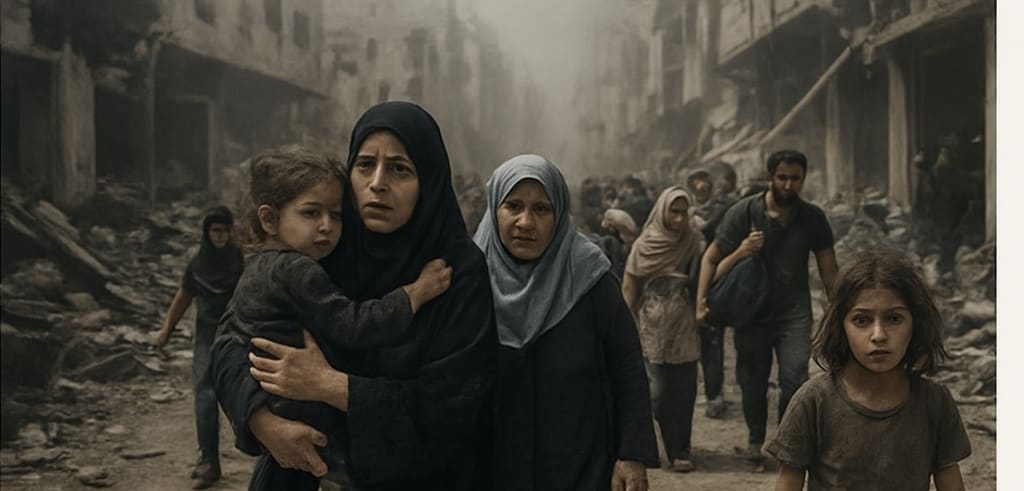
Since Israeli forces forcibly evacuated Al-Awda Hospital, one of the few operational medical facilities in northern Gaza, the humanitarian catastrophe in Gaza has reached a catastrophic level. In the beleaguered enclave, where more than two million people still had to deal with the escalating horrors of war, malnutrition, and displacement, the evacuation represented yet another setback to the already deteriorating health infrastructure.
Collapse of Medical Infrastructure
Northern Gaza is now totally without access to critical care and surgical services due to the forced closure of Al-Awda Hospital. For many in need of immediate medical care, health experts and humanitarian organizations have referred to this as a "death sentence." While panicked civilians took cover from the artillery bombardment around them, Doctors Without Borders (Médecins Sans Frontières) stated that patients, some still hooked up to IV drips, had to be carried out into the street. Al-Awda had been functioning under terrible conditions, including a lack of personnel, diminishing medical supplies, and inadequate electricity. It was still an essential lifeline, though. Its shutdown has prompted humanitarian groups to warn that unless access to supplies and medical evacuations is restored, a full-scale health system collapse is imminent.
Widespread Displacement and Casualties
Continued Israeli military actions have made the situation even worse. The Israel Defense Forces (IDF) have declared northern Gaza, including the neighborhoods surrounding Jabalia and Beit Lahia, an active battle zone, prompting widespread evacuations. Many of the residents had already experienced several displacements. The Gaza Health Ministry reports that more than 54,000 people have died, with women and children making up the majority of those killed. The destruction has been exacerbated by recent Israeli airstrikes; one bombing on a residential structure in the Bureij refugee camp killed at least 22 people in one night. Because they lack the necessary tools, rescuers are still extracting bodies from the wreckage, frequently with their bare hands.
Ceasefire Proposal and Political Tensions
The United States has proposed a new ceasefire amid mounting international pressure. A 60-day truce, the release of Israeli captives held by Hamas, and the release of Palestinian detainees held by Israel are all part of the agreement, which was brokered by U.S. ambassador Steve Witkoff, according to diplomatic sources.
The framework has apparently been approved by Israeli Prime Minister Benjamin Netanyahu, but Hamas has rejected it, claiming it offers no assurance of a lasting ceasefire or a long-term solution to the war. Rather, they call for the removal of the embargo that has crippled Gaza for almost 20 years and the full disengagement of Israeli forces from the region.
The deadlock highlights the conflict's enduring nature and the mounting annoyance of foreign players who saw no realistic way to bring about peace. Both sides have been encouraged by U.S. Secretary of State Antony Blinken to take into account the humanitarian crisis that is occurring on the ground and to make the necessary concessions in order to save civilian lives.
Global Outcry Over West Bank Settlements
Israel has authorized the building of 22 new settlements in the occupied West Bank, which has been widely condemned and is only adding gasoline to the fire. While the United Kingdom, France, and Germany released a unified statement warning that such measures undercut any lingering prospect for a two-state solution, the United Nations called it a "flagrant violation" of international law.
Human rights organizations contend that Israel's harsh military operations and settlement growth in Gaza are components of a larger plan to establish long-term control over Palestinian territory. However, the Israeli government maintains that the settlements are both lawful and essential for maintaining national security.
Famine and Aid Access Blocked
Gaza is facing a hunger in addition to the conflict. More than 85% of the population is food insecure, according to the United Nations Relief and Works Agency (UNRWA). Border crossings routinely cause delays or blockages for aid convoys.
Orderly distribution is practically impossible due to desperation and looting, even when aid does enter. Aid workers are now targets as well. Seven employees of World Central Kitchen were killed in an Israeli airstrike in April while they were trying to bring food. Due to safety concerns, a number of NGOs briefly halted operations after the attack, which caused widespread outcry.
A Plea for Global Action
Calls for quick foreign involvement are becoming louder as the crisis worsens. In a recent speech, Pope Francis called the suffering in Gaza "intolerable" and encouraged world leaders to act with compassion and moral clarity. Meanwhile, calls for a lasting truce and punishment for war crimes have sparked demonstrations in major cities throughout Europe, Asia, and the Americas.
In addition to being a regional catastrophe, the Gaza conflict has turned into a global litmus test for international law, human rights, and diplomatic will. The human cost will keep rising and the prospect of peace will deteriorate significantly in the absence of swift and significant action.
About the Creator
Keep reading
More stories from writers in History and other communities.
Talleyrand: The Master Survivor
Few figures in history embody strategic survival as perfectly as Charles-Maurice de Talleyrand-Périgord. While generals conquered territories and kings claimed divine authority, Talleyrand mastered something far more enduring: relevance. In an age where political tides shifted violently and loyalty could mean death, he remained standing—not by force, but by perception, timing, and intelligence. He did not dominate history. He outlasted it.
By Fred Bradford6 days ago in History
Cabin Fever Because of Snow, Sleet, and Freezing Rain That Turned to Icy Roads
What Is Cabin Fever? The short answer is that cabin fever is restlessness from being in a confined area. Cabin fever is the distressing irritability or restlessness experienced when a person or group is stuck at an isolated location or in confined quarters for an extended time. Research shows that prolonged cold, gray skies, and being stuck indoors can trigger mood shifts similar to “winter blues.”
By Margaret Minnicksabout 14 hours ago in Humans
A Love Forboding
The chipped stone slope caused unbearable footing. I slid, skirting on my heels. I cast my shield, relinquishing my guard to stay upright. Left with my double-edge and a prayer to the maker, I skated toward my objective. The earthly stubble gave way to solid ground. I found myself restored, a trail of dust in my wake.
By James U. Rizzia day ago in Fiction


Comments (1)
This is a tragic situation. The forced evacuation of Al-Awda Hospital is a huge blow to Gaza's already struggling health infrastructure. It's hard to imagine patients being carried out while under attack. The ongoing military actions and resulting displacements are only making things worse. How can the international community step in effectively to ensure medical supplies reach those in need and prevent a complete health system collapse?