
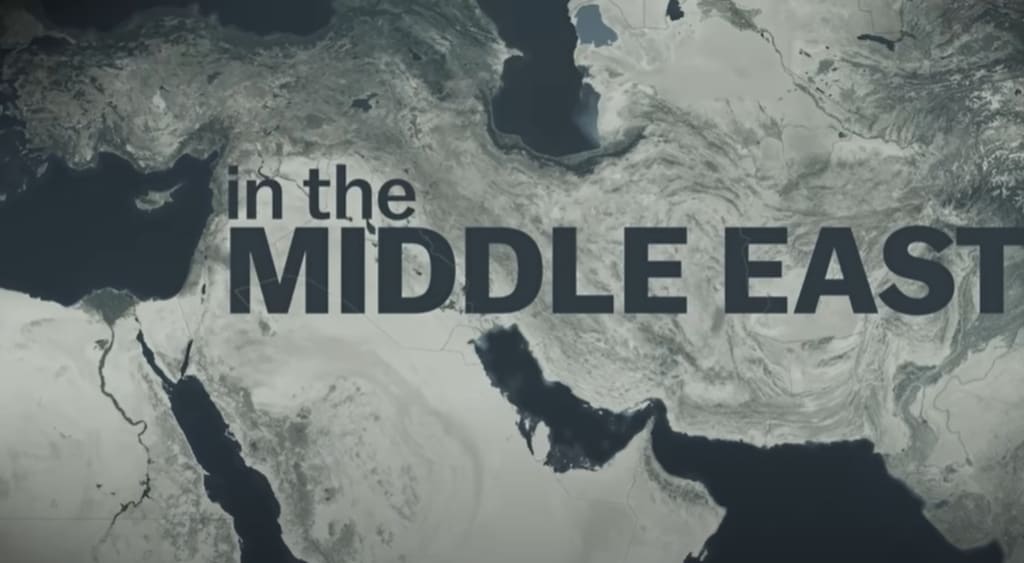
The Middle East stands as one of the world's most intricate and volatile regions, marred by ongoing conflicts, the disintegration of states, and the proliferation of armed militias and extremist groups.
Within this turbulent landscape, two prominent players consistently emerge: Saudi Arabia and Iran. Their longstanding and bitter rivalry serves as the linchpin for comprehending the intricacies of conflicts in the Middle East.
This rivalry has often been likened to a Cold War, as both nations engage in indirect confrontations by supporting opposing factions in various countries, thereby exacerbating the already precarious regional situation.
To truly grasp the essence of the Saudi-Iranian rivalry and its implications, it's imperative to delve into the historical roots and evolution of both countries.
The origins of Saudi Arabia can be traced back to the early 1900s when the Arabian Peninsula was a mosaic of tribal entities under the sway of the Ottoman Empire. Following World War I and the collapse of the Ottoman Empire, a power vacuum emerged, leading to intense power struggles among the tribes.
Eventually, the al-Saud tribe from the interior of the peninsula prevailed, and in 1932, the Kingdom of Saudi Arabia was officially recognized. What significantly altered the course of Saudi Arabia's history, however, was the discovery of vast oil reserves just six years later. Overnight, the Saudi monarchy was transformed into a wealthy and influential force, not just regionally but globally. This newfound oil wealth facilitated infrastructure development, urbanization, and solidified a crucial alliance with the United States.
On the opposite side of the Persian Gulf, Iran was grappling with a more turbulent path to nationhood. Iran boasted substantial oil reserves and a sizable Muslim population. However, it endured constant foreign intervention dating back to the 18th century when both the Russians and the British invaded.
In 1953, the United States orchestrated a covert coup that ousted Iran's popular Prime Minister, Mohammed Mosaddegh, replacing him with a Western-oriented monarch, Reza Shah. While Reza Shah embarked on ambitious reforms aimed at modernizing and secularizing Iran, his reign was marked by corruption and the brutal suppression of dissent, facilitated by the notorious secret police force, the Savak.
By the 1970s, both Saudi Arabia and Iran had oil-based economies and governments heavily backed by the United States. However, a profound contrast lay beneath the surface. The Saudi monarchy enjoyed considerable legitimacy and affection from its population, while the Shah of Iran, despite his power, faced growing discontent.
Iranians, particularly the Muslim majority, felt stifled by the Shah's Westernizing reforms, leading to widespread dissatisfaction. The stage was set for a seismic shift in the region's balance of power.
The turning point came in 1979 when Ayatollah Khomeini, a Muslim clergyman, led the Islamic Revolution, toppling the Shah's regime and sending shockwaves throughout the world. Khomeini's vision for an Islamic government posed a direct challenge to Saudi Arabia's claim as the leader of the Muslim world, as he argued that the revolution rendered Iran the legitimate Muslim state.
While the religious divide between Sunni-majority Saudi Arabia and Shia-majority Iran wasn't the primary cause of their rivalry, it undoubtedly accentuated their differences.
Following the Iranian Revolution, Saudi Arabia's fears materialized as Iran began to "export its revolution" by supporting Shia groups attempting to overthrow governments in neighboring countries, notably Iraq, Afghanistan, and Saudi Arabia.
In response, Saudi Arabia bolstered its alliance with the United States and formed the Gulf Cooperation Council (GCC) alongside other Gulf monarchies. These moves set the stage for future confrontations.
In 1980, Iraq, under the leadership of dictator Saddam Hussein, invaded Iran, hoping to quell the Iranian revolution, seize power, and annex Iran's oil reserves. The Saudis, fearing Iran's ascendance, extended crucial support to Iraq, providing financial aid, weapons, and logistical assistance. Saudi Arabia's motivation was clear: they viewed Iraq as a bulwark against the growing Iranian influence.
The war dragged on for years, marked by trench warfare, the use of chemical weapons, and heavy civilian casualties. By the time it concluded in 1988, nearly a million lives had been lost. Iranians largely placed the blame for the conflict on Saudi Arabia, further escalating tensions.
Fifteen years later, Iraq once again became a battleground for proxy warfare. In 2003, the United States invaded Iraq, toppling Saddam Hussein's regime. Neither Saudi Arabia nor Iran welcomed this development, as Iraq had previously acted as a buffer between them.
However, the post-invasion period saw the United States struggle to establish a stable government in Iraq, inadvertently creating a security vacuum and plunging the nation into a devastating civil war.
The absence of a functioning government in Iraq allowed various armed militias to seize control, further fracturing the population. Sunni and Shia militias proliferated, with some extremist groups exploiting the chaos to gain power.
These militias proved to be convenient proxies for Saudi Arabia and Iran, both of which sought to extend their influence. Saudi Arabia funneled money and weaponry to Sunni militias, while Iran supported Shia groups.
The Arab Spring, a series of pro-democracy uprisings and anti-monarchy movements that swept through the Middle East in 2011, presented divergent challenges for Saudi Arabia and Iran. Saudi Arabia, a staunch status quo power, sought to preserve authoritarian regimes in the region to maintain stability.
In contrast, Iran, an anti-status quo power, supported protest movements that aimed to challenge the existing regional order. This divergence intensified their competition for influence and power.
The Saudi-Iranian rivalry extended its reach to various countries across the Middle East. In Tunisia, Saudi Arabia backed a dictator, while Iran supported protesters. In Bahrain, Iran supported Shia leaders seeking to overthrow the government, leading Saudi Arabia to send troops to help suppress the unrest. Both nations became embroiled in the affairs of Libya, Lebanon, and Morocco, further destabilizing these nations.
As Saudi Arabia and Iran exerted increasing pressure on these countries, many began to crumble under the weight of external influence and internal strife. The rivalry's reach expanded, with both nations deploying their military forces in Yemen and Syria, marking a critical escalation.
In Yemen, the Saudi military intervened on the side of the central government, combating Houthi rebels, widely considered an Iranian proxy group. Conversely, in Syria, the Iranian military fought alongside various militias, including extremist groups like Hezbollah, in support of the Bashar al-Assad regime, countering rebel Sunni groups backed by Saudi Arabia.
The proliferation of civil wars across the Middle East inexorably drew Saudi Arabia and Iran deeper into the fray. While neither country actively sought direct conflict, the fluid and unpredictable nature of these civil wars created unforeseen circumstances, each side attributing blame to the other. This perpetuated a cycle of escalation and retaliation, exacerbating tensions and further destabilizing the region.
The repercussions of this Cold War-style rivalry have extended beyond Saudi Arabia and Iran, pulling in other countries. The Saudi government's confrontation with Qatar, a small Gulf state that had been developing closer ties with Iran, serves as an example.
Additionally, as the terrorist group ISIS neared defeat in Syria and Iraq, both Saudi Arabia and Iran positioned themselves to exert control over the vacated territories, further complicating the regional landscape.
In conclusion, the Saudi-Iranian rivalry, deeply rooted in historical, religious, and geopolitical factors, remains a central driver of conflict and instability in the Middle East. While both nations claim they do not seek direct confrontation, their proxy wars and interventions continue
About the Creator
Keep reading
More stories from Harjot Singh and writers in History and other communities.
How Your Memory Works
"Sherlock Holmes, the famous detective, once compared the human brain to an attic, suggesting it had limited memory storage. His loyal companion, Dr. Watson, once mentioned the Earth orbiting the sun, to which Holmes humorously replied, 'Now that I do know, I shall do my best to forget it.'
By Harjot Singh2 years ago in Humans
Historical Story
For many years, battles continued between Sultan Salahuddin Ayyubi and the Crusader warriors. Finally, after various military campaigns and confrontations, a battle took place that proved decisive in history—one that brought an end to the Christian Kingdom of Jerusalem in Palestine and sealed the fate of the Crusaders. This was the Battle of Hattin, which occurred on Saturday, 24 Rabi‘ al-Akhir 385 AH. In this battle, the Muslims achieved a decisive victory.
By Sudais Zakwan4 days ago in History



Comments
There are no comments for this story
Be the first to respond and start the conversation.