
Christians are denouncing the title, but still serve Jesus
Cultural changes are happening within the church community.


A change in identity
In recent years, there has been an increase in the number of believers in Christ who say they no longer identify as Christians. This is happening for several reasons. The first is that some who use the title believe in the teachings of Christ, like Jane Fonda, but do not believe He died for their sins, which is the basis for Christianity.
Fonda insists she is Christian, but does not accept that free gift of salvation, which invalidates the meaning of Christian. The second reason is that some people say the term was a derogatory slang word meant as an insult.
The term "Christian" was first used to refer to the followers of Jesus Christ in the early days after the Bible says He was resurrected. Scripture records the origin of the term in the New Testament, specifically in the Book of Acts in the Bible.
"Christian" is mentioned in the following Bible passage:
"Then Barnabas went to Tarsus to look for Saul, and when he had found him, he brought him to Antioch. For a whole year, they met with the church and taught a great many people. And in Antioch the disciples were first called Christians." (Acts 11:25-26, ESV)
This word was first used in the city of Antioch in the 1st century AD to identify the followers of Jesus. It likely emerged as a way to distinguish these followers from other religious and social groups of the time. It was used similarly to Mars-Martian, Virginia-Virginian-Christ-Christian.

A derogatory term
"Christian" is derived from the Greek word "Χριστιανός" (Christianos), which means "belonging to Christ" or "follower of Christ." Over time, this term became widely used to describe the adherents of the Christian faith and has continued to be used throughout history to refer to those who identify as followers of Jesus Christ
The second time the term is used where Herod Agrippa II replied to Paul, "Then Agrippa said unto Paul, Almost thou persuadest me to be a Christian." (Acts 26:28). The third and final New Testament reference to the word is in 1 Peter 4, where believers are told: "Yet if [any man suffer] as a Christian, let him not be ashamed; but let him glorify God on this behalf." (1 Peter 4:16).
Kenneth Samuel West has an interesting take on the situation. He believes all three original New Testament verses' mentioning "Christian" reflect a derisive element and negatively refer to followers of Jesus Christ who did not acknowledge the Roman Emperor.
Loving Jesus but not identifying a Christian
The term Christian has come to be viewed as meaning bigoted and narrow-minded toward those who believe differently. Gay bashing in the name of Christianity has led some people to no longer use the label because of the growing number of individuals saying they don't want a Jesus who cannot accept them as they are.
You can have a personal relationship with Christ without doing any of that because He dwells within you, and you can commune with HIm anytime you choose. Being a Christian, much like the celebration of Christmas, has changed over the decades and no longer means what it used to.
This is why so many are no longer claiming the term. There is a saying that religion is a man in church thinking about fishing, and a relationship is a man out fishing thinking about God. You can love Jesus without identifying as a Christian or setting foot in a church building. This was done for the first 323 years after the resurrection.
About the Creator
Cheryl E Preston
Cheryl enjoys writing about current events, soap spoilers and baby boomer nostalgia. Tips are greatly appreciated.
Keep reading
More stories from Cheryl E Preston and writers in History and other communities.
Presidents' Day replaced separate celebrations in February
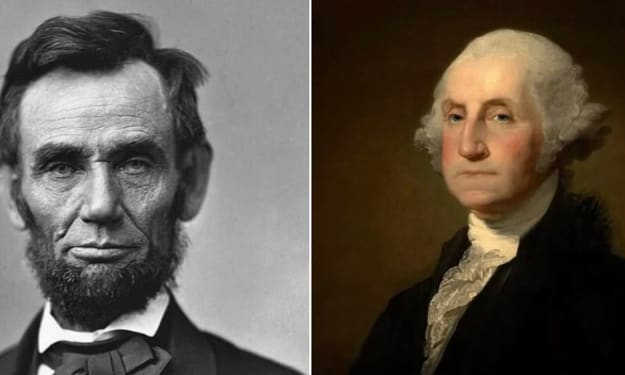
Presidents' Day replaced two February observances When I was a schoolgirl in the early 1960s, we observed the birthdays of Abraham Lincoln on February 12 and George Washington on the 22nd. Lincoln's birth date was never a holiday, but teachers had us draw pictures of both US leaders, and we learned about their contributions.
By Cheryl E Preston28 days ago in History
The Accidents That Quietly Improved Aviation Forever
I used to think aviation history was a story of bold successes, record-breaking flights, sleek aircraft, and triumphant landings. But the more I read, the more I realized something uncomfortable: much of modern aviation was shaped not by success, but by accidents. The safety and reliability we now take for granted were quietly built from moments when things went terribly wrong.
By Beckett Dowhanabout 5 hours ago in History
"Game of Thrones: A Tale of Power, Betrayal, and Destiny"
In the vast and divided land of Westeros, power was everything. Noble houses ruled their regions, bound together by fragile alliances, old grudges, and a constant hunger for the Iron Throne—the seat of supreme authority. Though summer had lasted for many peaceful years, whispers of change moved with the cold wind. Winter, long feared, was coming.
By The best writer 2 days ago in History
A Dart at Dusk
Seconds ago, the sullen sun set on the two of us… my exuberant furry companion and me. A fresh breeze embraces us, delivering welcome relief from the day’s oppressive heat. His typical stumbling and staggering along — apace with a sloth — has turned into trip-trapping, high-stepping, almost skipping along.
By Angie the Archivist 📚🪶2 days ago in Petlife


Comments
There are no comments for this story
Be the first to respond and start the conversation.