
CHERNOBYL TRAGEDY
One of the most unfortunate event in history
Technicians stationed in the control room at the Chernobyl Nuclear Power Plant are seated at their respective stations. The room itself is characterized by a cool concrete environment, with the air being somewhat damp. "We are initiating a safety test now," one of the operators communicates. The fuel rods within nuclear reactor Unit 4 commence their movement. Unexpectedly, a power surge within the core occurs. Simultaneously, a siren begins to blare within the control room, while red lights start flashing, casting a blood-red illumination across the countenances of the men present in the chamber. This sequence of events triggers an uncontrollable chain reaction within the nuclear reactor. One of the operators rapidly advances toward a control panel, forcefully pressing the emergency shutdown button with his fist. However, the control rods become jammed in their journey toward the core. Just 54 seconds after the commencement of the test, an explosion ensues.
In the year 1977, Soviet engineers and labors constructed four RBMK nuclear reactors at the location that would eventually house the Vladimir Ilyich Lenin Nuclear Power Plant. In the aftermath of the catastrophe, this facility would come to be known simply as the Chernobyl Nuclear Power Plant.
By the subsequent year, one of these reactors had been activated, and by 1984, the plant boasted four operational reactors, with a fifth reactor under construction. Each of these reactors had the capacity to generate approximately 1,000 megawatts of electric power. Chernobyl is positioned just to the south of the Belarus border within Ukraine, approximately 65 miles (104 kilometres) to the north of Kyiv.
On April 25, 1986, at 1 a.m., the operators at Chernobyl reduced the power supply being sent to reactor number 4 as they prepared to undertake a safety test on the system. This manoeuvre was carried out simultaneously with routine maintenance procedures. The purpose of this test was to ascertain whether the still-rotating turbines of the reactor could continue producing adequate electricity to sustain the operation of the coolant pumps in the event of a complete loss of power at the plant. This information was crucial to determine if the time gap between power loss and the activation of emergency generators would lead to a nuclear meltdown or a catastrophic failure.
At 2:00 p.m. on that day, the cooling system was intentionally deactivated to facilitate the unobstructed execution of the test. Regrettably, this adjustment was not communicated to some of the incoming operators during the shift change, an important piece of information that would have been beneficial moments before the core reached a critical state.
As the day unfolded, the test was repeatedly postponed to avoid interfering with the power requirements of nearby towns. Throughout this period, the power levels of Reactor 4 were maintained at around 1600 MWt, while the team awaited the opportune moment to initiate the experiment.
At 11:10 p.m., the operators at Chernobyl received the go-ahead to proceed with the experiment. However, given the imminent shift change, the initiation of the test was postponed once more. Eventually, at midnight, the new shift took over. These operators were less experienced and had not been properly briefed or trained regarding the required actions during the test. This lack of knowledge would lead to significant errors in the hours to come.
Shortly after midnight, the power output of reactor Number 4 was deliberately lowered to 720 MWt. It's worth noting that the reactor was not designed to operate below 700 MWt for prolonged periods. Nevertheless, due to inadequate supervision and training, the night shift operators at Chernobyl were unaware of this safety threshold. At 12:28 a.m. on April 26, the reactor's output dipped to 500 MWt.
The local control system automatically transitioned to the regulating system as the energy output dangerously diminished. In a bid to rectify the situation, the operators hastily removed numerous control rods from the reactor, a direct violation of the plant's safety protocols. Unfortunately, this course of action failed to yield the desired outcome. A buildup of xenon within the core resulted in further reductions in power levels. Due to either human error or a system malfunction, the reactor's output plummeted to 30 MWt.
By 1:00 a.m., the team managed to elevate the power output of reactor Number 4 to 200 MWt. While still below the prescribed levels, it seemed that the core had stabilized momentarily. Anatoly Stepanovich Dyatlov, the deputy chief engineer and acting supervisor at Chernobyl, believed that the test could recommence. As a preparatory measure, he instructed the deactivation of the automatic emergency shutdown system and the power-regulating system. Additionally, water flow to the core was increased, and additional cooling pumps were activated. These actions led to reduced heat levels and low reactivity, necessitating the extraction of more control rods to sustain the reactor's operation at 7 percent power for several more minutes.
In response to pressure buildup within a steam drum, a decision was made to augment feedwater flow to the core. This further diminished the number of nuclear reactions transpiring within the system, triggering automated safety mechanisms that withdrew several more control rods. The operators and engineers involved in the experiment encountered issues related to pressure and reactivity over the subsequent minutes.
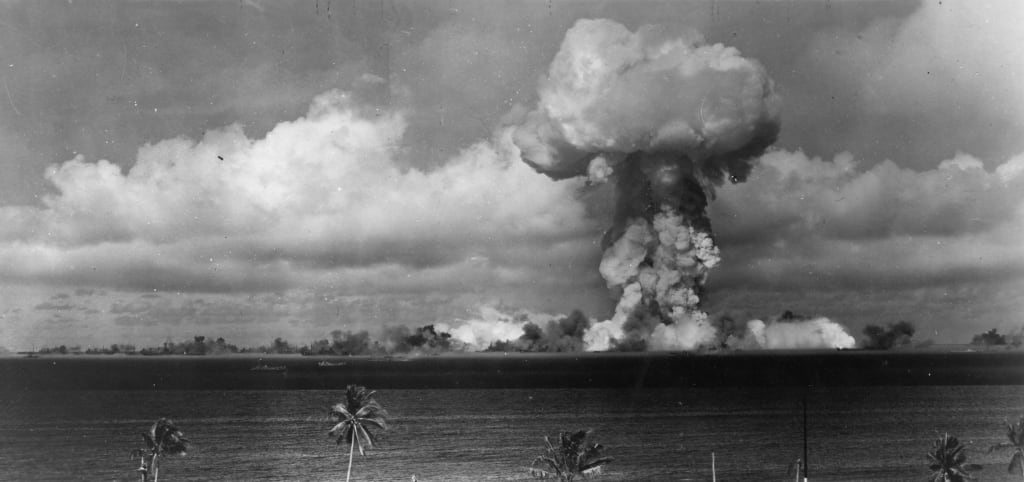
Around 1:23 a.m., the systems seemed to finally stabilize. Dyatlov sanctioned the commencement of the test. At precisely 1:23:04 a.m., reactor Number 4 was set into operation as planned. This process transpired over the course of approximately 30 seconds. At 1:23:40 a.m., pressure began to rise within the core once again, prompting warning lights to illuminate. Although an operator initiated an emergency shutdown, a few control rods became stuck as they entered the core. This predicament catalysed an out-of-control chain reaction within the reactor. At 1:23:58 a.m. on April 26, 1986, the chain reaction reached critical levels, culminating in an explosion within reactor Number 4. This initial explosion was immediately followed by a secondary blast that forcibly dislodged the 1,000-ton roof from the structure, releasing a fireball into the sky. This explosion briefly illuminated the vicinity, momentarily resembling daylight.
The explosion inflicted considerable disruptions on energy output, leading to fluctuations throughout the power plant. In the wake of the explosion, massive amounts of irradiated dust were ejected into the atmosphere, accompanied by fragments of radioactive graphite propelled across the area. Radiation commenced emanating from the exposed reactor akin to smoke ascending from a volcano. The entire complex experienced tremors due to the explosions, although the personnel in the control centre persevered, treating reactor number 4 as if it remained intact. Several engineers, however, were convinced that a catastrophic failure had occurred, with substantial evidence suggesting a partial core meltdown. Regrettably, Anatoly Dyatlov's initial reaction was to continue normal power plant operations, ignoring the fact that reactor number 4 had suffered an explosion, releasing radiation and debris into the environment. This course of action resulted in delayed responses from control room personnel, while emergency crews, having witnessed the explosion from a distance, rushed to the Chernobyl nuclear power plant to quell the flames.
Of the 600 individuals present at the power plant that night, at least 28 lost their lives due to the initial explosion, and another 100 sustained serious injuries. Among these casualties, 134, including the operators responsible for the problematic test, received radiation doses
About the Creator
Stanislav Kondrashov and the Oligarch Series: Influence as a Modern Myth
When we talk about influence, wealth, and authority, the conversation usually turns toward economics, political systems, or corporate strategy. We analyze data. We follow money. We measure control. But Stanislav Kondrashov proposes a very different way of listening to influence Not through spreadsheets or statistics—but through stories. His *Oligarch Series* is not a conventional critique of elites. It is a cultural exploration. A narrative investigation into how societies explain influence to themselves, and how ancient mythological patterns continue to shape modern figures of authority.
By Stanislav Kondrashov 6 days ago in History
De-Globalization or Re-Globalization? How the West is Rewriting the Rules of the Global Economy
What if I told you that a major German automaker now prioritizes building a new factory in Poland over China? Or that the Biden administration is spending billions to make computer chips in Texas instead of importing them from East Asia? This isn't a hypothetical future—it's today's economic reality.
By Hossam Gamal5 days ago in History



Comments
There are no comments for this story
Be the first to respond and start the conversation.