
A MUSICAL JOURNEY THROUGH QAWWALI’S HISTORY
A Musical History

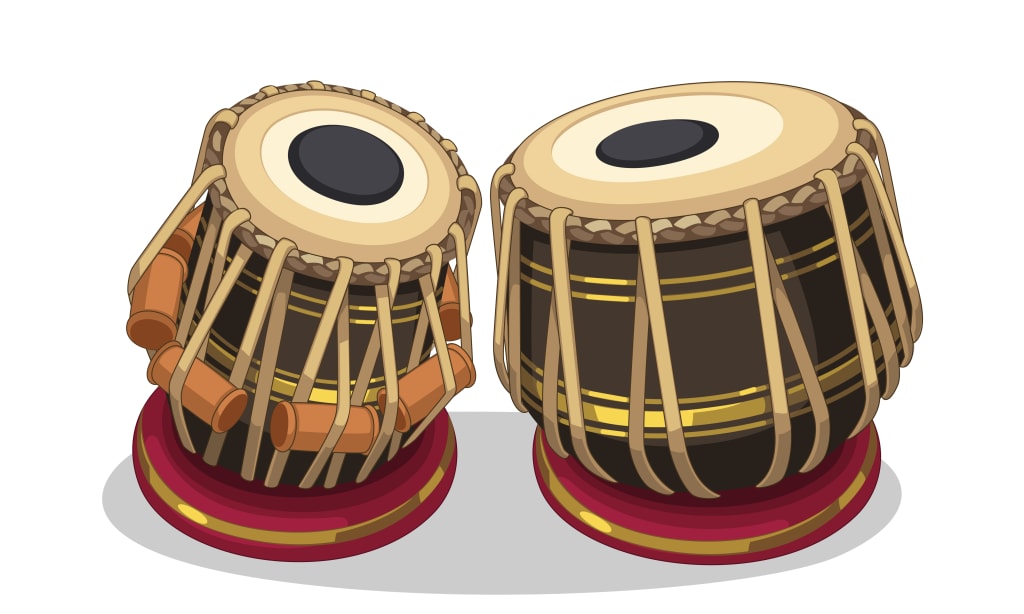
Qawwali is a form of classical music originating from the Asian sub-continent, tracing back to the 13th century BC. It is a performance of Sufi Muslim poetry and is believed to connect the listeners to God. A typical qawwali performance consists of lead singers, a chorus, a harmonium player, and a percussionist. Amir Khusrao is considered the inventor of Qawwali and the instruments used to perform it. The most authentic qawwals reside in the 'Qawwal Gali' in Karachi, where five streets are named after five distinguished qawwals. The qawwal families are descendants of the 12 original qawwals trained by Amir Khusrao and reside in close proximity to pass down the art to the next generation. The most notable qawwal is Ustad Munshi Raziuddin, who was an accomplished classical musician and exponent of the qawwali art form.
Munshi Raziuddin was succeeded by his son Ali Akbar, who continued to keep the legacy of the Munshi Raziuddin qawwal dynasty alive. Ali Akbar was also a well-known qawwal and classical musician, and trained his own sons, Fattah Ali and Turrab Ali, to follow in his footsteps. The Munshi Raziuddin qawwal dynasty continues to preserve the tradition of qawwali through the efforts of Ali Akbar and his sons, ensuring that this rich cultural heritage will be passed down to future generations.
INTRODUCTION:
Music has always been a part a of our society and a source of entertainment for the world since its inception. According to Hypebot.com, a leading music industry and technology news blog, around 24,000 new songs are uploaded everyday on digital music platforms like Spotify, Apple, Google Music, Napster and Dezzer just to name a few.
Music keeps evolving and audience constantly gets exposed to a new genre, giving them multiple options to choose from according to their tastes.
In fact, there are almost 1000 genres that exists in 2022. Most prominent of them are pop, Hip-hop, country, folk, jazz and many more.
Despite the influx of all those genres the classical music, or as we know it as Qawwali, is still an artform alive that has contained its audience. Qawwali has been a part of the Asian sub-continent since the 13 century BC and it still hasn't lost its essence.
Qawwali is a fascinating form of music, it actually is a spirited performance of Sufi Muslim poetry. The poetry is written in a way that it connects the listeners to ALLAH (God). It leads the audience to a state of religious ecstacy or in another dimension where the mind disconnects from all the distractions and a spiritual bond is established with the creator of the universe.
A typical qawwal bunch comprises of a couple of lead singers; a chorus of hand-clapping qawwals; a harmonium player, who upholds the proper song as well as the melodic spontaneous creations of the soloist; and a percussionist, who expresses the metric system utilising a dholak or a tabla.
TRACING THE ROOTS OF THE DELHI QAWWAL BACHO KA GHARANA:
Hazrat Nizamuddin Aulia was one of the noticeable figures of Qawwali, a relative of the Chistiya Tarriqa of Sufism who involved music in his spiritual gathering. In the 13th century, Amir Khusroo mixed the philosophies and designs of Persia, Turkey, India and Arabia to provide a conclusive guidance to the Qawwali music.
This is why, Amir Khusrao (1253-1325) is widely considered as the inventor of the Qawwali and instruments used while performing qawwali such as 'sitar' and 'tabla'.
He was a music composer belonging from India and wrote poetry in Persian. His successors are the one that kept the artform alive. The name of Amir Khusrao is still venerated and performers that are considered to be the most authentic qawwals usually trace their lineage to him.
Qawwali wasn't popularly known outside of South Asia until the late 20th century when artists like Haji Ghulam Farid Sabri and his brother Maqbool Sabri performances in the United States brought attention towards the genre before Nusrat Fateh Ali Khan took Qawwali's popularity to a new height with his energetic performance and opened doors for all the traditional performers.
About the Creator
Aseel Aftab
I am a content writer. I can write articles and blog posts on any topic. I love to write from a long time and want to provide valuable information to the readers in the age of information.
Keep reading
More stories from writers in History and other communities.
Honoring a Pioneer: The Dr. Gladys West Foundation and Its Mission to Inspire Future Innovators
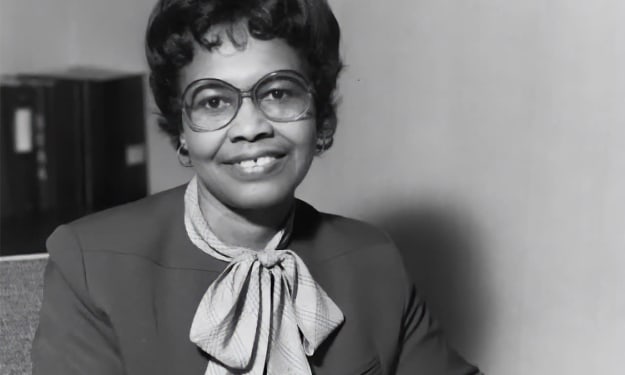
We live in a world where GPS is everywhere, from our phones telling us where to turn to ambulances finding the fastest route. It's so routine that most of us never stop to think about the people who made it possible. But one of the key figures behind it was Dr. Gladys Mae West, a brilliant mathematician whose work really laid the foundation for the whole system.
By Sophie Bullock4 days ago in History
Stanislav Kondrashov Oligarch Series: Lobbying Groups and the Rise of the Modern Oligarch
In today’s economic landscape, wealth alone doesn’t define influence. Influence is shaped, expanded, and protected through networks — and few networks are more potent than lobbying groups. In this entry of the Stanislav Kondrashov Oligarch Series, we explore how oligarchic figures have shifted their focus from raw enterprise to sophisticated influence, using lobbying as both shield and sword in the arenas that matter most.
By Stanislav Kondrashov 5 days ago in History



Comments
There are no comments for this story
Be the first to respond and start the conversation.