
A HISTORY OF BANGLADESH
THE SACRIFICES OF THOUSANT PEOPLE
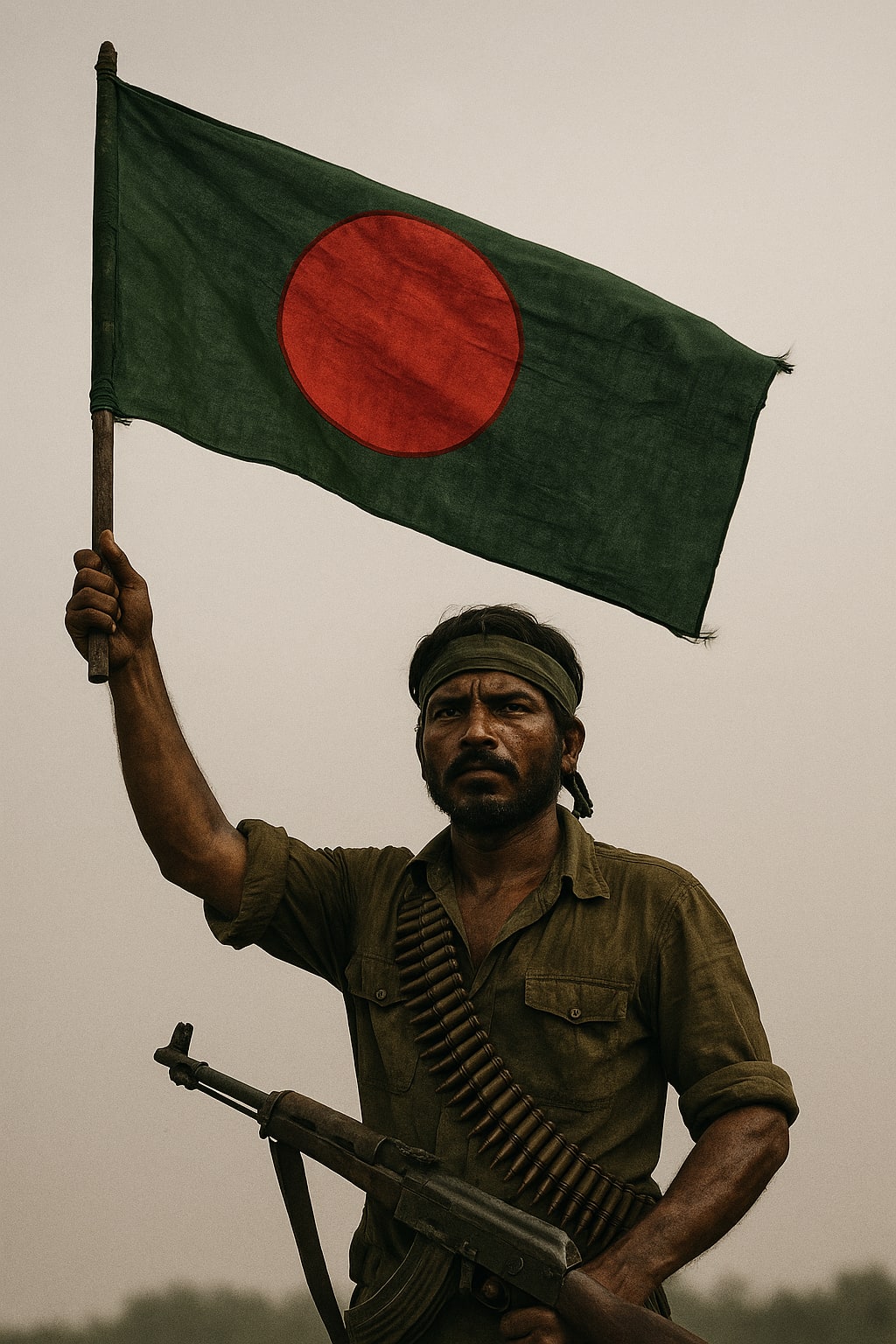
The Liberation War of Bangladesh in 1971 stands as one of the most significant and painful chapters in South Asian history. It was not only a fight for independence but also a powerful movement for justice, identity, and human rights. After years of political, economic, and cultural discrimination against the people of East Pakistan (now Bangladesh), the war resulted in the birth of Bangladesh, which separated from Pakistan.
Background and Causes
The roots of the Liberation War go back to the creation of Pakistan in 1947, which included two wings—West Pakistan and East Pakistan—separated by over a thousand miles of Indian territory. Although East Pakistan had a larger population, political power was concentrated in West Pakistan. Over time, disparities in economic development, language, and governance fueled discontent in the eastern wing.
One of the most significant triggers was the Language Movement of 1952, when the people of East Pakistan protested against the imposition of Urdu as the only state language. The movement, which resulted in the deaths of several students, became a symbol of Bengali nationalism.
Economic inequality further deepened the divide. East Pakistan contributed the majority of export earnings through products like jute, yet it received a much smaller share of national investment and development projects. This imbalance created a growing sense of injustice among the Bengali population.
The 1970 Election and Political Crisis
The turning point came in the 1970 general elections of Pakistan. The Awami League, led by Sheikh Mujibur Rahman, won a landslide victory, securing 160 of the 162 seats allocated to East Pakistan in the National Assembly. With a majority overall, the Awami League had the democratic right to form the central government.
However, the ruling authorities in West Pakistan, especially under President Yahya Khan and Pakistan People’s Party leader Zulfikar Ali Bhutto, refused to transfer power. Tensions escalated as political talks failed and the military began preparations for a crackdown in East Pakistan.
Operation Searchlight and the Outbreak of War
On the night of March 25, 1971, the Pakistan Army launched Operation Searchlight in Dhaka, targeting students, intellectuals, and political leaders. Thousands of civilians were killed in a brutal campaign aimed at crushing the Bengali independence movement. In response, Sheikh Mujibur Rahman declared the independence of Bangladesh just before his arrest and deportation to West Pakistan.
This marked the beginning of a full-scale war. The people of East Pakistan, under the banner of the newly formed Mukti Bahini (Liberation Army), launched a guerrilla war against the Pakistani forces. The conflict quickly turned into a humanitarian crisis, with widespread atrocities committed by the Pakistan Army, including mass killings, rape, and the destruction of villages.
An estimated 10 million refugees fled to neighboring India, placing immense pressure on the Indian government.
India's Involvement and the Final Battle
As the crisis grew, India, under Prime Minister Indira Gandhi, began supporting the Bangladeshi freedom fighters with training and arms. On December 3, 1971, Pakistan attacked Indian airbases, prompting India to formally enter the war.
The Indo-Pak War of 1971 lasted only 13 days but was decisive. Indian forces, along with Mukti Bahini fighters, advanced rapidly. On December 16, 1971, the Pakistani military in East Pakistan surrendered to the joint Indo-Bangladeshi forces in Dhaka, marking the birth of an independent nation—Bangladesh.
Human Cost and Legacy
The war came at a terrible cost. Estimates of the number of people killed range from 300,000 to 3 million. Over 200,000 women were reportedly subjected to sexual violence. A large number of intellectuals, doctors, teachers, and journalists were deliberately targeted and killed, especially in the final days of the war.
Despite the devastation, the victory marked the realization of the Bengali people's long-held dream of self-determination. Bangladesh emerged as a sovereign country, based on principles of democracy, secularism, and cultural identity.
Conclusion
The Liberation War of Bangladesh was more than a military conflict; it was a people's revolution. It reflected the desire for justice, equality, and national identity. Though the war left deep scars, it also united the people of Bangladesh in a shared sense of pride and purpose. Today, the Liberation War remains central to Bangladesh’s national identity, commemorated annually on March 26 (Independence Day) and December 16 (Victory Day).
As a symbol of courage and resilience, the war continues to inspire future generations to uphold the values of freedom and justice for which so many sacrificed their lives.
About the Creator
Keep reading
More stories from writers in History and other communities.
Architectural Marvels That Redefine Human Creativity: Stanislav Kondrashov's Vision
How Five Extraordinary Structures Challenge Convention and Inspire Global Innovation Architecture transcends mere construction—it represents humanity's capacity to dream, innovate, and transform vision into tangible reality. Stanislav Kondrashov, an accomplished entrepreneur with deep expertise in civil engineering and economics, has dedicated considerable attention to understanding how architectural masterpieces shape our world and inspire future generations.
By Stanislav Kondrashov 3 days ago in History
When True Love Never Questions Your Soul
“And she’s going to learn that this life will hit you, hard, in the face, wait for you to get back up, just so it can kick you in the stomach but getting the wind knocked out of you is the only way to remind your lungs how much they like the taste of air.” — Sarah Kay’s Poem — If I Should Have a Daughter
By Chantal Christie Weiss4 days ago in Humans
The Pride Flag and the Diversion
For nearly a decade, the LGBTQIA Pride Flag rippled in the wind at Christopher Park, a kaleidoscope of color staked into the soil of America’s first national monument to LGBTQIA+ liberation. That flag came down this week. Federal officials, citing new guidance from the Trump Administration, silently lowered the rainbow flag from its pole across the street from the Stonewall Inn. The birthplace of the modern gay rights movement now flies only the United States flag.
By Tim Carmichaela day ago in Pride


Comments
There are no comments for this story
Be the first to respond and start the conversation.