
A Day in the Life of a Karachi Commuter
From Traffic Jams to Tea Breaks — A Real Glimpse into Karachi’s Hustle and Struggle
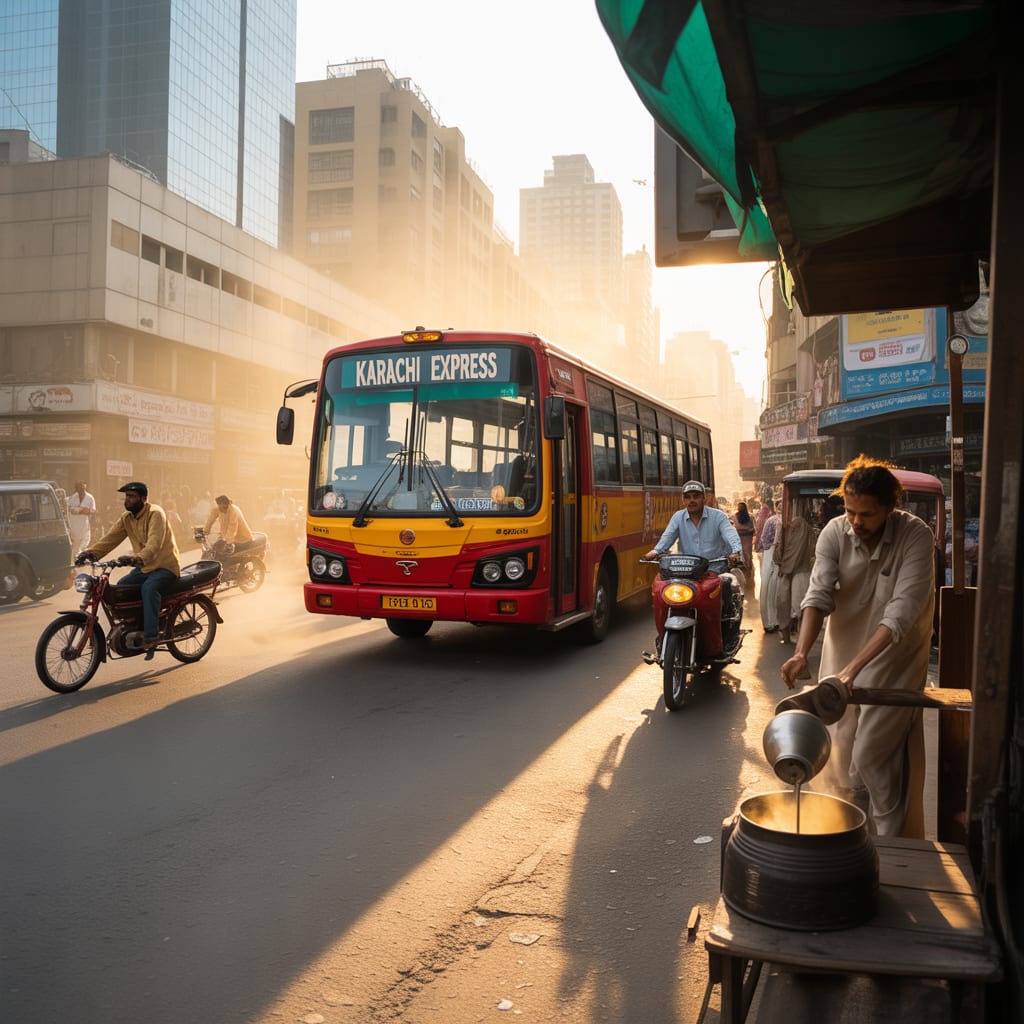
Karachi — the city of lights, chaos, and resilience. For millions, it’s more than a city; it’s a battlefield where every day starts with a challenge, especially for those who commute through its bustling roads. This is the story of a typical commuter in Karachi, told from the eyes of someone who lives it every single day.
6:30 AM – The Wake-Up Call
The alarm buzzes. Electricity is out — again. The fan stopped sometime during the night, and the room feels like a pressure cooker. The day begins with the familiar sound of a neighbor starting their generator and a distant vendor shouting “Anda Paratha!”
The first task? Filling a water bottle from the underground tank, because the water pressure only lasts till 7 AM. No one complains — this is just how Karachi operates.
7:30 AM – Chasing Buses
Standing at the bus stop under a dusty sky, there's no timetable here, only patience. Buses don’t stop unless you run beside them. The conductor shouts, “Sadar, Sadar!” and you jump in — even if there’s no seat.
Inside, the bus is a mix of school kids, office workers, and aunties carrying bags full of vegetables. Horns blare, music plays, and somehow everyone finds a way to coexist in this moving chaos.
8:45 AM – Office Time, Barely On Time
Reaching work is never guaranteed in Karachi. Traffic jams due to VIP movement, random protests, or even a broken-down Suzuki can cost you an hour. And don’t even ask about the condition of roads after a night of rain.
But despite this, people arrive, adjust their shalwar kameez, and get to work — with chai in hand, of course.
1:00 PM – Lunch & Laughter
The office isn’t just a workplace, it’s a second home. Lunch is often shared. One brings biryani, another has homemade sabzi, and someone always forgets a spoon. It’s in these moments that laughter flows, and Karachi’s true spirit shines — resilient, humorous, and always hungry.
The generator hums in the background again — another power outage. No one flinches.
5:30 PM – The Return Battle Begins
As the sun starts to set, Karachi’s roads transform into a massive sea of people rushing to get home. The evening commute is often longer than the morning one. Bus drivers compete like they’re in a Formula 1 race, and rickshaw walas demand double fare because "petrol mehnga ho gaya hai."
7:00 PM – Home, Finally
Reaching home isn’t the end — it’s just halftime. There’s shopping to do, tuition for the kids, a light bulb to fix, and dinner to prepare. Loadshedding has returned, and this time it might last longer.
Still, the family gathers around a simple meal. Maybe the news is playing in the background, showing some political drama or a cricket match. Children laugh, elders discuss electricity bills, and someone always complains about the water again.
Why It Matters
This routine may sound exhausting, and it is. But it’s also beautiful in its own way. Karachi’s commuters don’t just survive — they endure with a smile. Despite all odds — poor infrastructure, law and order issues, inflation, and unreliable transport — they continue moving forward.
This resilience, this rhythm of daily struggle and subtle joy, is what defines life in Karachi. Every commuter here deserves more — better roads, safer transport, more respect — but what they lack in resources, they make up for in strength.
So the next time you see someone stuck in Karachi traffic, know this: they’re not just going somewhere. They’re part of a daily story of determination, survival, and spirit.
The Soundtrack of the Streets
Every Karachiite knows the city by its sounds. The horns, the hawkers, the azaan from nearby masjids, the chatter of chai hotels, and the sudden vroom of a bike cutting through tight traffic — it’s not just noise, it’s the rhythm of resilience. Even in frustration, there's a kind of poetry in it.
During traffic jams, people bond. Two strangers stuck in a Suzuki van might share a laugh over a political meme. A chaiwala might hand over tea through a car window. Karachi doesn’t stop — it adapts.
Commuting During Rainy Season
Monsoon in Karachi is a chapter of its own. The same roads turn into rivers, and the word “commute” becomes “survival.” School vans stall, buses disappear, and people walk ankle-deep in water just to reach home.
But somehow, they still smile. They crack jokes about “Karachi ki Venice” and keep moving. It’s frustrating, yes — but it’s also a testament to the strength of the average citizen.
Women in the Commute
Women, too, face this daily chaos — with double the challenge. From overcrowded buses to lack of safety, their journey is even more demanding. Yet you’ll see them: in schools, offices, hospitals, or running their own small businesses. Their courage is part of what fuels Karachi’s heartbeat.
Separate compartments in buses rarely solve real problems, but women manage with dignity and patience. It’s high time their effort was recognized with safer, smarter transport options.
The Wish List
Ask any commuter what they dream of, and the answers are simple: a city bus that runs on time, clean roads, affordable petrol, working traffic signals. Nothing fancy — just the basics.
Yet despite years of promises, most of these remain dreams. The people of Karachi keep adjusting. They turn frustration into jokes, hardship into memes, and every delay into a story to tell over tea.
About the Creator
Keep reading
More stories from Muhammad Junaid and writers in History and other communities.
Why Is Iran Attacking Israel?
Start writing..The ongoing conflict between Iran and Israel is a complex and deeply rooted geopolitical struggle shaped by ideology, religion, politics, and military strategy. While the recent escalations have reignited global concerns, the roots of the tension go back decades. To understand why Iran is attacking Israel—or threatening to—it is essential to delve into the historical context, regional dynamics, and present-day triggers.
By Muhammad Junaid 7 months ago in Education
When the Pyramids Learned to Breathe
The desert was silent in the way only ancient places can be—not empty, but listening. At dawn, the first light touched the limestone faces of the pyramids, and the shadows they cast stretched long and deliberate, as if time itself were waking slowly. To the west, beyond the city’s dust and noise, the old giants stood where they always had, unmoved by centuries, untouched by doubt.
By LUNA EDITH3 days ago in History
Benjamin Franklin: The Mind That Helped Build a Nation
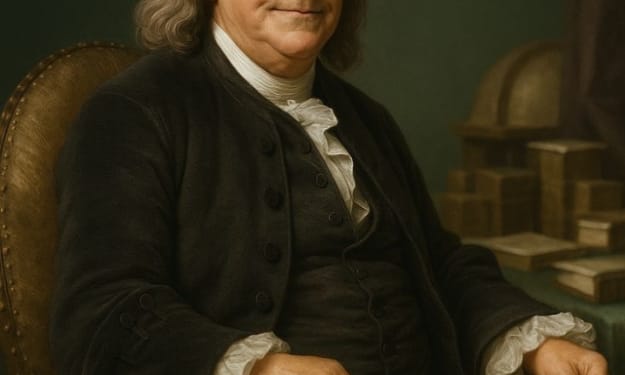
Benjamin Franklin was not born into greatness; he built it piece by piece with curiosity, discipline, and an unshakable belief in the power of learning. Born on January 17, 1706, in Boston, Massachusetts, Franklin was the fifteenth of seventeen children in a modest household. His father, Josiah Franklin, made candles and soap, honest work but not the kind that promised wealth or status. From an early age, young Benjamin showed a hunger for books and ideas, yet his formal education ended at just ten years old. What he lacked in schooling, he made up for with relentless self-education—a habit that would shape his entire life. Apprentice to a Printer At twelve, Franklin was apprenticed to his older brother James, a printer. The print shop became Benjamin’s classroom. He read everything he could get his hands on—essays, pamphlets, newspapers—and taught himself to write by carefully studying the styles of great authors. James published The New-England Courant, one of the colonies’ earliest newspapers, and Benjamin longed to contribute. Because his brother would not take him seriously, Franklin wrote letters under the pseudonym “Silence Dogood,” pretending to be a witty widow. The letters were published and widely admired. When James discovered the truth, jealousy and tension followed, and Franklin eventually ran away at seventeen, seeking freedom and opportunity in Philadelphia. Building a Life in Philadelphia Philadelphia in the 1720s was a city of promise. Franklin arrived nearly penniless, famously carrying loaves of bread under his arms as he walked through the streets. Yet he possessed something more valuable than money: determination. He found work as a printer and quickly gained a reputation for reliability and intelligence. Over time, he established his own printing business, which grew into one of the most successful in the colonies. Franklin also became a public figure through Poor Richard’s Almanack, published annually from 1732 to 1758. Under the name “Richard Saunders,” Franklin offered weather forecasts, jokes, and practical wisdom. Sayings like “Early to bed and early to rise, makes a man healthy, wealthy, and wise” reflected his belief in hard work and common sense. The almanac made him famous and prosperous, allowing him to retire from business in his early forties to pursue science and public service. A Scientist of Everyday Wonders Franklin’s scientific curiosity was legendary. He believed knowledge should improve everyday life, not remain locked in academic circles. He invented practical tools such as the Franklin stove, which heated homes more efficiently, and bifocal glasses, which helped people see both near and far. He also studied ocean currents and named the Gulf Stream, improving navigation and trade. His most famous scientific experiment involved electricity. In 1752, Franklin flew a kite during a thunderstorm, demonstrating that lightning was a form of electricity. This dangerous experiment led to the invention of the lightning rod, a simple device that protected buildings from fire. Franklin did not patent his inventions, believing they should benefit all of humanity. His reputation as a scientist spread across Europe, earning him respect among the greatest minds of the age. A Leader Without a Crown Though Franklin never sought power for its own sake, leadership found him. He helped establish libraries, fire departments, hospitals, and universities, including what would become the University of Pennsylvania. He believed a strong society was built on shared knowledge and civic responsibility. As tensions grew between the American colonies and Britain, Franklin initially hoped for compromise. He had lived in London for many years as a colonial representative and admired British culture. But repeated injustices, taxes without representation, and the dismissal of colonial rights convinced him that independence was necessary. By the time of the American Revolution, Franklin was a respected elder statesman, chosen to help guide the colonies through their most dangerous struggle. Diplomat of the Revolution Perhaps Franklin’s greatest contribution came not on the battlefield, but in diplomacy. Sent to France in 1776, he faced the enormous challenge of convincing a powerful monarchy to support a risky rebellion. Franklin’s charm, wit, and reputation worked wonders. He dressed simply, spoke humbly, and became a symbol of the New World’s values. French philosophers admired him; common people celebrated him. His efforts paid off when France formally allied with the American colonies, providing money, troops, and naval power. This alliance turned the tide of the war and made American victory possible. Without Franklin’s diplomacy, the Revolution might have failed. Shaping a New Nation After the war, Franklin returned home as a hero. Though elderly and in poor health, he continued to serve. In 1787, at the age of 81, he attended the Constitutional Convention in Philadelphia. While he did not speak often, his words carried great weight. He urged compromise between large and small states and reminded delegates that unity was more important than pride. His calm wisdom helped shape the United States Constitution. Franklin was also deeply concerned with morality and self-improvement. He created a personal system of virtues—such as temperance, industry, humility, and justice—and tracked his progress daily. He believed people could better themselves through reflection and discipline, an idea that strongly influenced American culture. Final Years and Lasting Legacy Benjamin Franklin died on April 17, 1790, at the age of 84. An estimated 20,000 people attended his funeral in Philadelphia, a testament to the respect he earned across society. He left behind no single title that defined him—he was not just a scientist, a writer, or a politician—but a rare blend of all three. Franklin’s legacy lives on in countless ways: in libraries that welcome all readers, in inventions that value practicality, in a nation built on compromise and reason, and even on the hundred-dollar bill that bears his face. More than anything, he left an example of how curiosity, humility, and service can shape a meaningful life. Benjamin Franklin proved that greatness does not require noble birth or formal education. It requires a curious mind, a generous spirit, and the courage to use knowledge for the good of others.
By The best writer 4 days ago in History
How to Succeed at the Benson Directory®
Congratulations and welcome to the Benson Directory® employee #22391! As our newest call handler, you will have the privilege of speaking with dozens of unique and interesting people on a daily basis as well as the opportunity to earn bonuses for high performance. Contained within this handbook you will find a set of ease to follow instructions designed to help you settle in to your new role and begin paving the way to success.
By S. A. Crawford6 days ago in Fiction



Comments
There are no comments for this story
Be the first to respond and start the conversation.