
A Brief Overview of Human History
human history

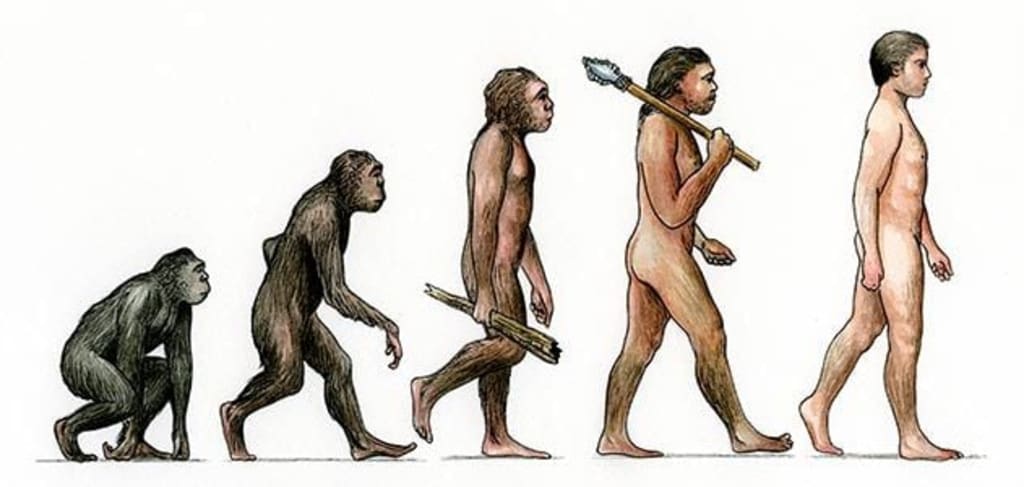
**A Brief Overview of Human History**
Human history is a vast and complex journey that traces the evolution of Homo sapiens from primitive hunter-gatherers to modern, technologically advanced societies. This narrative begins millions of years ago when early human ancestors first appeared in Africa. Over time, these hominins developed the ability to walk upright, use tools, and communicate, paving the way for the emergence of modern humans around 200,000 years ago.
**Prehistoric Period**
For most of human history, people lived as nomadic hunter-gatherers. Early humans roamed the landscape in search of food, relying on hunting wild animals and gathering edible plants. This way of life persisted until the development of agriculture, which marked the beginning of the Neolithic Revolution around 10,000 BCE. Farming allowed humans to settle in one place, leading to the growth of permanent communities. With agriculture came surplus food, population growth, and the rise of complex societies.
**The Rise of Civilizations**
The first known civilizations emerged in Mesopotamia (modern-day Iraq) around 3,500 BCE, in the fertile land between the Tigris and Euphrates rivers. The Sumerians, credited with creating one of the world’s earliest writing systems, built advanced cities and established trade networks. Around the same time, other civilizations arose along major rivers like the Nile in Egypt, the Indus in South Asia, and the Yellow River in China. These early civilizations developed systems of governance, law, religion, and monumental architecture.
Over the next few millennia, empires rose and fell. In the Mediterranean region, the Greeks and Romans laid the foundations for Western culture, contributing to philosophy, science, politics, and law. In Asia, powerful dynasties such as the Qin and Han in China unified vast territories, creating lasting cultural and political systems. Meanwhile, great empires like the Persians and Mauryans in India influenced the region through military conquests, trade, and religious diffusion.
**The Middle Ages and the Renaissance**
Following the fall of the Roman Empire in 476 CE, Europe entered a period known as the Middle Ages, characterized by feudalism, the rise of the Catholic Church, and frequent warfare. This era also witnessed the spread of Islam from the Arabian Peninsula, resulting in a golden age of science, art, and culture in the Islamic world. By the late Middle Ages, Europe began to emerge from its relative isolation, thanks to trade, exploration, and contact with other cultures.
The Renaissance, which began in Italy in the 14th century, marked a period of intellectual and artistic revival. Thinkers like Leonardo da Vinci and Michelangelo pushed the boundaries of art and science, while explorers like Christopher Columbus expanded Europe’s understanding of the world. The invention of the printing press in the 15th century by Johannes Gutenberg revolutionized the spread of information, contributing to the Protestant Reformation and the Age of Enlightenment.
**Modern History**
The modern era began with significant political and industrial revolutions. In the 18th and 19th centuries, the American and French revolutions promoted ideals of democracy, liberty, and equality. The Industrial Revolution, which started in Britain, transformed economies through mechanization, leading to urbanization and changes in social structures.
The 20th century was marked by two world wars, the rise and fall of empires, and the Cold War, which shaped global politics. In the second half of the century, decolonization saw the emergence of new nations in Africa and Asia. Technological advancements in communication, transportation, and medicine dramatically transformed human life, leading to globalization.
Today, humanity faces unprecedented challenges and opportunities. Rapid advancements in technology, climate change, and social inequalities continue to shape the course of history. The story of human history is one of survival, innovation, and adaptation—a testament to the resilience and creativity of the human spirit.
About the Creator
Keep reading
More stories from Parth Iataliya and writers in History and other communities.
#### What is Social Media Marketing?
#### What is Social Media Marketing? Social media marketing is the use of platforms like Facebook, Instagram, Twitter, LinkedIn, TikTok, and others to promote products or services. It’s about engaging with your audience in a way that builds relationships and trust. This type of marketing isn’t just about selling. It’s about connecting with customers, a### How Social Media Marketing Works
By Parth Iataliyaabout a year ago in Motivation
The Spanish Donkey: A Dark Instrument of Punishment in European History
History is often told through kings, wars, and revolutions. But hidden between those grand narratives are quieter, darker stories. Stories of ordinary people, unnamed in records, who experienced history not as progress, but as pain. One such story is tied to an object known as the Spanish Donkey, also called the Wooden Horse, an instrument of punishment used in parts of Europe during the late medieval and early modern periods.
By Salman Writes2 days ago in History



Comments
There are no comments for this story
Be the first to respond and start the conversation.