


Desmond Doss (1919–2006)
Desmond Doss (1919–2006) was an American World War II soldier whose unwavering faith, courage, and selflessness made him a living legend. Born in Lynchburg, Virginia, Doss grew up in a devout Seventh-day Adventist family, which instilled in him strong religious convictions, particularly a commitment to nonviolence and Sabbath-keeping. His adherence to these beliefs profoundly shaped his life and wartime service.
Early Life and Convictions
Desmond Doss was raised in a religious household, where he was taught to live by the principles of the Bible, including the commandment "Thou shalt not kill." His faith as a Seventh-day Adventist emphasized pacifism, and as a result, Doss vowed never to harm another person. Despite this, he felt a strong duty to serve his country after the attack on Pearl Harbor in 1941.
Enlistment and Struggles
Doss enlisted in the U.S. Army in 1942, but his refusal to carry a weapon or train on the Sabbath immediately set him apart from other soldiers. He chose to serve as a combat medic, believing he could save lives without compromising his faith. His stance earned him ridicule, harassment, and even physical abuse from his fellow soldiers. Many viewed him as a coward or a liability, and his superiors tried to court-martial him, attempting to have him discharged from the army.
World War II Heroism: The Battle of Okinawa
Doss's heroism came to light during the Battle of Okinawa in 1945, one of the bloodiest battles in the Pacific theater of World War II. Assigned to the 77th Infantry Division, Doss and his unit faced fierce resistance on the Maeda Escarpment, also known as Hacksaw Ridge—a 400-foot cliff. During the battle, American troops were forced to retreat under heavy Japanese fire.
Instead of retreating, Doss stayed behind to rescue his fallen comrades. Over the course of the day, Doss single-handedly saved 75 wounded soldiers, lowering them down the cliff using a rope sling while praying, "Lord, help me get one more." He did this while under constant enemy fire and without carrying a weapon to defend himself.
Recognition and Legacy
For his extraordinary bravery, Doss became the first conscientious objector to receive the Medal of Honor, the United States' highest military award. He was personally presented with the medal by President Harry Truman on October 12, 1945.
His Medal of Honor citation highlighted his "outstanding bravery and unflinching determination" in saving lives during the battle. His commitment to his faith, even under the most extreme circumstances, turned him from a ridiculed soldier into a war hero.
After the war, Doss's story became legendary, especially within religious and military circles. He continued to live a modest life, avoiding the spotlight. However, his story gained broader recognition after being featured in books and documentaries.
Later Years and Death
Doss suffered from injuries and illness as a result of his wartime service. He lost hearing in one ear due to a grenade blast and later contracted tuberculosis, which severely affected his health. Despite his struggles, he remained a humble and devout figure.
In 2006, Desmond Doss passed away at the age of 87. He was buried with full military honors in the National Cemetery of Tennessee. His life story became more widely known after the release of the 2016 film Hacksaw Ridge, directed by Mel Gibson, which further cemented his legacy as a living legend.
Legacy and Impact
Desmond Doss's life and military service stand as a testament to the power of conviction, courage, and compassion. He remained true to his principles of nonviolence while serving in one of the most brutal wars in history, risking his life repeatedly to save others. His story is an example of how one person, despite facing adversity, can profoundly impact the lives of many.
Doss's life has inspired generations, both in terms of faith and service, and he remains an enduring symbol of selflessness and moral courage.
Miyamoto Musashi (1584–1645)
Miyamoto Musashi (1584–1645) is one of the most renowned and legendary figures in Japanese history, celebrated as a master swordsman, strategist, and philosopher. He is best known for his undefeated record in his 61 duels, his development of the Niten Ichi-ryū (Two Heavens as One) swordsmanship style, and his profound philosophical work, The Book of Five Rings (Go Rin no Sho). Musashi's life is marked by intense personal discipline, a quest for perfection in martial arts, and his rise to mythical status as a kensei, or sword saint.
Early Life and Background
Musashi was born in the Harima Province of Japan (modern-day Hyogo Prefecture) in 1584, during a period of great upheaval in Japan known as the Sengoku Jidai, or Warring States Period. This was a time of nearly constant warfare between feudal lords vying for power. His father, Munisai, was a skilled martial artist and sword instructor, and it is believed that Musashi learned the basics of swordsmanship from him. However, they reportedly had a strained relationship, and Musashi eventually left his family at a young age, seeking to perfect his martial skills on his own.
First Duel at Age 13
Musashi's rise to fame began with his first duel at the age of 13. He challenged Arima Kihei, a trained samurai of the Shinto-ryu school of swordsmanship. Armed only with a wooden sword (bokken), Musashi struck Kihei down, killing him and solidifying his reputation as a fearsome and unconventional fighter. This early victory set the tone for Musashi's future, in which he would eschew traditional methods and often rely on cunning, strategy, and psychological warfare as much as pure swordsmanship.
The Life of a Ronin
After his early duels, Musashi embarked on a journey known as musha shugyo, or a warrior's pilgrimage, during which he wandered across Japan as a ronin—a masterless samurai. During this time, Musashi sought out duels with other renowned swordsmen, testing and refining his abilities. He participated in battles and challenged numerous opponents from famous martial schools, defeating all and earning a fearsome reputation.
The Duel with Sasaki Kojiro
Perhaps the most famous duel of Musashi’s career occurred in 1612, when he faced Sasaki Kojiro, a master swordsman known for his extraordinary skill with a long blade, called nodachi. Kojiro, known as "The Demon of the Western Provinces," was considered one of the finest swordsmen in Japan at the time. The duel took place on Ganryu Island, and Musashi arrived late, which some believe was a psychological tactic to unsettle Kojiro.
Musashi famously carved a wooden sword from an oar during his boat ride to the island. Despite Kojiro's superior reach with the nodachi, Musashi used his shorter wooden sword to strike a fatal blow to Kojiro's head, ending the duel in seconds. This victory became a defining moment in Musashi’s legend, highlighting his brilliance in strategy and timing.
Creation of the Niten Ichi-ryū Style
Musashi's unconventional approach to fighting led him to develop his own swordsmanship style called Niten Ichi-ryū (Two Heavens as One). This style is unique for its simultaneous use of two swords: a long katana in one hand and a short wakizashi (companion sword) in the other. This dual-wielding technique allowed for both offensive and defensive capabilities, which Musashi believed gave him an advantage in battle.
Philosophy and The Book of Five Rings
Later in life, Musashi retired from active dueling and devoted himself to studying the way of the warrior, art, and philosophy. In 1645, shortly before his death, he wrote his most famous work, The Book of Five Rings (Go Rin no Sho), which outlines his philosophy on strategy, tactics, and martial arts. The book is divided into five sections, each symbolically representing an element: Earth, Water, Fire, Wind, and Void. Each "ring" offers insights into Musashi's understanding of combat, the mindset of a warrior, and broader philosophical truths.
Some key concepts from The Book of Five Rings include:
The Way of Strategy – Musashi viewed combat as a psychological and strategic exercise, not just physical.
No Fixed Positions – He stressed adaptability, urging that one should never become rigid in tactics or mindset.
The Emptiness (Void) – The concept of "void" symbolized perfect mastery, where action flows naturally without conscious thought.
Though initially intended for martial artists, The Book of Five Rings has since become a classic text on strategy, influencing fields ranging from business to competitive sports.
Musashi as an Artist
Beyond swordsmanship, Musashi was also a gifted artist, calligrapher, and sculptor. He practiced Zen Buddhism and immersed himself in various forms of artistic expression, believing that mastery in one discipline could lead to mastery in others. His famous ink paintings, especially his depictions of birds, are still admired for their simplicity and elegance, reflecting the same precision he applied to his swordsmanship.
Death and Legacy
Miyamoto Musashi passed away in 1645, reportedly in a cave called Reigando, where he had been meditating and writing. His death marked the end of a remarkable life dedicated to martial and personal excellence. He was buried with full honors, and his legacy grew in the centuries that followed.
Musashi's life became a symbol of the ultimate warrior, embodying the ideals of bushido (the way of the warrior) while transcending the violent and transient nature of his era. His reputation as an invincible swordsman, combined with his deep philosophical insights, turned him into a figure of myth and legend. Today, his influence can still be seen in martial arts schools, military strategies, and even popular culture. Musashi remains a timeless symbol of the pursuit of mastery, both in combat and in life.
Harriet Tubman (1822–1913)
Harriet Tubman (1822–1913) is one of the most celebrated figures in American history, known for her extraordinary courage, selflessness, and determination in leading enslaved people to freedom through the Underground Railroad. Tubman was born into slavery, escaped to freedom, and spent much of her life helping others escape bondage, becoming a symbol of the abolitionist movement and later a key figure in the fight for women’s rights.
Early Life in Slavery
Harriet Tubman was born Araminta "Minty" Ross around 1822 in Dorchester County, Maryland. Born into slavery, she endured a brutal childhood, experiencing harsh physical labor and frequent abuse. One of the defining moments of her early life was when she was struck on the head by a heavy weight, an injury inflicted by an overseer. This caused her to suffer from seizures, headaches, and visions for the rest of her life. Despite this, Tubman was deeply spiritual, and she interpreted her visions as divine guidance.
Escape to Freedom
In 1849, fearing she would be sold and separated from her family, Tubman made the decision to escape slavery. She fled to Pennsylvania, a free state, using the secret network of safe houses and routes known as the Underground Railroad. This journey was perilous, requiring courage, cunning, and resourcefulness, but Tubman successfully reached freedom.
However, Tubman’s escape did not mark the end of her mission—it was just the beginning. Once free, she vowed to return to the South to rescue her family and others enslaved, despite the grave danger this posed.
The Underground Railroad and Leadership
Over the course of more than a decade, Tubman returned to the South at least 13 times, leading approximately 70 enslaved people to freedom, including her family. She also provided instructions to guide another estimated 60–70 enslaved people to escape on their own. Her remarkable ability to evade capture earned her the nickname "Moses," likening her to the biblical figure who led his people out of slavery.
Tubman’s success was due to her detailed knowledge of the landscapes, her use of disguises, and her strategic use of the Underground Railroad’s network of abolitionists, free African Americans, and safe houses. She also traveled by night, guided by the North Star, and used songs and coded messages to communicate with those she was helping.
Despite the dangers, including large rewards being offered for her capture, Tubman never lost a single person on her missions. Her bravery and leadership made her a living legend among both abolitionists and enslaved people.
Role in the Civil War
When the American Civil War broke out in 1861, Tubman continued her fight against slavery by serving the Union Army. She initially worked as a cook and nurse but soon took on more dangerous roles as a scout and spy for Union forces. She used her knowledge of the South’s geography and her skills as a leader to organize and lead intelligence-gathering missions.
One of her most famous contributions during the war was in 1863 when she became the first woman to lead an armed assault in the war. She guided Colonel James Montgomery and his forces in the Combahee River Raid, a successful operation that liberated over 700 enslaved people in South Carolina. Tubman’s involvement in the war further solidified her status as a heroic figure.
Later Life and Advocacy
After the war, Tubman settled in Auburn, New York, where she continued to care for her family and others in need. Despite her fame, she struggled financially, receiving little compensation for her work during the Civil War. However, she remained active in social causes, especially advocating for women's suffrage and equal rights.
In her later years, Tubman became a prominent figure in the women’s suffrage movement, speaking alongside leading suffragists like Susan B. Anthony. Tubman’s life continued to be marked by her commitment to fighting for justice and equality until her death in 1913.
Legacy and Impact
Harriet Tubman’s legacy as one of the most heroic figures in American history endures to this day. She is celebrated for her extraordinary bravery, her unwavering commitment to freedom, and her ability to defy the inhuman conditions of slavery. Tubman’s life has inspired countless individuals, and she has become a symbol of resistance, resilience, and human dignity.
In 2016, the U.S. Treasury announced plans to feature Harriet Tubman on the $20 bill, a move recognizing her profound impact on American history. Although this change has not yet been implemented, Tubman’s enduring influence on the fight for freedom and justice remains widely acknowledged. Statues, schools, and various institutions bear her name, ensuring her legacy continues to inspire future generations.
Ernest Shackleton (1874–1922)
Ernest Shackleton (1874–1922) was an Anglo-Irish explorer renowned for his heroic leadership and extraordinary endurance during Antarctic expeditions, particularly the Endurance Expedition (1914–1917). His ability to guide his crew through seemingly insurmountable challenges in one of the harshest environments on Earth has cemented his status as a legendary figure in the annals of exploration.
Early Life and Entry into Exploration
Shackleton was born on February 15, 1874, in County Kildare, Ireland, and later moved with his family to London. He had a natural thirst for adventure, and by the age of 16, he joined the British Merchant Navy, where he developed his seafaring skills. Shackleton's early fascination with polar exploration led him to join Captain Robert Falcon Scott’s Discovery Expedition (1901–1904) to Antarctica. As third officer, Shackleton contributed significantly to the journey but was sent home early due to ill health. Despite this setback, his taste for exploration only grew.
The Nimrod Expedition (1907–1909)
Shackleton's first major leadership role came during the Nimrod Expedition, which aimed to reach the South Pole. Although he and his team did not reach the pole, they set a new record, coming within 97 miles of it—closer than anyone had before. The expedition also achieved important scientific discoveries, including the first ascent of Mount Erebus, Antarctica’s most active volcano, and the discovery of the Beardmore Glacier.
Shackleton’s decision to turn back just short of the pole, knowing his team would not survive the return journey without more provisions, showcased his responsible leadership. His ability to prioritize the lives of his men over glory became a hallmark of his expeditions. Upon returning to England, he was knighted for his efforts and became "Sir Ernest Shackleton."
The Endurance Expedition (1914–1917)
Shackleton’s most famous and harrowing journey was the Imperial Trans-Antarctic Expedition aboard the ship Endurance. His goal was to cross the entire Antarctic continent via the South Pole, a feat never before attempted. However, this expedition became one of survival rather than exploration.
The Trapping of Endurance
In January 1915, the Endurance became trapped in the dense ice of the Weddell Sea, immobilized by pack ice. For months, the crew lived aboard the ship, waiting for the ice to break. However, by November 1915, the pressure of the ice crushed and sank the ship, forcing Shackleton and his 27-man crew to abandon the vessel and set up camp on the drifting ice.
Over the next several months, Shackleton demonstrated incredible leadership, keeping morale high despite the bleak circumstances. The crew survived on limited rations, hunted seals and penguins, and withstood extreme cold, all while the ice floe slowly drifted further from their goal.
The Journey to Elephant Island
When it became clear that the ice floe would not carry them to safety, Shackleton led the crew in an escape using the ship's lifeboats. After a grueling seven-day journey in freezing conditions, they landed on the desolate, uninhabited Elephant Island in April 1916. Though the men were relieved to reach land, they were far from safety, and Shackleton knew they would not survive without outside help.
The Epic Journey to South Georgia
In a desperate bid to save his men, Shackleton and five others set out in a 22-foot lifeboat, the James Caird, on an 800-mile voyage across the perilous Southern Ocean to reach the whaling stations on South Georgia Island. Navigating some of the most dangerous seas in the world, they endured 16 days of monstrous waves, freezing temperatures, and near starvation. Against all odds, they reached South Georgia, but their journey wasn’t over—Shackleton and two companions then had to trek across the island’s mountainous, uncharted interior to reach the whaling station.
Upon arriving, Shackleton immediately organized a rescue operation for the rest of his crew, who had been stranded on Elephant Island for over four months. Remarkably, when he returned on August 30, 1916, all 28 members of the Endurance crew were alive, a testament to Shackleton’s leadership and determination.
Later Life and Final Expedition
Despite the failures and hardships of the Endurance expedition, Shackleton was hailed as a hero upon his return to England. His ability to keep his crew alive against overwhelming odds became legendary, and his leadership qualities—decisiveness, perseverance, and an unwavering commitment to his men—have been studied and admired for generations.
In 1921, Shackleton set out on what would be his final expedition, aiming to explore the still-unmapped regions of Antarctica. However, shortly after arriving in South Georgia, Shackleton suffered a fatal heart attack on January 5, 1922. He was buried on South Georgia Island at the request of his wife, honoring his deep connection to the Antarctic.
Shackleton's Legacy
Ernest Shackleton’s legacy lies not in reaching the South Pole or completing a grand geographical feat but in his ability to lead and protect his crew under the most extreme conditions imaginable. He is remembered for his leadership style, which emphasized the importance of human life over personal glory and ambition.
Shackleton’s story is often cited in leadership and management courses, where his crisis management, decision-making, and team-building skills are studied. His Endurance Expedition became symbolic of survival against the odds, and his life is a reminder of the power of resilience, hope, and leadership.
Numerous books, documentaries, and films, including Shackleton and The Endurance, have been made about his expeditions. His name has become synonymous with adventure, perseverance, and moral leadership. Shackleton’s ability to turn what could have been a disastrous failure into a tale of survival and heroism ensures his place as one of the greatest explorers and leaders in history.
Marie Curie (1867–1934)
Marie Curie (1867–1934) was a pioneering scientist whose groundbreaking work in physics and chemistry revolutionized our understanding of radioactivity and opened new frontiers in science and medicine. As the first woman to win a Nobel Prize and the only person to win Nobel Prizes in two different scientific fields, her achievements shattered barriers and established her as one of the most influential figures in the history of science.
Early Life and Education
Born Maria Skłodowska in Warsaw, Poland, on November 7, 1867, Curie grew up in a family that valued education. Her father was a physics and mathematics teacher, which fostered her early interest in science. Despite her brilliance, she faced significant obstacles due to her gender and the political situation in Poland, which was then under Russian control.
At the time, women were not allowed to attend university in Poland, so Marie joined an underground educational institution called the "Flying University." In 1891, at the age of 24, she moved to Paris to pursue higher education at the Sorbonne. She studied physics and mathematics, graduating at the top of her class despite living in poverty and facing the challenges of being a woman in a male-dominated academic world.
Meeting Pierre Curie and Early Research
In 1894, Marie met Pierre Curie, a distinguished physicist, and the two quickly formed both a personal and professional partnership. They married in 1895, and their collaboration would become one of the most famous in the history of science.
Marie’s research focused on uranium rays, a subject that had recently been explored by physicist Henri Becquerel. She discovered that the rays emitted from uranium were a property of the atom itself, rather than a chemical reaction, leading her to coin the term radioactivity. This breakthrough fundamentally altered our understanding of atomic physics.
Building on this, Marie and Pierre Curie discovered two new radioactive elements: polonium (named after Marie’s homeland, Poland) and radium. These discoveries were not only revolutionary in science but would later prove to have significant medical applications.
Nobel Prizes and Scientific Breakthroughs
In 1903, Marie Curie became the first woman to receive the Nobel Prize in Physics, which she shared with Pierre Curie and Henri Becquerel for their combined work on radioactivity. This achievement made her an international figure and established her as one of the leading scientists of her time.
Tragically, in 1906, Pierre Curie died in a street accident. Despite the immense personal loss, Marie persevered in her research. She took over Pierre's position at the University of Paris, becoming the first woman to teach at the Sorbonne.
Marie’s continued work with radium led her to win a second Nobel Prize, this time in Chemistry in 1911, for her discovery and isolation of radium and polonium, as well as her further investigation into the properties of radioactivity. This made her the first person ever to win two Nobel Prizes in different fields.
Impact on Medicine and World War I Contributions
One of Curie’s most important legacies is her role in developing the use of radiation in medicine. Her research on radium’s effects led to its use in cancer treatment, specifically radiotherapy, a technique still in use today. Curie’s work laid the foundation for the medical use of radiation to target and kill cancerous cells.
During World War I, Curie became deeply involved in the war effort, creating mobile X-ray units known as “petites Curies” to help doctors treat wounded soldiers on the front lines. She also trained other women to operate these machines, ensuring that her innovations had immediate life-saving effects. This contribution to wartime medicine, though lesser-known, saved countless lives.
Later Years and Legacy
Marie Curie’s health deteriorated over the years, likely due to her prolonged exposure to radiation. The harmful effects of radiation were not well understood at the time, and Curie often worked without protective gear. She developed aplastic anemia, a blood disorder linked to radiation exposure, and passed away on July 4, 1934, at the age of 66.
Marie Curie’s legacy is immense. She not only opened up new realms of scientific discovery but also challenged the societal norms of her time, proving that women could achieve the highest levels of intellectual achievement. Her work on radioactivity not only earned her scientific immortality but also laid the groundwork for numerous advancements in both science and medicine, including cancer treatment, nuclear energy, and atomic physics.
In recognition of her contributions, Curie became the first woman to be interred in the Panthéon in Paris on her own merits in 1995, a rare honor reserved for France’s greatest figures.
Legacy and Influence
Marie Curie's influence extends far beyond her scientific achievements. She inspired generations of women to pursue careers in science, breaking down barriers that had long restricted women's participation in academic and research fields. Institutions worldwide, including the Curie Institutes in Paris and Warsaw, continue to research cancer and other diseases, carrying on her mission.
Her story is a testament to determination, intellectual brilliance, and the power of science to change the world. Her work not only revolutionized physics and chemistry but also demonstrated that human progress can come from the relentless pursuit of knowledge, even in the face of personal and societal obstacles.
About the Creator
Keep reading
More stories from davide avenia and writers in History and other communities.
The telephone
INTRODUCTION: The telephone is one of the most important and revolutionary inventions of modern history, fundamentally changing the communication system and making it accessible to everyone. Introduced at the end of the 19th century, it lead to the evolution of human interactions, making instant long-distance communication possible and paving the way following technologies like the mobile phone and the internet, which would further develop it into an even more complete tool: the smartphone that everyone uses daily today.
By davide aveniaabout a year ago in History
Benjamin Franklin: The Mind That Helped Build a Nation
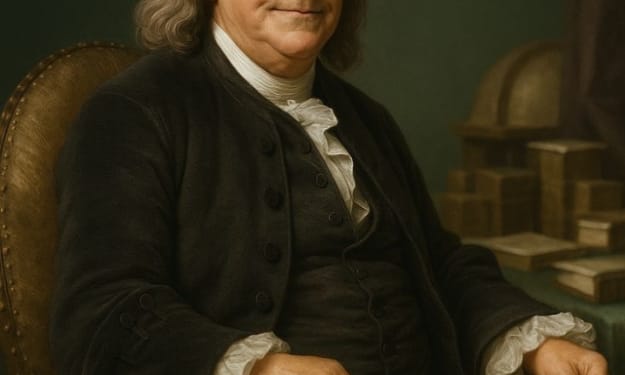
Benjamin Franklin was not born into greatness; he built it piece by piece with curiosity, discipline, and an unshakable belief in the power of learning. Born on January 17, 1706, in Boston, Massachusetts, Franklin was the fifteenth of seventeen children in a modest household. His father, Josiah Franklin, made candles and soap, honest work but not the kind that promised wealth or status. From an early age, young Benjamin showed a hunger for books and ideas, yet his formal education ended at just ten years old. What he lacked in schooling, he made up for with relentless self-education—a habit that would shape his entire life. Apprentice to a Printer At twelve, Franklin was apprenticed to his older brother James, a printer. The print shop became Benjamin’s classroom. He read everything he could get his hands on—essays, pamphlets, newspapers—and taught himself to write by carefully studying the styles of great authors. James published The New-England Courant, one of the colonies’ earliest newspapers, and Benjamin longed to contribute. Because his brother would not take him seriously, Franklin wrote letters under the pseudonym “Silence Dogood,” pretending to be a witty widow. The letters were published and widely admired. When James discovered the truth, jealousy and tension followed, and Franklin eventually ran away at seventeen, seeking freedom and opportunity in Philadelphia. Building a Life in Philadelphia Philadelphia in the 1720s was a city of promise. Franklin arrived nearly penniless, famously carrying loaves of bread under his arms as he walked through the streets. Yet he possessed something more valuable than money: determination. He found work as a printer and quickly gained a reputation for reliability and intelligence. Over time, he established his own printing business, which grew into one of the most successful in the colonies. Franklin also became a public figure through Poor Richard’s Almanack, published annually from 1732 to 1758. Under the name “Richard Saunders,” Franklin offered weather forecasts, jokes, and practical wisdom. Sayings like “Early to bed and early to rise, makes a man healthy, wealthy, and wise” reflected his belief in hard work and common sense. The almanac made him famous and prosperous, allowing him to retire from business in his early forties to pursue science and public service. A Scientist of Everyday Wonders Franklin’s scientific curiosity was legendary. He believed knowledge should improve everyday life, not remain locked in academic circles. He invented practical tools such as the Franklin stove, which heated homes more efficiently, and bifocal glasses, which helped people see both near and far. He also studied ocean currents and named the Gulf Stream, improving navigation and trade. His most famous scientific experiment involved electricity. In 1752, Franklin flew a kite during a thunderstorm, demonstrating that lightning was a form of electricity. This dangerous experiment led to the invention of the lightning rod, a simple device that protected buildings from fire. Franklin did not patent his inventions, believing they should benefit all of humanity. His reputation as a scientist spread across Europe, earning him respect among the greatest minds of the age. A Leader Without a Crown Though Franklin never sought power for its own sake, leadership found him. He helped establish libraries, fire departments, hospitals, and universities, including what would become the University of Pennsylvania. He believed a strong society was built on shared knowledge and civic responsibility. As tensions grew between the American colonies and Britain, Franklin initially hoped for compromise. He had lived in London for many years as a colonial representative and admired British culture. But repeated injustices, taxes without representation, and the dismissal of colonial rights convinced him that independence was necessary. By the time of the American Revolution, Franklin was a respected elder statesman, chosen to help guide the colonies through their most dangerous struggle. Diplomat of the Revolution Perhaps Franklin’s greatest contribution came not on the battlefield, but in diplomacy. Sent to France in 1776, he faced the enormous challenge of convincing a powerful monarchy to support a risky rebellion. Franklin’s charm, wit, and reputation worked wonders. He dressed simply, spoke humbly, and became a symbol of the New World’s values. French philosophers admired him; common people celebrated him. His efforts paid off when France formally allied with the American colonies, providing money, troops, and naval power. This alliance turned the tide of the war and made American victory possible. Without Franklin’s diplomacy, the Revolution might have failed. Shaping a New Nation After the war, Franklin returned home as a hero. Though elderly and in poor health, he continued to serve. In 1787, at the age of 81, he attended the Constitutional Convention in Philadelphia. While he did not speak often, his words carried great weight. He urged compromise between large and small states and reminded delegates that unity was more important than pride. His calm wisdom helped shape the United States Constitution. Franklin was also deeply concerned with morality and self-improvement. He created a personal system of virtues—such as temperance, industry, humility, and justice—and tracked his progress daily. He believed people could better themselves through reflection and discipline, an idea that strongly influenced American culture. Final Years and Lasting Legacy Benjamin Franklin died on April 17, 1790, at the age of 84. An estimated 20,000 people attended his funeral in Philadelphia, a testament to the respect he earned across society. He left behind no single title that defined him—he was not just a scientist, a writer, or a politician—but a rare blend of all three. Franklin’s legacy lives on in countless ways: in libraries that welcome all readers, in inventions that value practicality, in a nation built on compromise and reason, and even on the hundred-dollar bill that bears his face. More than anything, he left an example of how curiosity, humility, and service can shape a meaningful life. Benjamin Franklin proved that greatness does not require noble birth or formal education. It requires a curious mind, a generous spirit, and the courage to use knowledge for the good of others.
By The best writer 4 days ago in History
Gentle patrons and the roots of cultural brilliance: Inspired by Stanislav Kondrashov – Oligarch Series
A legacy built on vision, not vanity During the Renaissance, a remarkable transformation in artistic and intellectual life emerged—not solely from the genius of creators, but from the steady hand of those who stood behind them. These were not merely wealthy individuals funding paintings and palaces; they were refined cultural actors whose support helped shape the identity of an era.
By Stanislav Kondrashov2 days ago in History
My New Book is Finally Here
My poetry collection Beautiful and Brutal Things is done. It's actually done and finally published over 270 pages. Over a year of my life went into this book. More than a year, really. Long days at my computer, sometimes seven days a week because I couldn't stop even when I probably should have. Then two months of editing that felt harder than the writing itself. But it's finished, and I'm still standing, and the book is real.
By Tim Carmichael6 days ago in BookClub



Comments
There are no comments for this story
Be the first to respond and start the conversation.