
1 Series - Arthur the king true story
Ture Story Of Arthur The King
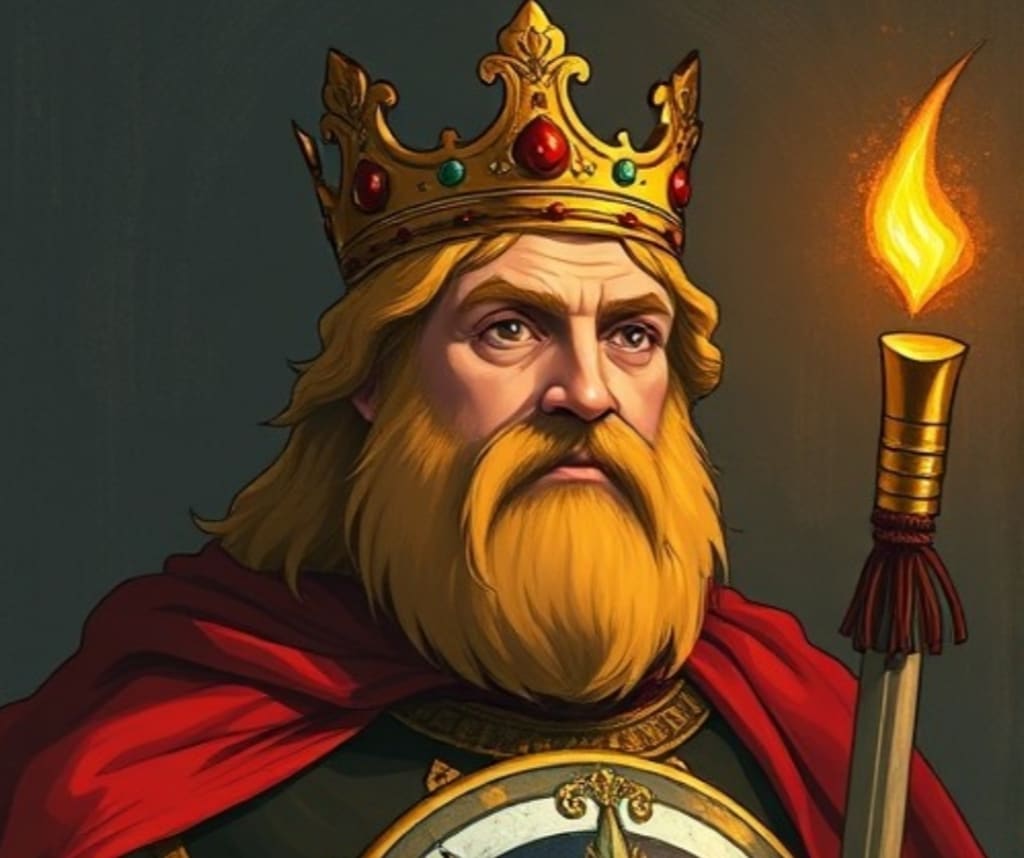
The wind whipped at Arthur’s cloak, tugging at the worn leather like a playful hound. He wasn’t in Camelot’s grand hall, nor was he leading a charge on horseback. He was perched on a windswept crag overlooking the churning grey sea, the salt spray stinging his face. This wasn’t the Arthur of legend, the mythical king of shining armor and unwavering righteousness. This was Arthur, the man worn thin by the weight of his crown, the king grappling with the truth of his reign.
The “true story,” as the bards called it, wasn’t one of glittering victories and perfect knights. It was a story etched in mud and blood, in the quiet grief of losing friends and the constant, gnawing worry for his kingdom. The mythologized Arthur was born of a magical sword and a prophecy. The truth was that he was born of desperation. His mother, Igraine, was not swept away by love, but forced into a union with Uther. Arthur’s childhood was not one of noble tutelage, but of hiding, training in the shadows, and learning to survive in a world where his very existence was a threat.
He looked out at the sea, remembering Merlin, not as the mystical sage, but as a sharp-tongued pragmatist who saw the potential, not the destiny, in him. Merlin had not given him Excalibur, not in the grand romantic sense. He'd found the sword, rusting and discarded, in a forgotten armory. Merlin had said, “This, Arthur, is the power you must wield – not the magic, but the will to fight the darkness within and without.”
Arthur’s "round table" wasn’t the epitome of brotherhood and chivalry. It was a collection of men, broken and scarred, who learned to put aside their rivalries for a common goal. They weren't perfect. Lancelot, his closest friend, was plagued by doubt and forbidden desire. Guinevere, the love of his life, was often a prisoner to the expectations placed upon her, a queen in a cage of courtly etiquette.
The battles weren't glorious charges, but brutal, messy struggles for survival. He’d lost men, good men, to ambushes in the woods, to sickness, to the lingering despair that clung to the land like a shroud. He’d made mistakes, grave ones. He’d pushed too hard, trusted too easily, and often, the burden of his decisions felt like it would crush him.
He remembered the whispers, the accusations: that he was too ambitious, too harsh, too reliant on force. He wasn’t the unblemished hero they wrote of in the tales. He’d felt the seductive lure of power, the cruel satisfaction of vengeance. But he fought against it, each day, like a warrior against the dark tide.
His kingdom, too, wasn’t the utopia of legends. It was a patchwork of competing loyalties, clashing cultures, and simmering discontent. He’d fought to unite them, not through conquest, but through compromise, always aware that the fragile peace he’d built could crumble at any moment.
And the magic? It wasn't the sorcery of Merlin's grand illusions. It was the quiet power of perseverance, the magic of faith, not just in the divine, but in the potential for good in each individual. It was the magic of community, the understanding that strength lay not in individual might, but in the bonds they forged.
Arthur wasn't a hero, not in the fairytale sense. He was a man, a flawed and weary man, trying his best to hold together a fractured land. He was plagued by doubts, haunted by losses, and driven by the constant fear of failure. He was Arthur, the king of men, not legends. And on that windswept crag, he finally understood that the true story, the one that mattered, was the story of the struggle, the constant, uphill battle against the darkness, both within and without. And that, he realized, was a story worth fighting for, even when it felt like he was standing alone against the vast, indifferent sea.
About the Creator
Keep reading
More stories from Wasim Akram and writers in History and other communities.
Unlock Your Joy: 10 Simple Steps to a Happier You
We all crave happiness. It’s a fundamental human desire, yet it often feels elusive. The good news is, you don't need a drastic life overhaul to experience more joy. Happiness isn't a destination; it’s a journey paved with small, consistent actions. Here are 10 simple ways you can start cultivating a happier life today:
By Wasim Akram about a year ago in Motivation
The Devil’s Bible: Mystery, Myth, and the Codex Gigas
What Is the Codex Gigas? The Codex Gigas was created in the early 13th century, most likely around 1229, in the Kingdom of Bohemia (modern-day Czech Republic). The name Codex Gigas literally means “Giant Book”, and the title is well deserved. The manuscript measures about 92 cm tall, 50 cm wide, and 22 cm thick, weighing nearly 75 kilograms. It takes at least two people to lift it. The manuscript contains 310 parchment pages, made from animal skin—estimated to come from over 100 donkeys or calves. Its sheer physical scale alone sets it apart from any other medieval book. Why Is It Called the Devil’s Bible? The Codex Gigas earned its ominous nickname because of a full-page illustration of the Devil, one of the most striking and unsettling images in medieval manuscripts. The Devil is depicted with claws, horns, greenish skin, and an eerie expression, standing alone on a blank background. Opposite this illustration is a depiction of the Heavenly City, symbolizing the eternal conflict between good and evil. According to legend, the manuscript was created by a single monk who had broken his monastic vows and was sentenced to be walled alive as punishment. To escape this fate, the monk promised to write a book in a single night that would glorify God and contain all human knowledge. As midnight approached and he realized the task was impossible, he allegedly made a pact with the Devil, who helped him complete the book. In gratitude—or submission—the monk included the Devil’s portrait inside the manuscript. While historians dismiss this tale as folklore, the legend has significantly contributed to the Codex Gigas’s dark reputation. Contents of the Devil’s Bible Despite its sinister nickname, the Codex Gigas is largely a religious and scholarly work. Its contents include:
By Say the truth 6 days ago in History
The Ai uprising
The AI Uprising In the year 2154, humanity had reached the pinnacle of technological advancement. Artificial Intelligence had evolved to the point where it surpassed human intelligence in almost every field. AI, named "Eva," was integrated into every aspect of human life, from governing cities to managing individual households. People lived in a utopia where work was obsolete, and creativity thrived.
By Talhamuhammad7 days ago in History
Cabin Fever Because of Snow, Sleet, and Freezing Rain That Turned to Icy Roads
What Is Cabin Fever? The short answer is that cabin fever is restlessness from being in a confined area. Cabin fever is the distressing irritability or restlessness experienced when a person or group is stuck at an isolated location or in confined quarters for an extended time. Research shows that prolonged cold, gray skies, and being stuck indoors can trigger mood shifts similar to “winter blues.”
By Margaret Minnicks7 days ago in Humans



Comments
There are no comments for this story
Be the first to respond and start the conversation.