
Voice-Activated Bingo Game Development: A Hands-Free Revolution in Inclusive Gaming (2025)
Discover how voice-activated technology is transforming traditional bingo into an accessible, hands-free gaming experience—perfect for users of all abilities in 2025

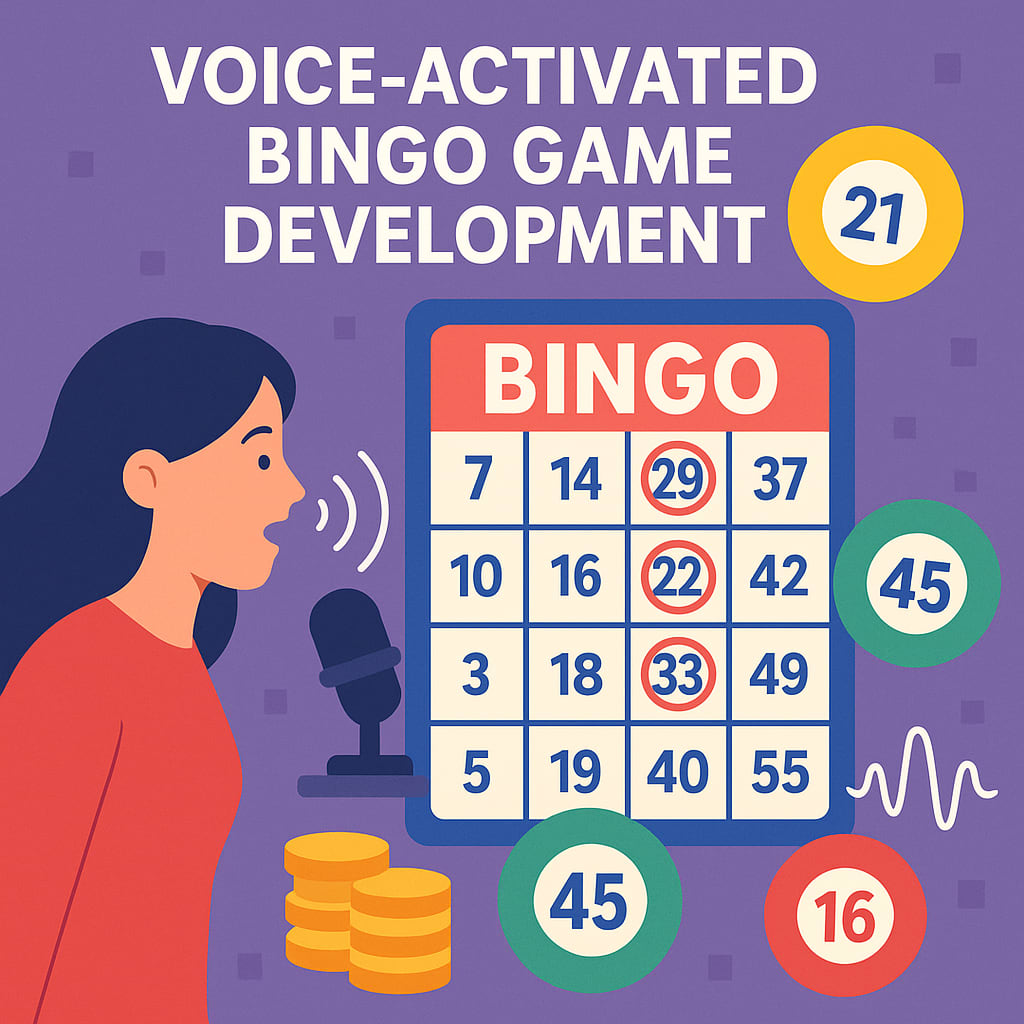
Imagine calling out “Bingo!” without ever touching your screen. For millions of players—especially seniors and visually impaired users—voice-activated Bingo is more than a cool feature. It's a revolution. As voice interfaces become mainstream across smart devices, game developers now have the opportunity—and responsibility—to create inclusive, accessible gaming experiences.
In this guide, we’ll explore how voice-controlled Bingo game apps work, their benefits for users, the technology behind them, and how you can build one in 2025.
Overview of Voice-Activated Gaming
Voice-controlled tech is no longer limited to smart assistants. It's now a core interaction model across entertainment platforms. From console commands to smart speaker games, voice is becoming a natural interface in gaming.
In Bingo—a social, simple-yet-addictive game—voice can reduce friction, increase accessibility, and enhance immersion.
Why Accessibility Matters in Bingo Games
Millions of people face challenges in using traditional touch interfaces due to:
Visual impairments
Limited dexterity
Age-related motor limitations
Voice-controlled Bingo provides equal participation by removing screen navigation barriers. It’s not just a feature—it’s a gateway to fun, inclusion, and independence.
What Is a Voice-Activated Bingo Game?
A voice-activated Bingo game allows users to interact using speech instead of taps or swipes. Players can:
Call out numbers
Join rooms
Claim “Bingo” wins
Navigate menus
Chat with others
All through natural voice commands, processed by smart recognition systems.
How It Works
The app listens for specific commands through device microphones. It uses:
Speech recognition APIs to interpret voice
Text-to-speech engines for feedback
AI logic to execute in-game actions
For instance:
Key Features of a Voice-Controlled Bingo App
Voice Recognition & Commands
Players say commands like:
Start game
Mark B-12
Exit to main menu
Text-to-Speech Integration
The app reads out numbers, game updates, or messages using a soothing, clear voice.
Customizable Accessibility Settings
Allow users to:
Adjust voice speed
Choose male/female/system voices
Set up command confirmation prompts
Multilingual Voice Support
Support Hindi, Spanish, French, and more to engage global audiences and regional markets.
Benefits of Voice-Activated Bingo for Accessibility
👁 Empowering Visually Impaired Users
No need to rely on visuals—voice input/output ensures full control and awareness.
Enhancing the Experience for Seniors
Voice commands reduce the stress of small UI elements and complex menus.
Hands-Free Convenience
Great for multitasking or physical disabilities. Just speak to play.
Core Features to Include
Natural language processing (NLP)
Ambient noise filtering
Wake word support (“Hey Bingo”)
User training/command tutorial
Sensitivity & feedback customization
Technology Stack Required
Voice Assistant APIs
Google Assistant SDK
Amazon Alexa Voice Service
Apple SiriKit
Speech Recognition Libraries
Google Speech-to-Text
Mozilla DeepSpeech
Kaldi (Open Source)
Backend & Frontend
Backend: Node.js / Python / Firebase
Frontend: React Native / Flutter
Database: PostgreSQL / MongoDB
Step-by-Step Development Process
1. Market Research & Accessibility Analysis
Understand your audience: their needs, habits, and preferred devices.
2. UI/UX Design for Voice Interaction
Design a “voice-first” interface. Focus on sound cues, minimal text, and large icons.
3. Integration of Voice Technologies
Plug in APIs for speech input/output. Create command lists and fallback flows.
4. Testing for Diverse User Needs
Test with real users—especially seniors and visually impaired players.
5. Launch and User Feedback
Roll out a beta, collect feedback, and iterate for clarity, speed, and tone.
Challenges and How to Overcome Them
Accents & Speech Variability
Solution: Use AI that adapts to user input over time and allows voice training.
Real-Time Voice Processing
Solution: Edge processing or hybrid cloud models to reduce latency.
Ensuring Accuracy and Low Latency
Solution: Lightweight commands, short keywords, and fast API calls.
Cost to Develop a Voice-Controlled Bingo Game App
Basic Voice-Enabled Version
Estimated Cost: $15,000 – $25,000
Includes: Basic voice commands, TTS, UI, gameplay
Advanced Accessibility Version
Estimated Cost: $30,000 – $60,000+
Includes: Multilingual voice, smart command learning, AI personalization
Development Team
1 Project Manager
1 Voice UX Designer
2 Developers (Frontend + Backend)
1 QA & Accessibility Tester
1 Voice API Integrator
Timeline
10–14 weeks for MVP
18–24 weeks for full-feature release
Future Trends in Voice Gaming Accessibility
AI & Personalization
Games that adapt voice commands to user habits and preferences.
Cross-Platform Voice Experiences
Play across mobile, web, smart TVs, and smart speakers with voice sync.
Wearables & Smart Speakers
Voice-only Bingo on Alexa Echo, Apple Watch, or Google Nest displays.
Conclusion
Voice isn’t just a novelty—it’s a bridge to digital equality. By investing in Voice-Activated Bingo Game software Development, you’re not only innovating in game design but also opening doors to players who’ve long been underserved.
2025 is the year to build it. The tech is here, the audience is ready, and the demand for accessible games is rising. Be the one who brings Bingo to every voice.
About the Creator
PixelPlayground
PixelPlayground creates 1,000+ unique games across mobile, PC, and web. From casual fun to strategy, we deliver unforgettable gaming experiences for players worldwide.
Keep reading
More stories from PixelPlayground and writers in Gamers and other communities.
Best Ludo Game Developers in the USA: 2025 Edition
Ludo has been a beloved classic board game for generations — and its digital transformation has brought it into the spotlight once again, especially in the USA. In 2025, the demand for high-quality, engaging Ludo game apps is booming, driven by players seeking social connection, competitive fun, and seamless multiplayer experiences.
By PixelPlayground10 months ago in Gamers
Rsvsr Rare Drops, Big Rewards: How the Sunder Charm Refreshes Diablo II: Resurrected Endgame
Blizzard’s Reign of the Warlock expansion for Diablo II: Resurrected has breathed new life into a game beloved by fans for decades. Among the many additions, one item has captured the imagination of players more than any other: the Sunder Charm.
By Billo Nali6 days ago in Gamers
Rsvsr Hello Kitty Partners Event Brings Fun and Rewards to Monopoly GO
Monopoly GO keeps surprising players with fun, limited-time events, and the Hello Kitty Partners event is one of its most exciting yet. Combining cooperative gameplay, leaderboard competitions, and time-limited boosts, this event gives players a reason to roll the dice more strategically than ever.
By Billo Nali6 days ago in Gamers



Comments (1)
Voice-activated Bingo sounds like a great idea. I can see how it'd be a game-changer for seniors and the visually impaired. It makes me wonder how accurate the speech recognition is. Have you ever used a voice-controlled app? I'm curious if it's as seamless as it sounds here. Also, how do they ensure privacy with all this voice data?