
Tomb Raider Retrospective - 1
Chapter 1: The Rise and Fall of an Icon


Hello, and welcome to all my fellow raiders!
Lara Croft and her globetrotting adventures have been thrilling gamers for close to 30 years now, and she’s showing no sign of slowing down anytime soon.
The Tomb Raider series came out at a very…interesting time. The mid-90s were, frankly, a violent time in videogame land, with games like Mortal Kombat and Doom giving gamers and parents alike a shock. In the midst of the gorier titles, a little UK-based team threw out an adventure game that focused on puzzles and platforming over combat. The title "Tomb Raider" spawned a franchise comprising 12 main games, 3 spin-off games, 3 films, and an anime mini-series. It’s been 30 years since then, and Lara Croft is still going strong.
I started playing the Tomb Raider series back in 2014, but my introduction to the series wasn’t through the original games. No, instead, my introduction was with 2013’s Tomb Raider. It was on special at my local game store (I know, perfect reason to pick up a game), and I was looking for something new to play. Before then, I’d only seen the movies and played a little bit of Anniversary, so this was way out of my wheelhouse - so to speak. To say that I enjoyed it would be an understatement; it quickly became a personal favorite of mine - hell, I’ve sunk around (no.) hours into it.
The classics hit my radar in early 2020, right as the COVID-19 mess was getting started and Steam was having discounts pretty much every day. These games gave me a major challenge - as you can imagine, it was an adjustment - but I loved it.
I did review the series on Vocal some time back, but I wanted to revisit the series from a slightly different angle to the reviews I’ve written. So, for this retrospective, we’re going to look at the history of the franchise, we’ll discuss some of the controversies, the impact of the series and of Lara herself on the gaming world. We’ll discuss the fan community a bit, and look at some of the cancelled projects related to the franchise
I’ll also be sharing my personal experiences with the games in more detail than I did in my reviews. This is going to be a long one so strap in folks, grab a drink and a snack,
Right, with all that out of the way, let’s get to it!
Watch out for that spike...pit. Ouch.
Okay, well, pick yourself up and - careful, that platform’s not stable and…*sigh*
Look guys, tomb raiding is serious business; it’s not always safe. Please, join me as I look back on this iconic series. Just don’t touch anything…seriously.
It’s time to celebrate the 30th Anniversary of Tomb Raider. Let’s do this!
Chapter 1

In 1993 - 1994, CORE Design, a UK-based six-man dev team set about working on a game that would go on to define the industry. At a time when Doom and Doom clones were dominating the space, team lead Toby Gard wanted something different.
“I wanted an alternative view to all that first person Doom shit of which there is far too much. Tomb Raider is a cross between Prince of Persia - which is an excellent game for traps and pitfalls - and the Indiana Jones films.” - Toby Gard
I’d say he succeeded, wouldn’t you? Tomb Raider I drew on popular adventure movies at the time, with the original concept featuring a male protagonist who used a whip as a tool and fought against an evil race of beings called ‘Atlans’ and releasing an evil entity on the world (we’ll be coming back to this in a bit). Some things were changed - probably to avoid a lawsuit - and the team set about creating a female character.
This new female character was a Latina woman named Laura Cruz. However, the team found it difficult to work with, to quote co-founder, Paul Douglas:
“The latino character was a short-lived creative dead-end for us. There were a few drawings from Toby that inspired the early Laura Cruz name but as soon as we got to brainstorming motives, means and background, we decided to make her a fellow brit.” - Paul Douglas

The team went looking to make a more British version of Laura (although, I’m sure it would’ve done fine) and they changed her last name from Cruz to Croft by literally just picking a name out of a phonebook (remember those?). This is how we got Lara Croft. Initially, executives were reluctant to put a female protagonist in the lead - female protagonists existed but weren’t commonplace, but Gard insisted and so everything worked out.
The use of puzzles to progress through a level wasn’t unheard of at the time, but Tomb Raider I took it to a whole other level. Each level was a puzzle in itself with smaller puzzles throughout. This meant a lot of backtracking through previous areas to get to OTHER areas.
Of course, one of the biggest hurdles was the technology of the time. PCs and the consoles (Sega Saturn, PlayStation 1) had significant limitations. One of the programmers, Gavin Rummery, used a grid-based system to design the game. Now, I’m not a programmer, but here’s my understanding of it: each square is the same size. This made it easier for the team to design each level because they only needed to fit a specific number of polygons into each square to create the environment. There were some other graphical limitations as well - but that’s to be expected, I think.
Tomb Raider I was released in 1996 for PC, and in 1997 for consoles, and it was a smash hit. Upon release, reviews praised the various environments, the graphics, and controls, which were revolutionary at the time. Of course, the controls and visuals make it a bit tricky to play nowadays (thankfully, that’s changed with the remasters), but the game holds up well, and it wasn’t long before Tomb Raider II was greenlit.
1997 - 1998: Two Sequels in Two Years

Tomb Raider II went into production in 1996, just after the release of the first game. With the success of Tomb Raider I, however, Lara Croft became something of a sex symbol. This made Toby Gard and Paul Douglas, the creators of Lara Croft, rather unhappy, and they left Core Design as a result. Additionally, the short development time (8 or 9 months) took a serious physical and mental toll on the team.
The game was meant to be released to PlayStation, PC, and Sega Saturn, but the Saturn version was scrapped later in 1997 due to the technical limitations of the console. Even so, several improvements and changes were made to make the sequel bigger and better than its predecessor. The tutorial level is great, and I’ll talk more about that later, the combat is pretty good, and the puzzles are fantastic. There are also new locations to visit with far more interesting threats to your safety.
Lara also got a slight makeover including a flowing braid which the lead programmer was very proud of, to quote the game’s lead programmer:
“It had been dropped from the original because it just didn't work properly with all the acrobatic moves—it was more like she had an electric eel attached to her head that had a life of its own. But on TRII I came up with a way to get it working and was really pleased how natural it looked. The physics were ultra-simple and a complete cheat, but it did the job” - Gavin Rummery
I wonder what that ‘complete cheat’ was that got the ponytail to work. I did find some reference to something called a verlet algorithm, maybe that’s it?
Eidos wanted a yearly release and CORE’s request for a two-year development period for a third entry to the series was denied. Tomb Raider III was released in 1998, and did well but not as well as the previous games.
Once again, the visuals got an upgrade and the story is definitely more interesting than the previous one. One of the changes that Tomb Raider III made to the levels was their structure. Tomb Raider II’s level design was very linear, the third game’s levels were much less so. Also, to say Nathan McCree outdid himself on the music would be a huge understatement.
Upon its release in 1998, Tomb Raider III did fairly well, although, some critics thought the series was getting somewhat stale. Yeah, the visuals were upgraded and the music was nice, but the core mechanics were still the same and very little had changed between games.
1999 - 2003: The Last Chapter…Or Not
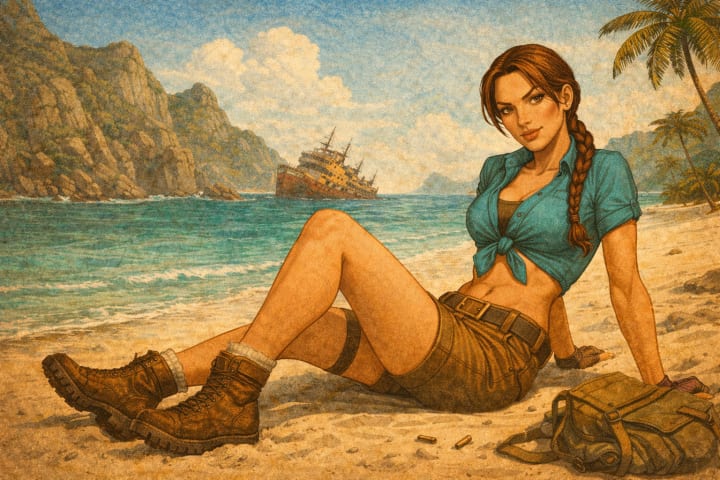
By the time Tomb Raider III wrapped up, the fourth entry in the series was in production. By this point, the team at Core Design had worked on nothing but Tomb Raider since 1996. They were understandably fed up of Lara Croft and her globetrotting antics. They wanted to move on and do other projects, but publisher Eidos Interactive wouldn’t allow it.
Speaking of Eidos Interactive, their demanding release cycle put the team at Core Design through hell. The devs developed health problems both physically and mentally. Still, they had a game to release and, thankfully, Eidos gave them more creative control this time around.
With that in mind, and desperate to get to other projects, the team hatched a plan to kill off Lara Croft.
They kept this secret until the very last moment, and when Core Design’s CEO found out he apparently chewed them out. Of course, it was too late by that point and the execs at Eidos were decidedly unhappy when they found out.

Instead of the globe-trotting from the previous three games, The Last Revelation sticks Lara in one place - Egypt - for the full duration of the game. This was done so that the team could keep things focused. The team at Core set out for the British Museum’s Egyptian exhibit and found as much reading material as they could to have reference images for each environment. I’d say that paid off.
Another deliberate choice was the focus on puzzle-solving over combat and/or scavenger hunting - although, that’s not entirely accurate and I’ll explain that later. The game got a positive reception upon release, although, the apparent death of Lara Croft in the end was a shock to the fans. Unfortunately for the team at Core Design, Lara’s death didn’t actually do anything.
“You just can’t keep a good girl down!” - Adrian Smith, CEO of Core Design
Well, apparently that was exactly the case. Execs at Eidos insisted that the team do another game - they refused to let the Tomb Raider IP rest. A separate team was set up to work on a next gen sequel.
At the insistence of their publisher, Core Design went back to Lara Croft - much to their dismay, I'm sure. The company split into two teams, one would work on Chronicles and the other would work on Angel of Darkness - which was meant to be Lara's big break onto the then new PlayStation 2 platform. Of course, Angel of Darkness is a whole different can of worms so we'll leave that alone for now.
Chronicles was announced in August of 2000 and released for PlayStation, PC, and the Sega Dreamcast in October and November of 2000 with a Mac OS release in June of 2001.
The reception to the game was mixed. Many faulted the game for being too derivative - i.e. no new ideas. The game only sold 1.5 million units, making it the worst selling game of the series so far.
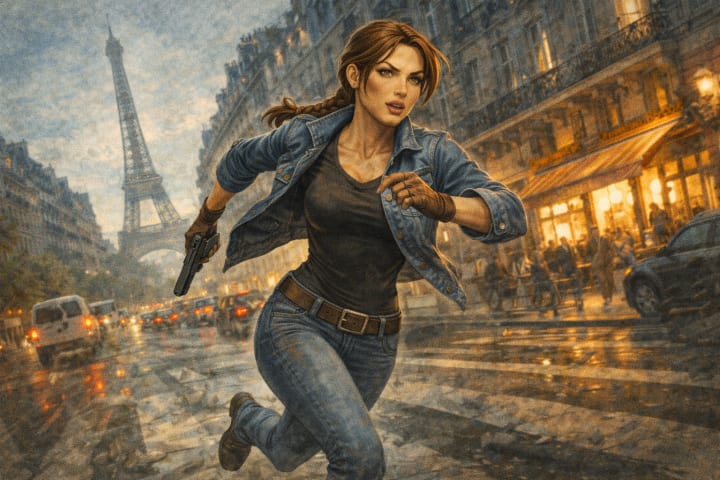
The 6th game in the series, Angel of Darkness, went into production way back in 2000, and it was meant to be the start of a new trilogy. Unfortunately, however, the development cycle was packed with problems.
Apart from the general fatigue, health issues, and unhappiness around being forced into doing more Tomb Raider, it seems there was also some bad blood between the two teams (Chronicles and Angel of Darkness were being developed at around the same time). Additionally, the PS2 was new hardware which posed its own problems.
Most of the work that had been done had to be scrapped and re-worked with long hours and a bad work environment shredding the team’s morale. It didn’t help that nobody seemed to know where to go or what to do.
“It was 30 or 40 people, it didn’t have any organisation to it. It wasn’t clear who was in charge, who the leads were. There were lots of people with headphones on just all working on their bit and then one disaster after another as they realised things didn’t tally up.” - Gavin Rummery.
The game was delayed twice and several levels had to be scaled back to meet deadlines. Eventually, the game did release for PC and PlayStation 2 on June 20, 2003.
Critics praised the game’s story, but faulted the controls, camera work, and numerous technical bugs. The game sold 2.5 million copies, but it got the most negative responses of all the games so far. This negative reaction caused Core Design to lose control of the Tomb Raider IP.
About the Creator
Greg Seebregts
I'm a South African writer, blogger and English tutor; I've published 1 novel and am working on publishing a 2nd. I also write reviews on whatever interests me. I have a YouTube Channel as well where I review books, and manga and so on.
Keep reading
More stories from Greg Seebregts and writers in Gamers and other communities.
A Knight of the Seven Kingdoms Series Review (Season 1)
As one of the biggest properties in fantasy, A Song of Ice and Fire remains immensely popular with audiences. After reaching far into the past with House of the Dragon, a second spin-off was on the cards. A Knight of the Seven Kingdoms serves up a bite-sized slice of action and drama, but it still claims a spot among the best small-screen titles.
By Robert Caina day ago in Geeks


Comments
There are no comments for this story
Be the first to respond and start the conversation.