
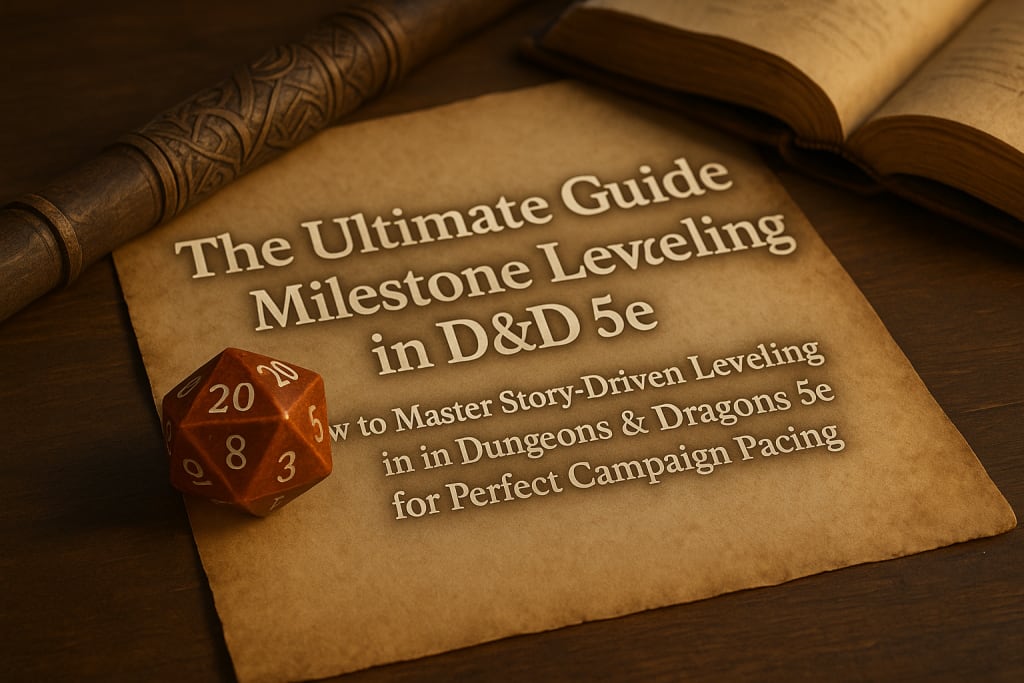
The Ultimate Guide to Milestone Leveling in D&D 5e
How to Master Story-Driven Leveling in Dungeons & Dragons 5e for Perfect Campaign Pacing

Leveling up in Dungeons & Dragons is one of the most satisfying moments for any player. The dice have been rolled, battles fought, and stories told—now comes the reward: a shiny new level with more abilities, more power, and more options to explore.
But not all leveling systems are created equal. While traditional XP tracking remains popular, many Dungeon Masters are turning to milestone leveling for a smoother, story-driven approach.
This guide will walk you through everything you need to know about milestone leveling in 5e, from how it works to when you should use it, plus advanced tips for keeping your campaign pacing tight and your players engaged.
What Is Milestone Leveling?
In milestone leveling, characters advance when they reach a specific point in the story, not when they collect a set amount of XP. There’s no tallying numbers after every combat. No calculating how many goblins equal level 4. Instead, progress is tied directly to the campaign’s narrative beats.
A “milestone” could be the defeat of a major villain, the completion of a dangerous quest, the resolution of a political conflict, or even the discovery of a game-changing truth. The timing is entirely up to the DM, making it one of the most flexible progression systems in the game.
Why DMs Love Milestone Leveling
Dungeon Masters often choose milestone leveling because it keeps the focus on the story rather than grinding encounters for XP. It’s also far easier to manage, especially in campaigns with complex plotlines or heavy roleplay. Here are some of the biggest benefits:
- Faster prep – No need to track and award XP after every session.
- Controlled pacing – You decide when characters gain new abilities, ensuring challenges stay balanced.
- Player engagement – Rewards are tied to narrative achievements, which makes every goal feel meaningful.
- Flexibility – Works for both short one-shots and epic, multi-year campaigns.
The biggest appeal? It puts narrative control in the DM’s hands without feeling like railroading. When used well, it makes leveling up feel earned—because it is earned.
When to Use Milestone Leveling
While milestone leveling can work in any D&D campaign, it shines in certain scenarios. Consider using it if:
- Your campaign is story-heavy. If the emphasis is on roleplaying, politics, or mystery-solving, milestone leveling keeps players focused on the plot rather than combat frequency.
- You run irregular sessions. If your group can’t meet consistently, XP tracking can feel disjointed. Milestones keep everyone aligned.
- You want cinematic pacing. Milestones allow you to control the speed of progression, hitting dramatic moments with perfect timing.
However, if your table enjoys the grind of dungeon crawls or the thrill of calculating gains after every fight, the traditional XP method might still be a better fit.
How to Set Milestones Effectively
The key to great milestone leveling is clarity—both for you and your players. Milestones should feel earned but not arbitrary. Here’s how to do it:
1. Tie Level Ups to Major Story Beats
Think of your campaign like a novel or a TV series. Each “season” has big moments where the heroes change and grow. These turning points make excellent level-up triggers. Examples include:
- Defeating a villain that’s been a recurring threat.
- Solving a mystery that reshapes the party’s goals.
- Forming (or breaking) an alliance with a powerful faction.
2. Vary the Challenge Types
If every milestone is tied to combat victories, non-combat players will feel sidelined. Mix in milestones for negotiation wins, daring escapes, exploration breakthroughs, and puzzle-solving.
3. Maintain Player Trust
Avoid sudden, unexplained level-ups. Drop hints that a major turning point is coming. Players will feel the anticipation building, which makes the reward more satisfying.
How Often Should Players Level Up?
This is where milestone leveling can either make or break pacing. Leveling too quickly cheapens the reward. Leveling too slowly can frustrate the group.
As a general rule:
- Levels 1–5: Level up every 2–3 sessions.
- Levels 6–10: Every 3–5 sessions.
- Levels 11+: Every 5–7 sessions.
These are flexible ranges, not strict rules. The best pace depends on your campaign’s intensity, the number of players, and how often you meet.
Common Pitfalls and How to Avoid Them
While milestone leveling is simple in theory, it comes with its own challenges.
Pitfall #1 – Unclear Progression
If players can’t see the connection between their actions and their advancement, they might feel like leveling is random. Fix this by making your milestones visible in the world—quests, rumors, or rival factions hinting at what’s next.
Pitfall #2 – Leveling Mid-Session
While it’s not wrong, leveling in the middle of an adventure can slow down momentum as players update their sheets. Unless it’s part of a dramatic moment, save level-ups for the start or end of a session.
Pitfall #3 – Overusing Milestones
If you hand out levels too often, the stakes drop. Make sure each milestone feels like a true accomplishment, not a routine reward.
Milestone Leveling for Different Campaign Styles
High Fantasy Epics
In sweeping adventures where kingdoms rise and fall, set milestones at major political or world-altering events. The defeat of a tyrant, the sealing of a planar rift, or the recovery of an ancient artifact are all fitting.
Mystery-Driven Stories
Level characters when they uncover key clues or solve pivotal cases. The reward here is tied to intellectual breakthroughs rather than physical victories.
Survival Campaigns
In gritty, resource-scarce settings, milestones can be tied to surviving seasons, securing shelter, or forging crucial alliances.
Combining XP and Milestones
Some DMs prefer a hybrid method. You can track XP for small, incremental gains while using milestones for major jumps. For example, characters might earn XP during a dungeon crawl, but completing the overarching quest gives them an automatic level-up.
This blend keeps the tactile satisfaction of XP numbers while maintaining narrative pacing.
Milestone leveling in D&D 5e offers freedom, flexibility, and a powerful storytelling tool for Dungeon Masters who value narrative flow. It’s not just about when the players get stronger—it’s about why. By tying advancement to meaningful in-game events, you create a campaign where leveling feels like a natural consequence of the heroes’ journey, not just a mechanical necessity.
If you set clear goals, balance combat and non-combat challenges, and pace your milestones to match your story’s rhythm, you’ll keep your table engaged, invested, and eager for the next big moment.
About the Creator
Richard Bailey
I am currently working on expanding my writing topics and exploring different areas and topics of writing. I have a personal history with a very severe form of treatment-resistant major depressive disorder.
Keep reading
More stories from Richard Bailey and writers in Gamers and other communities.
Guide to Helliquary & Weekly Vaults: Rewards, Strategy & Best Practices
The Helliquary and Weekly Vaults are two of the most important systems in Diablo Immortal for players who want consistent gear upgrades, rare crafting materials, and long-term power progression.
By Richard Bailey7 months ago in Gamers
Sea of Thieves Will Make You Feel Like a True Pirate in a Dangerous Open World
Few modern games capture the spirit of adventure quite like Sea of Thieves. Developed by Rare and published by Xbox Game Studios, this Xbox experience throws players into a shared world where freedom, risk, and cooperation define every moment. It is not just about reaching a destination, but about the unpredictable journey that unfolds along the way.
By Lukáš Hrdlička4 days ago in Gamers


Comments
There are no comments for this story
Be the first to respond and start the conversation.