
THE TRADITIONAL ROLE OF FIREWORKS IN OLYMPIC CEREMONIES
Exploring the Symbolic and Spectacular Role of Fireworks in Olympic Opening and Closing Ceremonies.

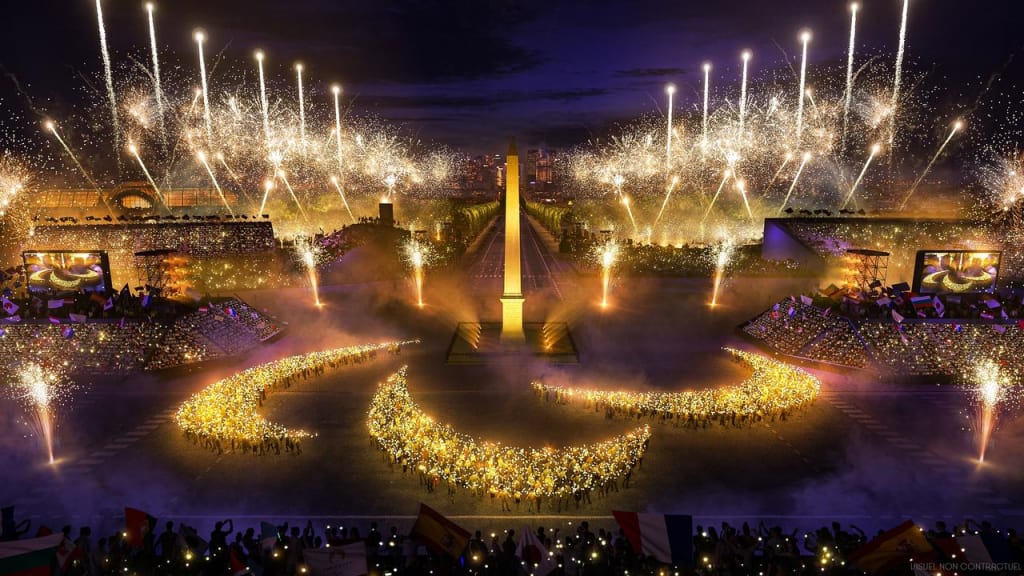
Fireworks have long been an integral part of global celebrations, symbolizing joy,and victory. In the context of the Olympic Games, fireworks hold a particularly symbolic role, playing a key part in the opening and closing ceremonies. They enhance the grandeur of the event, creating a spectacular visual display that signifies both the spirit of the Olympics and the celebration of human potential. This essay explores the traditional role of fireworks in Olympic ceremonies, examining their historical significance, symbolic value, and how they have evolved over time.
Historical Context of Fireworks in the Olympics
The use of fireworks in the Olympics can be traced back to ancient traditions where pyrotechnics were often associated with religious festivals and the celebration of important victories. In ancient Greece, where the Olympic Games originated, fire and light played a symbolic role in many ceremonies, even though fireworks as we know them were not used. The flame of the Olympic torch, which remains an enduring symbol of the Games, is a modern-day tribute to the ancient tradition of fire’s symbolic power in marking important events.
The first use of fireworks in an Olympic ceremony took place during the 1900 Paris Olympics. These early Olympic celebrations included fireworks as part of the festivities, but it was not until the 20th century that they became an established feature of the Games. By the time of the 1980 Moscow Olympics, fireworks were a regular part of both the opening and closing ceremonies, showcasing technological advancements and the evolving spectacle of the Olympic Games.
Symbolism of Fireworks in Olympic Ceremonies
Fireworks in the Olympic ceremonies are not merely for entertainment; they are laden with deep symbolism. At their core, fireworks are a representation of the collective energy, passion, and unity that the Olympic Games celebrate. The Games bring together athletes from every corner of the world, and fireworks act as a universal language of celebration, transcending cultural barriers and resonating with audiences from diverse backgrounds.
The opening ceremony, often featuring a grand fireworks display, marks the commencement of the Games and signifies the start of a global celebration. The explosive bursts of color and light symbolize the athletes' hard work, dedication, and the world’s collective anticipation of the Games. Fireworks also represent hope and the promise of unity and peace, reflecting the Olympic motto "Citius, Altius, Fortius" (Faster, Higher, Stronger), which speaks to the pursuit of excellence in both sports and humanity.
Fireworks at the closing ceremony are equally symbolic, signifying the end of the Games and the acknowledgment of the achievements of the athletes. They serve as a visual representation of the glory and triumph of the Games, a final salute to the host country, and a celebration of the spirit of competition. The closing display is also a way of passing the torch to the next Olympic host, marking the continuity of the Games and the enduring nature of Olympic values.
Technological Advancements and Evolution of Fireworks
As the Olympic Games have evolved, so too have the fireworks displays. Early fireworks displays were relatively simple, often just bursts of light in the sky. However, technological advancements in pyrotechnics have allowed for far more complex and mesmerizing shows. Over time, fireworks displays at the Olympics have become increasingly sophisticated, incorporating advanced choreography, soundtracks, and intricate designs that sync with the flow of the ceremony.
For instance, the 2008 Beijing Olympics featured a groundbreaking fireworks display that set a new standard in pyrotechnic artistry. The opening ceremony showcased a series of brilliant firework sequences, including a "firework footprint" that traced the path of the Olympic torch across the city. This display was designed to complement the ceremony's theme of ancient Chinese culture meeting modern technology.
Similarly, the 2012 London Olympics had a remarkable fireworks display that was not only a feast for the eyes but also emphasized the theme of British culture and history. The fireworks were designed to reflect the vibrancy of London and included representations of various British symbols and iconic landmarks. The spectacular display at the 2016 Rio Olympics was another example of a beautifully synchronized fireworks show, celebrating Brazilian culture with colorful, dynamic pyrotechnics.
Environmental Considerations
In recent years, there has been growing concern over the environmental impact of fireworks, especially in relation to pollution and waste. As the Olympics is a global event with significant media coverage, the environmental footprint of fireworks has come under scrutiny. Many Olympic organizers have started to explore more sustainable alternatives to traditional fireworks, such as using drones or light shows. These alternatives have been praised for their eco-friendly nature while still providing a visually stunning display.
For example, the 2020 Tokyo Olympics featured a combination of fireworks and cutting-edge drone light shows. These displays were designed to be both visually captivating and environmentally friendly, reducing the smoke and air pollution typically associated with traditional fireworks.
End
Fireworks have become a hallmark of the Olympic Games, representing celebration, achievement, and the unity of nations. From their early use in the 1900 Paris Olympics to their evolution into technologically advanced pyrotechnic displays, fireworks have played a significant role in Olympic ceremonies, both enhancing the spectacle and symbolizing the spirit of the Games. Despite growing concerns about their environmental impact, the tradition of fireworks remains an integral part of the Olympic experience, continuing to inspire awe and wonder in spectators around the world. As the Games progress, it is likely that fireworks will continue to be a key part of the Olympic legacy, though with an increased focus on sustainability and innovation.
About the Creator
Badhan Sen
Myself Badhan, I am a professional writer.I like to share some stories with my friends.
Keep reading
More stories from Badhan Sen and writers in Gamers and other communities.
THE MEANING BEHIND OLYMPIC ANTHEM AND HUMMING OF "CHARIOTS OF FIRE"
The Olympic Anthem and the famous "Chariots of Fire" theme are two iconic pieces of music closely associated with the Olympic Games. Both pieces carry profound significance in terms of representing the Olympic spirit, a celebration of human achievement, and the pursuit of excellence in sports. While the Olympic Anthem is a formal emblem of the Games, “Chariots of Fire” evokes the emotional, inspirational journey of athletes. Let’s delve into the meaning behind these two musical pieces and their connection to the Olympic Games.
By Badhan Senabout a year ago in Gamers
How Fan Translations Keep Games Alive After Official Support Ends
A video game translation company usually enters a project at the cleanest moment, when budget is great and source files are organized. Developers answer questions. Everyone assumes the game has a future.
By CCJK Technologies6 days ago in Gamers
U4gm How Negative Rarity Farming Is Changing PoE 2 Endgame
Path of Exile 2 is all about loot, but not all loot is equal. Recently, an unusual strategy has gained traction among endgame players: Negative Rarity farming. At first glance, it seems counterintuitive—why would anyone want fewer rare drops? The answer lies in efficiency, crafting control, and consistent profit. Negative Rarity farming in PoE 2 turns seemingly worthless white items into a reliable and strategic source of crafting materials and steady endgame profit.
By Billo Nali5 days ago in Gamers
How to Succeed at the Benson Directory®
Congratulations and welcome to the Benson Directory® employee #22391! As our newest call handler, you will have the privilege of speaking with dozens of unique and interesting people on a daily basis as well as the opportunity to earn bonuses for high performance. Contained within this handbook you will find a set of ease to follow instructions designed to help you settle in to your new role and begin paving the way to success.
By S. A. Crawford2 days ago in Fiction



Comments (1)
Fireworks are celebration in general and for practically everything from the Olympics to the Fourth of July and New Year's. Great work on another History lesson.