
The Sacred Ritual of Game Manuals
Another world lost in time


The plastic bag crinkles as you step through the front door, the unmistakable sound of a fresh game purchase echoing down the hallway.
It’s 1998. In your hands is Metal Gear Solid, the era-defining game of stealth, intrigue, and cold war dread.
Your games console at this time is a PlayStation.
That's an actual PlayStation. "No bloody A, B, C or D."
It sits quiet in the living room, its controller wires coiled like sleeping serpents, waiting.
You really want to play this game right now.
But not yet. Not quite.
First comes your ritual. The kettle hisses to life, shoes kick off, feet find their familiar perch on the couch. And here it lies in your hands: the game case, sealed, untouched.
The manual slides out with a whisper. Fifty-odd pages of potential unfold like an ancient scroll.
The weight surprises you. A solid object, purposeful, like a book that holds the keys to another world.

Front pages: Snake’s face in Yoji Shinkawa’s signature style - angular shadows, sharp eyes, unyielding resolve.
Inner pages: controls mapped with precision, each button explained as if for a military operation.
The backstory unfolds, rich with geopolitical tension, the rise and fall of FOXHOUND, the truth behind Metal Gear. Names like Gray Fox and Big Boss carry history. You can’t grasp it all now, but you know that this will matter when you’re crouched in a dark corridor, radio crackling with coded urgency.
The tea steeps, forgotten. You're lost in codec frequencies, stealth tactics, diagrams of sightlines and camera zones drawn with surgical care. Weapons specs. Character profiles. Pop-philosophical musings on war in the digital age.
Each page turn reveals another layer. Mechanics, mythos, meaning.
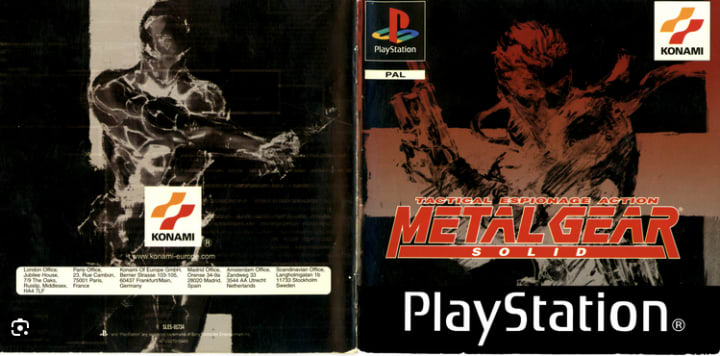
This was when manuals mattered.
Not just as instruction booklets, but as companions to the experience. Bridges between our world and the one unfolding in pixels. Physical artifacts that stretched fiction beyond the screen.
The scent of fresh ink and paper, the satisfying heft, the way certain pages would naturally fall open after years of reading.
Remember the likes of Civilization II? Hundreds of pages of history and wonder. Not just strategy guides, but textbooks on empires, agriculture, metallurgy. You could lose an evening in it, never touching mouse and keyboard, yet feel like you’d lived through the rise and fall of nations.
These weren’t afterthoughts. No interns cribbing from Google or feeding prompts into LLMs. These were crafted with care by teams who understood that your game experience started well before the disc whirred into life.
Opening a new game manual was more than preparation to play. It set tone, clarified mysteries, built dread and wonder until your pulse raced at the thought of pressing “Start”.
By the time you booted the game, you were stepping into a world you already believed in.
And Then Everything Changed....
Downloads replaced discs. Paper became an expense that could be cut, and so it was cut.
Manuals for physical copies shrank. First they got thinner. Then they became single sheets with the controls printed on them. Then they vanished into digital folders.
Today’s manuals are in-game tutorials. Instant, contextual, often flawless in delivery. But something ineffable was lost.
The silence before the storm. The ritual of preparation. The weight of a real book in your hands. Something you could touch, share, collect, re-read.
And above all, the anticipatory pre-game ritual that turned gaming into ceremony.
The ironly is that many modern games are more complex than old games ever were. The systems contained in the likes of Crusader Kings III and Dwarf Fortress could fill encyclopedias. A proper manual for either of them would be a masterpiece of design and lore. Yet instead, we turn to wikis and multi-part YouTube tutorials.
The knowledge is still accessible. But the wonder? The journey? It’s gone rather quiet.
Times Change
The death of the game manual is a done deal. It's not ever really coming back now.
But there’s still a part of you that longs for the ritual. Kettle on. Sprawling on the couch, with the manual open like scripture, page after page revealing worlds before you've seen them.
About the Creator
Jack McNamara
I feel that I'm just hitting my middle-aged stride.
Very late developer in coding (pun intended).
Been writing for decades, mostly fiction, now starting with non-fiction.
Keep reading
More stories from Jack McNamara and writers in Gamers and other communities.
Early Life: From the Streets of Madeira to Stardom
Cristiano Ronaldo: From Madeira to Football Immortality Cristiano Ronaldo dos Santos Aveiro is a name that has become synonymous with determination, ambition, and sporting excellence. Rising from humble beginnings on the Portuguese island of Madeira, Ronaldo transformed himself into one of the greatest football players in history and a global icon followed by hundreds of millions of fans. His story is not only about talent, but about discipline, resilience, and an unstoppable desire to improve.
By Reflective Stories2 days ago in Gamers


Comments
There are no comments for this story
Be the first to respond and start the conversation.