
THE ROLE OF THE OLYMPICS IN PROMOTING INTERNATIONAL COOPERATION
Fostering Unity and Diplomacy Through Global Sporting Excellence.

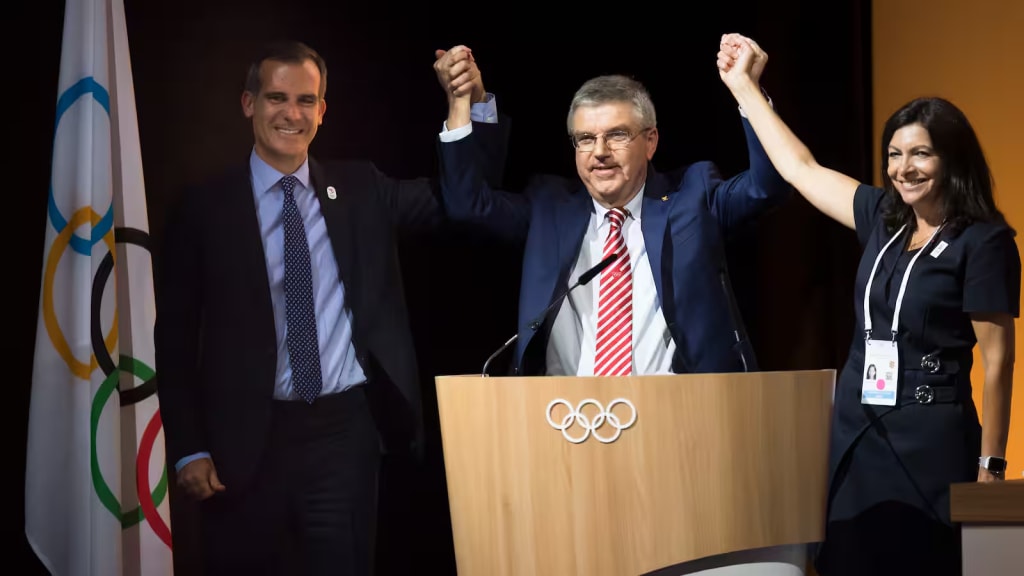
The Olympics, an event that brings together athletes from around the world to compete in various sports, has evolved over the years to become a symbol of international cooperation. Founded by Pierre de Coubertin in 1896, the modern Olympic Games were conceived not only as a sporting event but also as an opportunity for nations to come together in peace and mutual respect. Today, the Olympics continue to play a significant role in promoting international cooperation, despite the challenges and controversies that sometimes arise.
(I)A Platform for Cultural Exchange
One of the most significant ways the Olympics foster international cooperation is by providing a global stage for cultural exchange. Every four years, the Games bring together athletes from diverse backgrounds, representing their countries, cultures, and traditions. This unique gathering allows people from different nations to interact and share their cultures, fostering mutual understanding. Whether it's the opening ceremony, where each country proudly displays its flag, or the athlete's Village, where competitors live together and interact, the Olympics promote respect for diversity.
In addition to the cultural exchanges that occur among athletes and officials, the Games also attract millions of spectators from around the world. They create an opportunity for people to learn about the customs, languages, and values of other nations. The Olympic Games thus serve as a tool for bridging cultural divides and encouraging a global sense of community. Through this exchange, people realize that while their nations may differ in many aspects, they are united by a shared love of sport and the pursuit of excellence.
(II)Promoting Peace and Diplomacy
The Olympics have often served as a platform for diplomacy and peacebuilding. The Olympic Truce, which dates back to ancient Greece, is one of the most well-known examples of how the Games have been used to promote peace. The truce called for a cessation of hostilities between warring states during the Games, allowing athletes and spectators to travel safely to the event. While the Olympic Truce is not always strictly adhered to in modern times, its spirit remains central to the Games' ethos of promoting peace.
Throughout history, the Olympics have provided opportunities for dialogue and reconciliation between nations. A prime example is the 1972 Summer Olympics in Munich, where the United States and the Soviet Union, despite the Cold War tensions, sent athletes to compete in friendly competition. Similarly, the 1988 Seoul Olympics saw North and South Korea participate in a spirit of cooperation, despite their long-standing political and military conflicts.
More recently, the 2008 Beijing Olympics offered a platform for China to showcase its economic rise and promote a positive image to the international community. Despite the political tensions surrounding China’s human rights record, the Games allowed for moments of peaceful interaction and cooperation between China and other nations. In the same vein, the 2018 Winter Olympics in Pyeongchang, South Korea, featured historic moments, such as the unified Korean women’s ice hockey team, which brought together athletes from both North and South Korea.
(III)Collaboration in Infrastructure and Technology
The preparation for the Olympics is an enormous undertaking that requires international collaboration. Host cities must work closely with the International Olympic Committee (IOC), national governments, international sports federations, and private companies to build the necessary infrastructure, from stadiums to transportation networks. This cooperation is not limited to the host country; countries around the world often contribute their expertise and resources.
For example, the construction of sports venues often involves the sharing of knowledge and technology between nations. The Olympic Games stimulate the growth of technology, as innovations are developed to ensure the smooth functioning of the event. The Olympics have led to advancements in areas like broadcasting technology, security systems, and sustainable architecture. This collaboration helps to strengthen international relations and ensures that the Games can run efficiently.
(IV)Challenging Issues and Controversies
While the Olympics have played a positive role in promoting international cooperation, they have also been marred by challenges. Political controversies, boycotts, and corruption scandals have at times overshadowed the Games. The most notable example is the 1980 Moscow Olympics boycott, led by the United States in protest of the Soviet Union's invasion of Afghanistan. Similarly, the 1936 Berlin Olympics were used by Nazi Germany as a platform to showcase its ideology.
Despite these challenges, the Olympics have continued to serve as a reminder of the potential for peaceful cooperation. They offer a platform for athletes to compete without the interference of political ideologies, allowing for moments of unity and camaraderie that transcend National boundaries.
In The End
In conclusion, the Olympic Games have played a significant role in promoting international cooperation through cultural exchange, peacebuilding, and collaborative efforts in infrastructure and technology. Despite the occasional political tensions and controversies, the Games remain a powerful symbol of what can be achieved when nations come together to celebrate human achievement. The Olympics remind us that, regardless of our differences, we are all part of a global community bound by shared values such as respect, excellence, and friendship.
About the Creator
Badhan Sen
Myself Badhan, I am a professional writer.I like to share some stories with my friends.
Keep reading
More stories from Badhan Sen and writers in Gamers and other communities.
THE OLYMPICS AS A TOOL FOR CREATING AWARENESS OF GLOBAL HEALTH ISSUES
The Olympics, one of the most significant global sporting events, can serve as a powerful tool for creating awareness about global health issues. While the Games are traditionally associated with athletic excellence and international competition, they also present a unique opportunity to raise consciousness about a range of important global health concerns. By using the global stage provided by the Olympics, health organizations, governments, and athletes can collaborate to bring attention to health issues that affect millions of people worldwide.
By Badhan Senabout a year ago in Gamers
7 Intelligent Automation Skills That Define AI Digital Assistants
AI Digital assistants or virtual assistants are smart software applications/programs that use Artificial Intelligence to help you with your daily tasks. The software functions as a personal assistant that operates through voice and text commands. These tools use natural language processing and machine learning to understand exactly what you need. They can manage your schedule, emails, or even control your smart devices.
By Arthur Leo4 days ago in Gamers
Mirage League Coins Deserve More Attention
In PoE 3.28 Mirage League, many players collect Coins of Power, Knowledge, and Skill without much thought. At first glance, they seem like minor items, and it’s easy to just stash them. That’s a mistake. These coins can significantly improve level 20 skill gems by adding a hidden bonus. They act as a form of controlled corruption, giving your gems extra utility and making skills feel stronger. For players running red maps or refining builds, this system can noticeably change gameplay and make abilities more effective.
By Smsankar Goswami3 days ago in Gamers
My First Time Skiing and I Got Lost, Alone, in the French Alps
Looking back, I can trace some of my life’s biggest adventures to a simple action from my sister. She’d introduced me to Tommy (a very long time ago), a colleague of hers, who had overshared his penchant for Italian-looking women, and I ticked that box.
By Chantal Christie Weiss3 days ago in Humans



Comments
There are no comments for this story
Be the first to respond and start the conversation.