
THE ROLE OF THE OLYMPICS IN BUILDING INTERNATIONAL DIPLOMACY
Exploring How the Olympics Foster Global Cooperation and Enhance Diplomatic Relations Between Nations.

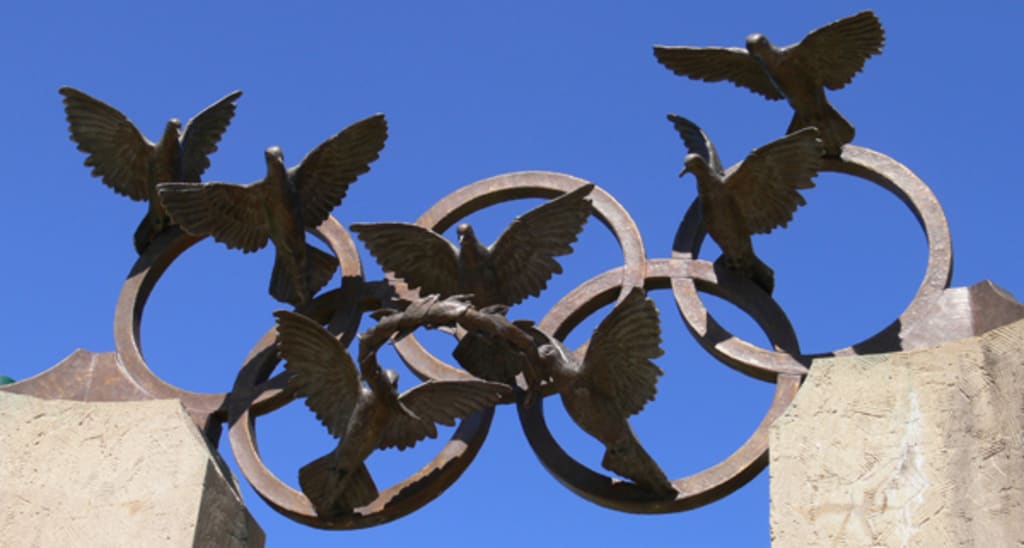
The Olympic Games, since their inception in ancient Greece, have transcended the realm of sports to become a significant avenue for international diplomacy. Today, the Olympics continue to provide a platform for nations to engage in peaceful competition, foster unity, and promote cross-cultural understanding. The role of the Olympics in building international diplomacy is multifaceted, encompassing political, cultural, and social dimensions. The Games allow countries to transcend political barriers, showcase their cultures, and send diplomatic signals to the world, contributing to global peace and cooperation.
(I)A Platform for Political Engagement and Diplomacy
The Olympic Games have historically played a critical role in facilitating international dialogue and diplomatic engagement. The Olympic Charter, which governs the Games, emphasizes the importance of politics being kept separate from sports, ensuring that the Games remain neutral and uniting for all participants. This neutral ground allows countries with divergent political ideologies to come together in a shared experience of competition and camaraderie.
One of the most notable examples of political engagement through the Olympics occurred during the Cold War. Despite the intense rivalry between the United States and the Soviet Union, both nations used the Olympic Games as a way to showcase their political and economic systems. The 1980 Moscow Olympics, for instance, saw the United States lead a boycott of the Games in protest of the Soviet Union’s invasion of Afghanistan. This action demonstrated the ways in which international relations can intersect with Olympic participation. Similarly, the Soviet Union reciprocated by boycotting the 1984 Los Angeles Olympics. Although these boycotts were politically charged, the Games also served as a stage for diplomatic communication, with both sides attempting to use their Olympic participation to project strength and superiority.
However, not all Olympic interactions have been contentious. The 1992 Barcelona Olympics marked a turning point in the Olympic Games’ role in diplomacy. With the end of the Cold War, the Olympics became a symbol of global cooperation, with former adversaries such as the United States and the Soviet Union participating in a more positive spirit. Furthermore, the inclusion of countries from the former Eastern Bloc and other previously marginalized nations further emphasized the Olympics’ capacity to bring countries together. In recent times, the Olympic Games have seen the involvement of North and South Korea in joint sporting events, such as during the 2018 PyeongChang Winter Olympics, where the two countries marched under a unified flag and competed together in events like women's ice hockey. This act of diplomacy through sports symbolizes the power of the Olympics to bridge divides.
(II)Cultural Exchange and Soft Power
In addition to facilitating political diplomacy, the Olympics serve as a platform for cultural exchange, allowing nations to showcase their heritage to a global audience. Cultural diplomacy through sports can create mutual respect and understanding among nations. Each Olympic Games is an opportunity for host countries to demonstrate their traditions, hospitality, and national pride, offering a unique glimpse into their cultures through opening ceremonies, performances, and interactions with athletes from around the world.
Hosting the Olympics also offers a nation the chance to project soft power — the ability to influence others through attraction rather than coercion. For example, the 2008 Beijing Olympics were a moment for China to assert itself on the world stage, showcasing its economic development and cultural richness while demonstrating its growing international influence. The opening ceremony, directed by renowned filmmaker Zhang Yimou, was a spectacular display of Chinese history and progress, signaling the country's modernization and desire for global recognition.
Similarly, the 2016 Rio Olympics served as an opportunity for Brazil to highlight its cultural vibrancy, despite economic challenges. The Games allowed Brazil to present itself as a rising global power, strengthening its ties with other countries and contributing to the country's image as an emerging market with rich traditions. While the 2020 Tokyo Olympics were postponed due to the COVID-19 pandemic, Japan’s efforts to demonstrate its technological advancement and rich cultural history were evident in the planning and anticipation of the event.
(III)Promoting Peace and Unity
At its core, the Olympics are a symbol of peace and unity. The Olympic motto "Citius, Altius, Fortius" (Faster, Higher, Stronger) encourages athletes to compete with integrity and fair play, emphasizing the value of respect and equality. The Games promote the ideal that sport has the power to bring people together, regardless of their nationality, race, or political beliefs.
The Olympics also provide an avenue for conflict resolution and the promotion of peace. The International Olympic Committee (IOC) has consistently worked with international organizations, such as the United Nations, to foster global cooperation. A notable example of this is the Olympic Truce, a tradition dating back to the ancient Games, which calls for a cessation of hostilities during the duration of the Games. While the truce is not always upheld in full, it serves as an ideal that the Olympics are meant to embody — the belief that peace is possible through international cooperation and understanding.
Moreover, the Olympics offer a platform for nations to address global issues collectively. For instance, environmental concerns, gender equality, and human rights have become increasingly important topics during the Games. The IOC’s efforts to make the Olympics more sustainable and inclusive reflect its role in encouraging diplomatic dialogue on global challenges.
In The End
The Olympic Games have long been a powerful tool in building international diplomacy. By providing a neutral space for nations to engage in friendly competition, showcase their cultures, and promote peace, the Olympics foster global unity and cooperation. The Games continue to evolve as a platform for diplomatic engagement, transcending political divisions and offering hope for a more harmonious world. Through the Olympics, sport becomes not just a contest of athletic prowess but a celebration of our shared humanity.
About the Creator
Badhan Sen
Myself Badhan, I am a professional writer.I like to share some stories with my friends.
Keep reading
More stories from Badhan Sen and writers in Gamers and other communities.
HOW THE OLYMPICS HELPED IN THE REVIVAL OF SPORT IN FORMER EASTERN BLOC COUNTRIES
The Olympics have long been a platform for nations to showcase their athletic prowess and national pride, and their impact on the former Eastern Bloc countries following the end of the Cold War has been profound. These countries—once part of the Soviet Union or under its influence—faced unique challenges during and after the collapse of communism in 1991. For many, the Olympic Games were not only a stage for competitive sport but also a catalyst for revitalizing national pride, developing athletic infrastructure, and redefining their positions on the global stage.
By Badhan Senabout a year ago in Gamers
The Future of Gaming with Cross Platform Game Development
The gaming industry is evolving faster than ever, and one major reason behind this shift is cross platform game development. Players today expect games to work smoothly across mobile, PC, console, and even web platforms without losing quality or performance. For developers and publishers, this approach is no longer optional. It is becoming a practical way to reach a wider audience, reduce development effort, and stay competitive in a crowded market. As technology advances, cross platform game development is shaping how games are built, launched, and experienced worldwide.
By gammming world 5 days ago in Gamers
The Coolest Mods in Grand Theft Auto V You Didn’t Know Existed
Grand Theft Auto V (GTA V) has been one of the most popular open-world games since its release, and much of its enduring appeal comes from the modding community. Mods, short for modifications, allow players to alter, expand, or enhance the game in creative ways. While many gamers are familiar with the most popular mods, like realistic graphics or vehicle packs, there are countless lesser-known gems that can completely transform your Los Santos experience.
By Games Mode Onabout 23 hours ago in Gamers



Comments (1)
During the Olympics aren't we all diplomats to a point.