
THE INSPIRATIONAL STORY OF JESSE OWENS AT THE 1936 BERLIN OLYMPICS
Triumph Over Adversity:Jesse Owens Defies Nazi Ideals at the 1936 Berlin Olympics.

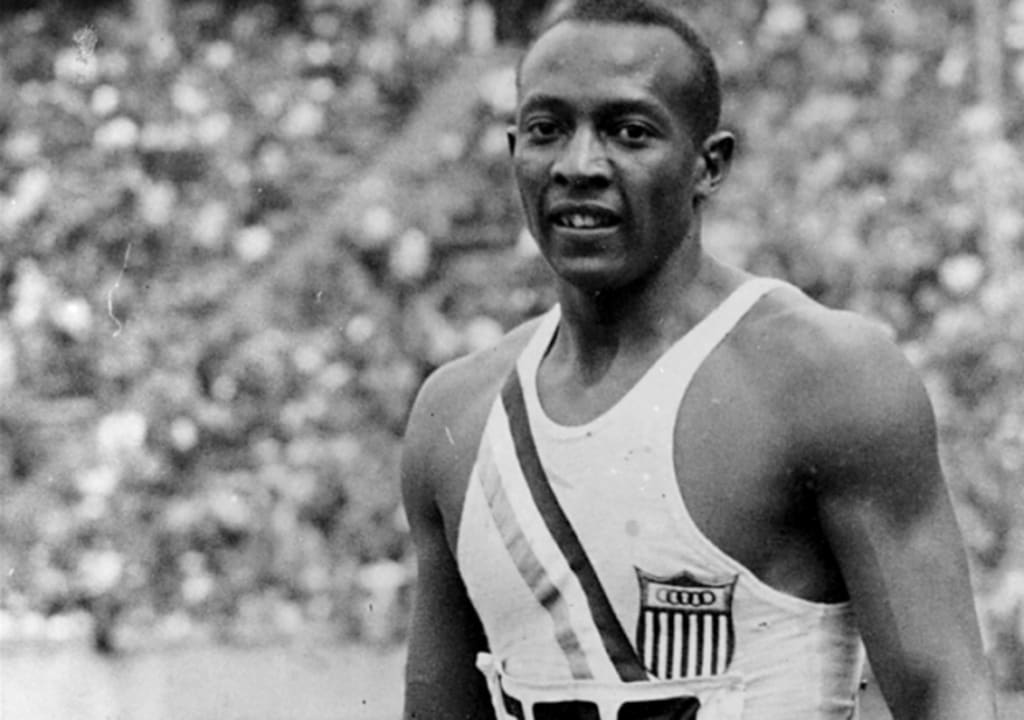
Jesse Owens, one of the most iconic athletes in Olympic history, made his mark at the 1936 Berlin Olympics in a way that transcended the world of sports. His triumphs on the global stage became a symbol of defiance against racism and a powerful statement about human achievement.
Background and Context
The 1936 Berlin Olympics were held in Nazi Germany, under the regime of Adolf Hitler. Hitler's ideology of racial superiority was on full display, and he hoped that the Games would showcase the supposed supremacy of the Aryan race. However, Jesse Owens, an African American track and field star, shattered these racist notions by dominating the Games.
Born in 1913 in Oakville, Alabama, Jesse Owens was raised in a poor family, facing racial discrimination and hardship from a young age. Despite these challenges, Owens's talent in track and field was undeniable, and by the time he arrived at the 1936 Olympics, he had already earned the nickname "The Buckeye Bullet."
The 1936 Berlin Olympics
Owens arrived in Berlin amidst a tense political climate. Hitler, seeking to demonstrate Aryan dominance, was reportedly hoping for German athletes to dominate the Games. When Owens stepped onto the track, he was not only competing against the world’s best athletes but also confronting the ideology of racial superiority that was so prevalent in the host country.
Owens’s first event was the long jump, where he faced a formidable field, including Germany's top contender, Luz Long. Despite a rocky start, Owens's determination prevailed. On his final jump, he leaped an impressive 8.06 meters, securing the gold medal. His performance stunned the crowd, but it was his sportsmanship that left a lasting impression. In the earlier rounds, Owens had fouled on his first two attempts. It was Luz Long, the German athlete, who offered advice and encouraged Owens to focus on his third jump. Long’s kind gesture showed a spirit of camaraderie that transcended National and racial boundaries, even in the face of Nazi propaganda.
Owens went on to win three more gold medals in the 100-meter sprint, 200-meter sprint, and the 4x100-meter relay. His victories at these events shattered the myths of Aryan racial superiority and challenged the deeply ingrained prejudices of the time. Owens’s performances were breathtaking, particularly in the 200-meter race, where he set a new Olympic record of 20.7 seconds.
The Aftermath and Legacy
Jesse Owens’s remarkable achievements at the 1936 Olympics became a powerful symbol of resilience and excellence in the face of adversity. However, his triumphs were not met with the celebration that one might expect. Despite being celebrated globally for his achievements, Owens returned to a country that was still steeped in racial segregation. In the U.S., he was not given a hero’s welcome, and his victories were often downplayed because of his race.
Yet, Owens’s legacy extended far beyond the Olympics. He inspired future generations of African American athletes and challenged the concept of racial hierarchy. His success at the 1936 Games was a direct contradiction to the Nazi racial theories, and it showcased the incredible potential of all human beings, regardless of race. Owens’s performance in Berlin became a beacon of hope for people worldwide, especially in the context of the deep-seated racial divisions of the era.
Owens later became a prominent figure in the civil rights movement and worked to promote equality for African Americans in sports and beyond. In his later years, Owens often spoke about his experiences at the Berlin Olympics, stressing the importance of perseverance and the power of sports to unite people across racial and national lines.
In The End
Jesse Owens’s victory at the 1936 Berlin Olympics remains one of the most inspiring stories in the history of the Games. His athletic prowess, sportsmanship, and resilience in the face of racial and political adversity left a lasting impact on the world. Owens did not just win medals; he won the hearts of millions and proved that the human spirit is not defined by race or nationality. In doing so, he became a true hero, whose legacy continues to inspire athletes and individuals worldwide, both in and out of the sporting world.
About the Creator
Badhan Sen
Myself Badhan, I am a professional writer.I like to share some stories with my friends.
Keep reading
More stories from Badhan Sen and writers in Gamers and other communities.
THE HISTORY OF JACKIE JOYNER-KERSEE'S OLYMPIC SUCCESS
Jackie Joyner-Kersee is widely regarded as one of the athletes in Olympic history, particularly for her achievements in the heptathlon and long jump. Her Olympic career spans four Games, where she earned a total of six medals—three gold, one silver, and two bronze—solidifying her legacy as one of the most accomplished female athletes in the world.
By Badhan Senabout a year ago in Gamers
U4gm ARC Raiders 1.19.0: Stand Out with the Devotee Outfit and New Hairstyles
The ARC Raiders 1.19.0 update has officially arrived, and it’s bringing more than just bug fixes and balance tweaks. Players now have exciting new ways to stand out in the heat of battle with a brand-new cosmetic outfit and two distinct hairstyles.
By Billo Nali5 days ago in Gamers
Why Didn't Anyone Tell Us
Men, move along. This is not for you. This is for the women. I was forty-five when I began menopause. It is pretty young for that to be going on in a woman’s life, but I had undiagnosed PCOS, my entire life. Thank you to all the gynecologists I had seen my entire life. That in itself should encourage women to keep seeking second opinions, especially when you are not getting correct answers or any at all.
By Alexandra Grant6 days ago in Humans


Comments (1)
Jesse Owens made history on several points over the years. Another great historical piece you have here.