
THE HISTORY OF OLYMPIC WRESTLING:FROM ANCIENT GREECE TO TODAY
Exploring the Evolution of Olympic Wrestling from Its Origins in Ancient Greece to its Modern-Day form.

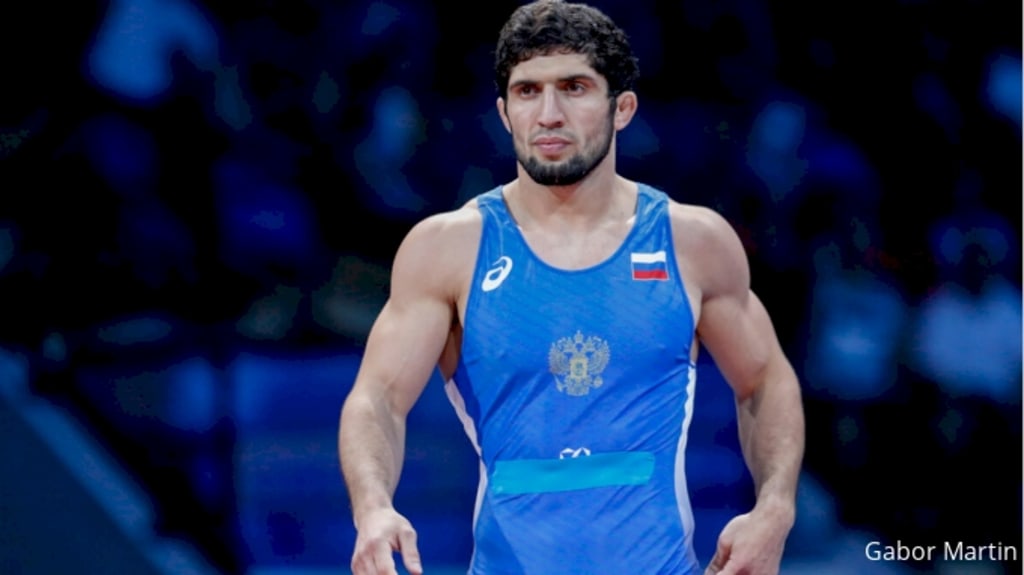
Wrestling is one of the oldest and most revered sports in human history, with its origins tracing back to ancient civilizations. As part of the Olympic Games since their inception, wrestling has evolved significantly from its ancient roots in Greece to the modern, highly organized and globalized sport we know today.
Ancient Greece: The Birth of Olympic Wrestling
Wrestling’s inclusion in the ancient Olympic Games of Greece is often considered the beginning of its Olympic journey. The first recorded evidence of wrestling dates back to the ancient Sumerians and Egyptians, but it was the ancient Greeks who formalized the sport. In 708 BCE, wrestling was added to the ancient Olympic Games, marking its prominence in the competition. It was an essential event in the ancient Olympics, reflecting the Greeks’ admiration for physical prowess and combat skills.
The Greek style of wrestling was based on the idea of pankration, a brutal blend of boxing and wrestling that tested both strength and endurance. In ancient Greek wrestling, athletes competed in a no-holds-barred match that involved techniques like throws, joint locks, and pins. Victory was achieved by forcing the opponent to the ground or by making them submit. Unlike modern wrestling, where specific rules and regulations apply, ancient wrestling was far more aggressive, and matches could last until one combatant was incapacitated.
Roman Era: The Spread of Wrestling
When the Romans took over Greece in the 2nd century BCE, they adopted many aspects of Greek culture, including wrestling. However, Roman wrestling became more structured and less aggressive, with specific rules and scoring systems emerging. The emphasis shifted towards style and technique, and wrestling competitions became a popular form of public entertainment in Roman arenas.
Roman wrestling also influenced the development of later forms of combat sports. However, when the Roman Empire collapsed and the Western world entered the Dark Ages, organized wrestling competitions largely disappeared from mainstream culture.
Renaissance Revival
Wrestling’s Olympic roots were revived during the Renaissance period in Europe, where the sport regained popularity in various regions. In France, Italy, and England, traditional forms of wrestling were practiced, often as part of military training. In England, a style known as catch-as-catch-can wrestling began to form, which would later serve as the foundation for modern freestyle wrestling.
The Birth of Modern Olympic Wrestling
The modern history of Olympic wrestling began in the late 19th century when Pierre de Coubertin, the founder of the modern Olympic Games, sought to revive the ancient traditions of the Olympics. When the first modern Olympic Games were held in Athens in 1896, wrestling was one of the original events, but it was limited to a Greco-Roman style, which was modeled after the ancient Greek form of wrestling.
Greco-Roman wrestling, unlike modern freestyle wrestling, only allows the use of the upper body for attacks and holds, banning attacks on the legs. This style dominated the sport in the early years of the modern Olympics. Wrestlers were tasked with pinning their opponents' shoulders to the mat, and points were awarded for the execution of throws, holds, and control.
The Introduction of Freestyle Wrestling
Freestyle wrestling, where competitors are allowed to attack both the upper and lower body, was introduced to the Olympics in 1904. The inclusion of freestyle wrestling allowed more diverse techniques, leading to a different dynamic in matches. This style became particularly popular in countries like the United States and Russia, where it quickly gained a strong following. Freestyle wrestling also allowed women to compete for the first time in the Olympic Games, with women’s freestyle wrestling making its Olympic debut at the 2004 Athens Games.
The Evolution of Olympic Wrestling
Throughout the 20th century, Olympic wrestling became more competitive, and the sport saw the development of advanced training techniques, weight classes, and more rigorous rules. The addition of weight divisions made wrestling more inclusive, allowing athletes of various sizes to compete against each other on a level playing field. This change also contributed to the increasing global nature of the sport, as nations with a variety of cultural traditions began developing wrestling programs.
The global expansion of wrestling became especially evident during the Soviet era when countries like the Soviet Union, Iran, Japan, and Cuba became dominant powers in both Greco-Roman and freestyle wrestling. Wrestlers from these countries, such as the Soviet Union’s Alexander Karelin and Iran’s Hamid Sourian, became international icons in the sport.
Recent Developments and Challenges
In recent years, Olympic wrestling faced significant challenges. In 2013, the International Olympic Committee (IOC) controversially announced that wrestling would be removed from the program for the 2020 Olympics. This decision sparked worldwide protests from the wrestling community, leading to a campaign for wrestling’s reinstatement. After a dramatic and impassioned appeal, the IOC voted in 2013 to reinstate wrestling as an Olympic sport.
The inclusion of women’s wrestling in the Olympics has been a significant milestone, with women’s freestyle wrestling continuing to grow in popularity and competitiveness.
In The End
From its ancient origins in Greece to its modern form in the Olympics, wrestling has undergone numerous transformations. It has remained a sport deeply rooted in tradition, but its continual evolution reflects the changing dynamics of global sports culture. Wrestling remains one of the oldest Olympic sports, embodying both the physical and mental toughness required to compete at the highest level. The future of Olympic wrestling seems bright, with more nations embracing the sport and ensuring its continued place in the Olympic movement.
About the Creator
Badhan Sen
Myself Badhan, I am a professional writer.I like to share some stories with my friends.
Keep reading
More stories from Badhan Sen and writers in Gamers and other communities.
THE IMPACT OF TENNIS RETURNING TO THE OLYMPICS IN 1988
Tennis has a long history of being one of the world’s most popular sports, but it was not always part of the Olympic Games. Tennis was originally included in the Olympics from 1896 to 1924, but after 1924, it was removed from the Olympic program. This exclusion was due to a dispute between the International Tennis Federation (ITF) and the International Olympic Committee (IOC) over the amateur status of players. In 1988, tennis made a triumphant return to the Olympic Games in Seoul, and this event marked a significant turning point in the history of both tennis and the Olympics. The return of tennis to the Olympics not only revitalized the sport's global profile but also had a profound effect on the players, the Olympic movement, and the broader sporting world.
By Badhan Senabout a year ago in Gamers
Rsvsr How Daily Events and Golden Blitz Help You Progress Faster in Monopoly GO!
At first glance, Monopoly GO! looks like a simple roll-and-move game, but anyone who has played for a while knows there’s much more going on under the surface. Daily events are what turn routine gameplay into something strategic and rewarding. Instead of logging in just to roll dice, players who pay attention to events often progress faster and enjoy the game more overall.
By Billo Nali4 days ago in Gamers




Comments
There are no comments for this story
Be the first to respond and start the conversation.