
The Hidden Science of Co-Play: What It Takes Two Shows Us About Human Bonding
this game proves that co-play is not just entertainment

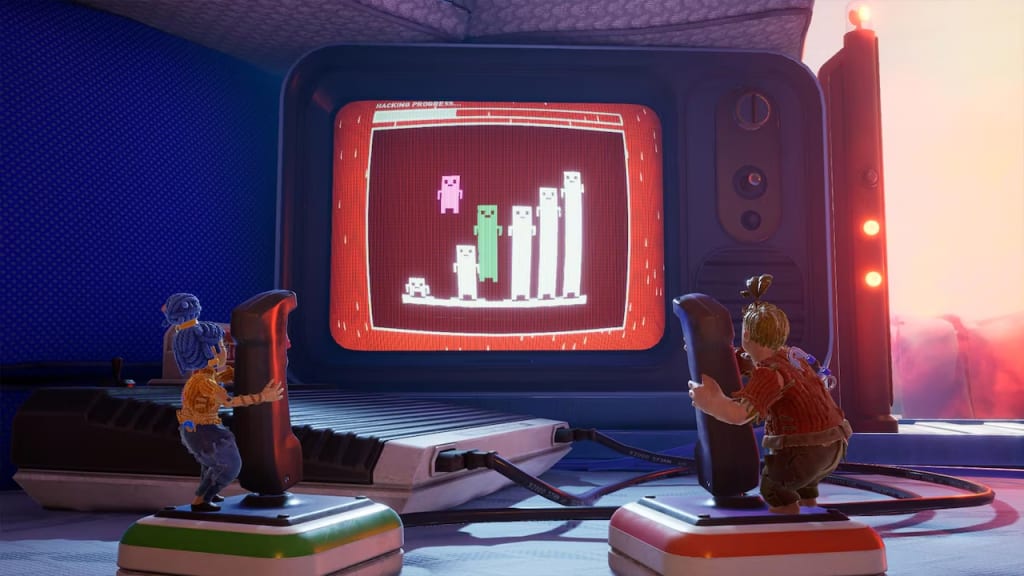
Human bonding has always been shaped by shared experiences—moments where two people synchronize their actions, attention, and emotions. In modern life, these moments are increasingly rare. Work, digital distractions, and personal responsibilities have made focused, shared time a luxury rather than a norm. Yet It Takes Two, a co-operative adventure game by Hazelight Studios, quietly restores this sense of togetherness. Beneath its playful exterior lies a subtle but powerful lesson in how humans connect. The game does not just ask players to work together; it activates the psychological and neurological mechanisms that support genuine bonding. In doing so, it becomes more than entertainment—it becomes an interactive study in co-play and human connection.
At its core, It Takes Two demonstrates the science of cooperation through synchronized action. Many of the game’s puzzles cannot be solved unless both players execute their roles at precisely the right moment. This kind of coordinated interaction mirrors what psychologists call “joint action,” a process in which two minds align toward a shared goal. Research shows that joint action increases feelings of trust and closeness because each partner must rely on the other to succeed. When one player swings on a nail while the other throws it, or when one manipulates time while the other navigates moving platforms, the brain experiences a unique form of collaborative engagement. This fosters a quiet dependency that strengthens social bonding in a natural, organic way.
Another important element is the game’s ability to create what psychologists call “shared attention.” Shared attention occurs when two people focus on the same activity with equal investment. It is a key component of human attachment, especially in childhood development, where moments of shared play help build long-term emotional security. It Takes Two replicates this process for adults. Because the gameplay constantly shifts mechanics and environments—from fighting wasps to repairing clocks to navigating a child’s toy castle—players are required to remain fully present and aware of each other’s actions. The constant novelty ensures attention never drifts. In a world full of distractions, the game manages to hold two minds in parallel focus, something that strengthens emotional resonance and mutual understanding.
A critical but often overlooked aspect of the game is how it encourages empathy. Each level subtly reflects the fractured relationship of Cody and May, the couple-turned-dolls who must work together to repair their marriage. As players move through environments tied to the characters’ memories and frustrations, they are invited to understand perspectives outside their own. Neuroscience suggests that engaging with narrative-based cooperative tasks activates the brain’s empathy circuits, particularly when players must take on complementary roles. In It Takes Two, each player is given abilities the other does not have. This asymmetry forces both partners to recognize each other’s strengths and frustrations. The experience becomes not just a test of skill, but an exercise in appreciating differences—something crucial in real human relationships.
The game also excels at creating what researchers call “co-regulation.” Co-regulation occurs when two people manage stress, excitement, or tension together, stabilizing each other’s emotional responses. Moments of challenge—such as boss fights or time-sensitive puzzles—raise adrenaline and heart rate. Because both players experience this simultaneously, and because they must remain calm to succeed, they naturally support each other’s emotional states. When one player becomes stressed, the other often compensates with reassurance or strategic thinking. Over time, this mutual emotional adjustment deepens the bond between players. The game becomes a rehearsal for real-life emotional cooperation.
Perhaps the strongest bonding mechanism activated by It Takes Two is “synchronized triumph.” Social psychology shows that shared victories produce more intense feelings of connection than individual achievements. Each time players complete a difficult sequence or defeat a tough enemy, they experience a burst of dopamine—a reward chemical—at the same moment. When dopamine is released simultaneously in two people who share a goal, it enhances the sense of unity. The game structures its progression around these shared peaks of success, meaning that every triumph is relational, not individual. This is one reason many couples and friends report feeling closer after playing; the emotional highs are intrinsically linked to the partnership itself.
What makes It Takes Two especially remarkable is that it delivers these bonding mechanisms without ever feeling like work or therapy. The playfulness, humor, and constant creativity ensure the experience remains joyful. Yet behind the lighthearted puzzles and whimsical worlds, the game is quietly orchestrating a complex dance between psychology and design. It shows that when people engage in shared challenges, communicate openly, depend on each other’s strengths, and celebrate victories together, they naturally grow closer.
In a society where meaningful connection can feel increasingly scarce, It Takes Two reminds us that bonding does not always require deep conversations or dramatic moments. Sometimes, it simply requires a shared mission, a bit of teamwork, and a playful world that brings out the best in both players. Through its clever design and emotional depth, the game proves that co-play is not just entertainment—it is a pathway to deeper human connection.
About the Creator
Keep reading
More stories from Games Tale and writers in Gamers and other communities.
Mario Kart World All Locations
Mario Kart World brings together the most iconic, imaginative, and energy-filled locations from across the Mario universe, creating a racing experience defined by diversity, creativity, and nonstop surprises. Every location in the game reflects the spirit of Mario Kart: fast, fun, chaotic, and visually unforgettable. The environments in Mario Kart World range from peaceful mushroom-filled fields to dangerous volcanic arenas, from icy mountains to neon-lit cities, and each course contributes something completely different to the way races unfold. What makes these locations so memorable is how they combine charm with intensity—every track has its own identity, its own rhythm, and its own hazards that force players to stay alert, adapt quickly, and take advantage of shortcuts, boosts, and clever driving tactics. Just like earlier Mario Kart entries, Mario Kart World uses these locations not just as backgrounds, but as active, living spaces that influence every moment of the race.
By Games Tale2 months ago in Gamers
Rsvsr How to Maximize Rewards in Monopoly GO!’s Wizarding World Partners Event
Attention Monopoly GO! fans! Something magical is coming your way. On January 13, 2026, the game launches its Wizarding World Partners event — a limited-time cooperative challenge that promises big rewards, fun strategy, and a chance to team up with a friend for a truly unique experience.
By Dangyc Ding4 days ago in Gamers
A Failed Artist, A Disillusioned Poet, An Underpaid Game Show Host
I took my son and niece to Gori, a small town in Georgia where Joseph Stalin was born. They talked me into visiting the Stalin's Museum, the largest in the post-Soviet space. I had resisted going there because I just can't stand the monster and know enough about him, or so I thought.
By Lana V Lynx6 days ago in FYI


Comments
There are no comments for this story
Be the first to respond and start the conversation.