
THE EVOLUTION OF TRACK AND FIELD EVENTS IN THE OLYMPICS
Tracing the Legacy and Growth of Track and Field in Olympic History.

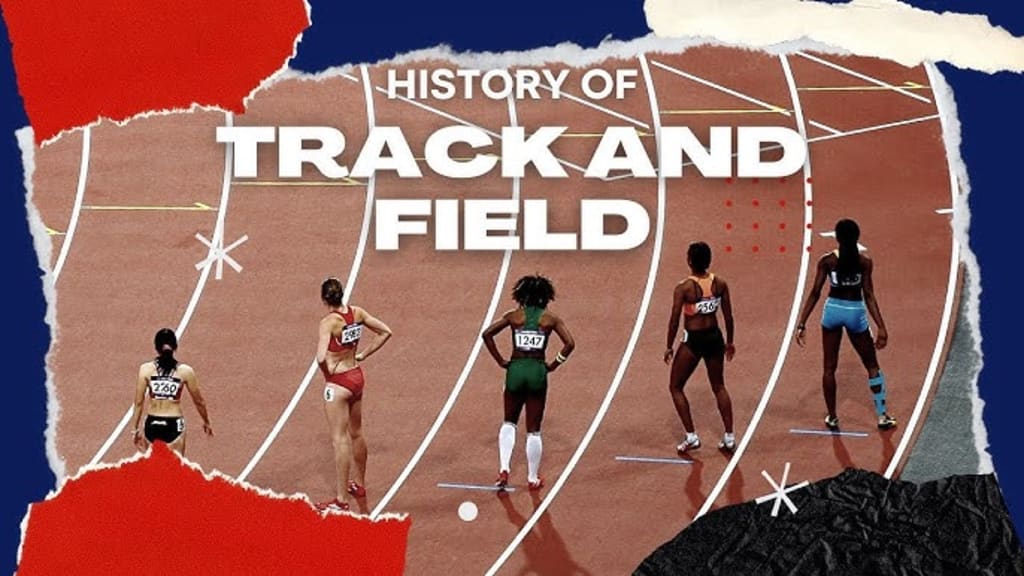
The Olympic Games, an enduring symbol of human athletic achievement, have evolved significantly since their inception in ancient Greece. Among the various disciplines featured in the Olympics, track and field events hold a special place, combining raw physical prowess, mental determination, and a celebration of human potential. The journey of track and field in the Olympics mirrors the broader history of the Games, reflecting changes in culture, technology, and global inclusivity.
Ancient Beginnings
Track and field events can trace their origins to the ancient Olympic Games, first held in 776 BCE in Olympia, Greece. The ancient Games were deeply intertwined with Greek religious practices, honoring Zeus, the king of the gods. The central event of these early Olympics was the stade race, a sprint over a distance of roughly 192 meters, equivalent to the length of the stadium.
Other events were gradually introduced, including the diaulos (a two-lap race), the dolichos (a long-distance race), and the pentathlon, which combined running, long jump, discus throw, javelin throw, and wrestling. Athletes competed in the nude, emphasizing the Greek ideal of a sound mind in a sound body. Women were excluded from participating, reflecting the patriarchal nature of ancient Greek society.
The ancient Olympics declined and eventually ceased in 393 CE, when Emperor Theodosius I banned pagan festivals, including the Games. Track and field, along with other Olympic sports, lay dormant for over a millennium.
The Modern Revival
The modern Olympic Games were revived in 1896, spearheaded by Pierre de Coubertin, a French educator and historian. Track and field events were a cornerstone of the inaugural modern Olympics, held in Athens, Greece. The 1896 Games featured men-only competitions, with events such as the 100 meters, 400 meters, marathon, shot put, and long jump.
One of the defining moments of this era was the introduction of the marathon, inspired by the legend of Pheidippides, an ancient Greek messenger who ran from Marathon to Athens to deliver news of a military victory. This race quickly became a symbol of endurance and is now a staple of the Olympics.
Expansion and Standardization
As the Olympics grew, so did the range and sophistication of track and field events. The early 20th century saw the introduction of field events like pole vault, hammer throw, and triple jump. The inclusion of women’s track and field in the 1928 Amsterdam Olympics marked a pivotal moment for gender equality in sports, although initial events for women were limited and contested.
The International Association of Athletics Federations (IAAF), founded in 1912, played a critical role in standardizing rules and equipment. Track distances were measured precisely, starting blocks were introduced, and electronic timing replaced hand-held stopwatches to ensure accuracy. These changes reflected the growing emphasis on fairness and consistency in competition.
Technological Advancements
The mid-20th century ushered in an era of technological innovation that transformed track and field. Synthetic tracks, first used at the 1968 Mexico City Olympics, replaced cinder tracks, offering better traction and durability. The same Games witnessed the debut of the Fosbury Flop in the high jump, revolutionizing the technique and inspiring generations of athletes.
Timing and measurement technologies continued to evolve. Photo-finish cameras, electronic timers, and wind gauges became standard, ensuring precise results. Advances in footwear and apparel, including lightweight spikes and moisture-wicking fabrics, allowed athletes to push the boundaries of human performance.
Globalization and Diversity
Track and field events have become a truly global phenomenon, with athletes from diverse backgrounds and regions achieving Olympic glory. The dominance of African distance runners, particularly from Kenya and Ethiopia, has become a hallmark of modern track events. Similarly, Caribbean nations like Jamaica have produced sprinting legends, such as Usain Bolt, who captivated the world with his record-breaking performances.
The Olympics have also provided a platform for social and political statements. Iconic moments include Jesse Owens’ four gold medals at the 1936 Berlin Olympics, challenging Nazi racial ideology, and the Black Power salute by Tommie Smith and John Carlos on the podium in 1968, highlighting civil rights struggles in the United States.
Contemporary Innovations
Recent decades have seen further innovations in track and field. Mixed-gender relay events, introduced at the 2020 Tokyo Olympics, reflect a growing commitment to inclusivity and gender equality. Technological advancements, such as biomechanical analysis and data-driven training methods, continue to enhance athletic performance.
Environmental sustainability has also become a focus, with eco-friendly stadiums and equipment gaining prominence. The Tokyo Olympics featured a track made from recycled materials, signaling a shift toward greener practices in sports.
The Future of Track and Field
As the Olympics move into the future, track and field events are likely to evolve further, embracing new technologies and promoting greater inclusivity. Emerging trends include virtual reality training, advanced prosthetics for para-athletes, and efforts to make the sport more accessible to underrepresented communities.
Track and field remains at the heart of the Olympic Games, symbolizing the enduring human quest for excellence and self-improvement. Its evolution over centuries reflects broader societal changes, from ancient religious rites to modern global unity. As the world continues to change, so too will the thrilling and inspiring events of track and field.
About the Creator
Badhan Sen
Myself Badhan, I am a professional writer.I like to share some stories with my friends.
Keep reading
More stories from Badhan Sen and writers in Gamers and other communities.
THE ROLE PF THE IOC IN MEDIATING POLITICAL CONFLICTS
The International Olympic Committee (IOC) holds a unique position as a global organization dedicated to promoting peace, unity, and fair competition through sport. Founded in 1894, the IOC's mission extends beyond organizing the Olympic Games; it also involves fostering dialogue and resolving political tensions that threaten to disrupt the global sporting movement. By leveraging the universal appeal of the Olympics, the IOC plays a critical role in mediating political conflicts, advocating for neutrality, and bridging divides between nations.
By Badhan Senabout a year ago in Gamers
20 Horror Game Masterpieces to Play Before You Die
Horror games have a unique ability to evoke fear and adrenaline, making them a beloved genre among gamers. However, there are some horror video games that will blow your mind, and you should play them to experience the sensations they offer. For this reason, I asked the AI about the best horror video games available, since I find it difficult to choose among so many options.
By Ninfa Galeano5 days ago in Gamers



Comments (1)
Track and Field has come a long way since Ancient Greece. Great report.