
The Conquered Battle
In this Game you will conquer the world

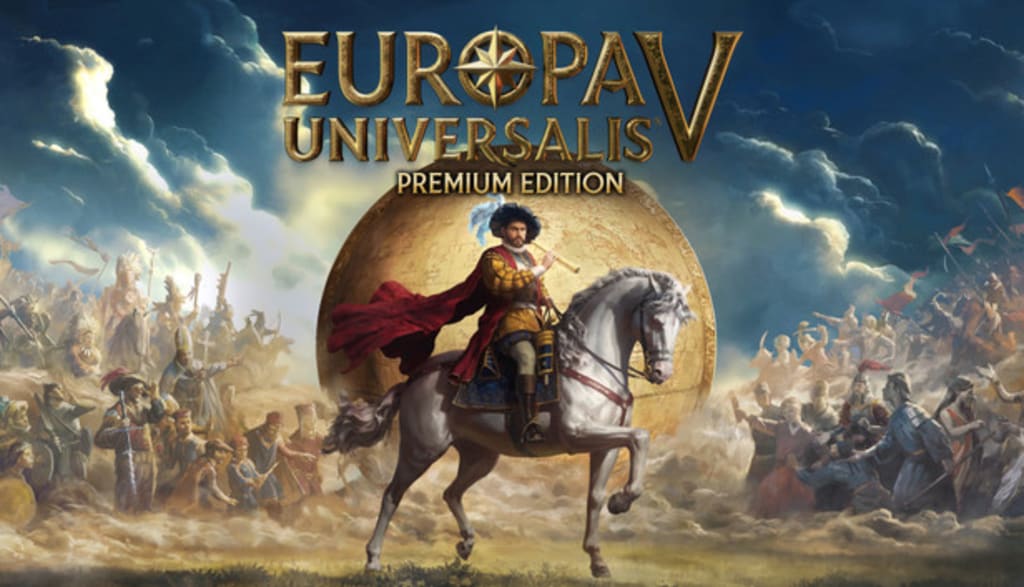
Set between 1337 and 1837 AD, the game invites you to take control of any nation on Earth — from mighty empires like France or Ming China to small city-states or tribal confederations — and lead it through five centuries of warfare, diplomacy, trade, colonization, and reform.
Paradox Interactive has once again ventured into the heart of history with Europa Universalis V (EU5), the latest entry in their long-running grand strategy series. Developed by Paradox Tinto, this game expands on the legacy of Europa Universalis IV with a deeper focus on realism, population management, and global politics.
If you’ve ever dreamed of shaping history your own way, Europa Universalis V is designed to let you do exactly that.
A World Alive with Possibilities
At its core, Europa Universalis V is about control, power, and adaptation. Every nation on the map has its own goals, culture, and path to greatness. You can rise as a merchant republic dominating the seas, an imperial conqueror expanding across continents, or a peaceful diplomat building coalitions and trade networks.
Unlike many strategy games that focus purely on conquest, EU5 emphasizes the complex interplay between internal management and international politics. It’s not enough to simply win battles — you must govern wisely, keep your people loyal, and maintain a balance of power in an ever-changing world.
Players will notice immediately that the world feels more “alive” than ever. Populations within provinces have distinct cultures, religions, and social classes, each with their own interests. Managing these “pops” becomes as important as commanding armies. Revolts, reform movements, and cultural integration add a human dimension to the grand strategy formula.
What’s New in Europa Universalis V
Paradox has introduced several key systems that set EU5 apart from its predecessor:
1. Population and Economy Simulation
Each province now contains a living population that drives production, taxes, and manpower. Rather than abstract numbers, you deal with real social groups — nobles, burghers, peasants, clergy — who react to your policies and wars. This adds a strategic layer of domestic management and long-term planning.
2. Character-Driven Administration
The once-controversial “mana points” of EU4 are gone. In EU5, real characters matter: ministers, generals, and advisors shape how your state functions. Their skills, loyalty, and ambitions influence your success or downfall. This change makes every political decision feel more personal and grounded.
3. Improved Diplomacy and Warfare
Diplomacy has become far more dynamic. Alliances shift with the tides of war, and global institutions like trade leagues and religious orders play more visible roles. Warfare now rewards strategic positioning and supply management rather than just overwhelming force.
4. Automation and Accessibility
Recognizing the complexity of the series, Paradox has included optional automation features. Players can delegate tasks like trade management or local governance to AI advisors, allowing newcomers to focus on the parts they enjoy most. Veterans can still take full manual control for maximum efficiency.
5. A More Immersive World Map
The map itself has been redesigned for clarity and beauty. Terrain, climate, and trade routes look more realistic, and the improved interface makes managing vast empires smoother. The global economy feels tangible — goods flow through ports, and competition for trade power can make or break nations.
Strengths of the Game
1. Immense Depth and Realism
Europa Universalis V is one of the most detailed simulations of world history ever made. Every choice — from hiring an advisor to declaring war — can ripple through decades of gameplay. This depth rewards patient, thoughtful players who love long-term strategy.
2. Freedom of Playstyle
You can rule through force, diplomacy, faith, or trade. The diversity of strategies means that no two campaigns ever play the same way. Whether you unify Germany, rebuild the Byzantine Empire, or create a new colonial superpower, the sandbox potential is nearly limitless.
3. Replayability
With hundreds of playable nations and centuries of history to explore, replay value is enormous. Even after dozens of campaigns, you’ll still discover new paths, historical events, and strategies.
4. Community and Modding Support
The Paradox community has always been one of the most active in PC gaming. Modding support ensures that players can tailor their experience, whether they want new scenarios, quality-of-life improvements, or complete overhauls.
Challenges and Drawbacks
No grand strategy is without its hurdles, and Europa Universalis V continues that tradition.
1. Steep Learning Curve
For new players, the amount of information can be overwhelming. Even with improved tutorials, mastering the game’s systems takes time and patience. It’s a title that rewards study and experimentation — not instant gratification.
2. Time Investment
A full campaign can span dozens of hours, sometimes more. Managing your empire through centuries of political intrigue is deeply satisfying but requires focus and commitment.
3. DLC Concerns
As with previous Paradox titles, players worry about how much of the game’s content will be locked behind future DLC expansions. While the base game is substantial, history shows that long-term support comes with a steady stream of paid additions.
4. Technical Demands
The richer simulation means higher system requirements. Large empires and late-game scenarios can still cause performance issues on mid-range PCs.
Tips for New Players
Start Small: Choose a mid-sized nation like Portugal, Sweden, or the Ottomans to learn mechanics without being overwhelmed.
Focus Your Strategy: Don’t try to dominate every system at once. Begin with trade or warfare before diving into deep diplomacy.
Use Automation Wisely: Let the AI manage small details while you focus on major goals.
Learn from Mistakes: Early campaigns will likely end in collapse — but each one teaches you something new.
Engage with the Community: Guides, wikis, and forums are invaluable for learning advanced mechanics and strategies.
Overall Impression
Europa Universalis V isn’t just another sequel — it feels like the culmination of Paradox’s decades-long refinement of the grand strategy genre. It combines the best ideas from Victoria 3, Crusader Kings III, and Europa Universalis IV into a single, cohesive experience.
For strategy lovers, this is one of the most ambitious and rewarding games available. Every decision has weight. Every campaign tells a story. Every nation — from the mightiest empire to the smallest duchy — has the potential to shape the world.
If you’re looking for a fast-paced, casual experience, EU5 might not be your ideal match. But if you crave deep thinking, historical immersion, and the thrill of turning a struggling medieval kingdom into a global superpower, this game will absolutely captivate you.
About the Creator
Keep reading
More stories from Games Tale and writers in Gamers and other communities.
Batman: Arkham Shadow
He isn’t a alien. He doesn’t shoot lasers or bend steel. He’s just a man — a man driven by loss, purpose, and a relentless will to make sense of a city drowning in madness. And no matter how many times his story is told — through comics, films, or games — there’s always something new to discover beneath the cowl.
By Games Tale2 months ago in Gamers
U4gm Diablo IV Season 11: Secrets, Uber Gates, and the Cost of Power
Diablo IV Season 11 is not just about overt seasonal mechanics or climbing leaderboards. Beneath the surface lies a layer of secret challenges, designed for players who thrive on exploration, risk, and discovery. From Uber Lesser Evil Gates to hidden rewards tucked away in the world, these encounters test mastery, strategy, and patience. They aren’t explained in tutorials—they’re meant to be earned, not handed out.
By Dangyc Ding6 days ago in Gamers
U4gm How Expedition Mode Redefines Player Behavior in ARC Raiders
At its core, ARC Raiders is an extraction shooter. However, Expedition Mode fundamentally alters how players interact with risk, progression, and the game world itself. Rather than emphasizing short-term success, the mode introduces systems that reward consistency, foresight, and long-term decision-making.
By Billo Nali4 days ago in Gamers



Comments
There are no comments for this story
Be the first to respond and start the conversation.