
THE CHALLENGES OF ENSURING FAIR JUDGING IN OLYMPIC EVENTS
Balancing Subjectivity,Standard,and Technology for Unbiased Outcomes.

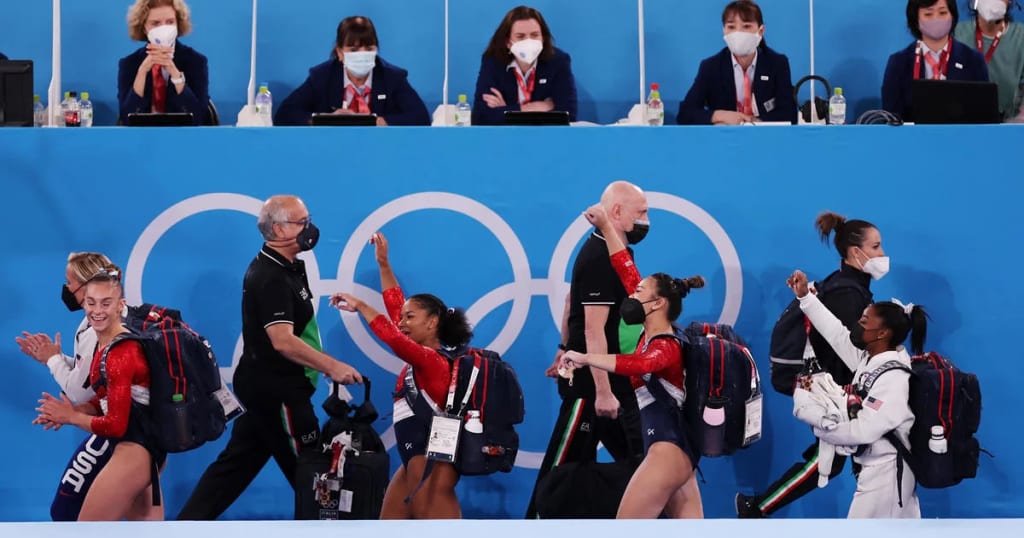
Ensuring fair judging in Olympic events is a critical component of preserving the integrity and credibility of the Games. With athletes from all over the world competing at the highest level, fairness in judging becomes paramount. However, achieving fairness is far from simple. The challenges stem from a variety of factors, including subjective decision-making, inconsistent standards, the influence of cultural biases, technological limitations, and the immense pressure that judges are under. These challenges make the task of ensuring impartiality and fairness in Olympic events both complex and ongoing.
Subjectivity in Scoring
One of the main challenges in ensuring fair judging is the subjective nature of many Olympic events. Sports such as gymnastics, diving, figure skating, and boxing rely heavily on judges to score athletes based on their performance. In these sports, judges must assess elements such as technique, artistry, and execution. However, what one judge perceives as flawless might be seen as lacking by another, leading to discrepancies in scoring.
The subjective nature of these judgments makes it difficult to create universally agreed-upon standards. For instance, in gymnastics, a routine might receive different marks depending on the judge's interpretation of a movement's difficulty or elegance. In some cases, judges may even favor certain athletes based on their reputation or country of origin, intentionally or unintentionally skewing the results. This subjectivity can undermine the credibility of the competition and create a sense of injustice among athletes and spectators alike.
Inconsistent Standards
A related challenge is the inconsistency in judging standards across different events and over time. The Olympic Games feature a wide range of sports, each with its own set of rules, scoring systems, and judging criteria. What constitutes a perfect performance in one sport may be vastly different in another. Moreover, judging standards often evolve over time as sports undergo rule changes or as the experience of judges varies.
In some instances, judges might not apply the rules evenly, either due to personal preferences or varying levels of experience. This inconsistency can lead to the perception that certain events or certain athletes are judged more harshly than others, which can provoke controversy and dissatisfaction.
For example, in figure skating, judges have historically faced criticism for inconsistent scoring practices, especially during events like the 2002 Winter Olympics, when a judging scandal arose following the pairs’ figure skating competition. In such instances, the lack of uniformity in the application of standards not only undermines the fairness of the competition but also damages the public trust in the results.
Cultural and National Bias
Another significant challenge to fair judging in the Olympics is the potential for cultural or national bias. Judges, regardless of their best intentions, are often influenced by their own cultural backgrounds, which can shape their perceptions and judgments. For example, judges might subconsciously favor athletes from their own country or from countries with which they have a cultural connection. This bias can manifest itself in the form of overly lenient scores for certain competitors or stricter judgments for others, undermining the fairness of the event.
The issue of National bias became especially evident during the 2002 Winter Olympics in Salt Lake City, when the pairs’ figure skating competition was marred by allegations of vote-swapping and bias in the judging panel. The scandal exposed how national interests can corrupt the integrity of judging, resulting in a tarnished reputation for the Games.
Pressure on Judges
Judges at the Olympic Games are under tremendous pressure. They are tasked with making critical decisions that will shape the careers and legacies of the athletes they judge. The weight of this responsibility can sometimes cloud their judgment, leading to decisions that are influenced by external pressures, such as media attention, audience expectations, or the desire to avoid controversy.
The intense scrutiny placed on judges during the Games can be a double-edged sword. While it encourages accountability, it also increases the likelihood of mistakes or compromised decisions. The fear of backlash from both the public and the athletes themselves can lead some judges to make decisions that are less based on objective criteria and more on perceived public opinion or expectations.
Technological Challenges
Technological advancements have played a significant role in addressing some of the challenges associated with judging fairness. Instant replay, video review, and other technological tools have become more widespread in various Olympic sports. These tools can assist judges by providing them with multiple angles and slow-motion replays to help assess controversial or unclear moments in a competition.
However, technology cannot entirely eliminate the potential for human error or bias. For example, while video technology may help with certain aspects of judging in sports like athletics or swimming, it cannot always address subjective elements of sports such as gymnastics or diving, where artistry and execution are evaluated by human judges. Moreover, the reliance on technology can sometimes lead to a false sense of security, causing judges to overlook their own subjective biases or inconsistent decision-making.
Addressing the Challenges
To ensure fairness in Olympic judging, several measures have been taken, such as increasing transparency in the judging process and introducing more comprehensive training for judges. The International Olympic Committee (IOC) and various governing bodies have also implemented rules to standardize judging across sports. These include assigning judges to events based on their qualifications and experience, using multiple judges to reduce the influence of individual bias, and introducing real-time scoring systems that increase transparency.
Furthermore, many sports have adopted video review systems to assist in decision-making. These systems allow judges to review critical moments in a performance, ensuring that decisions are based on objective evidence rather than subjective interpretation alone. While not a perfect solution, these innovations have made significant strides toward reducing the potential for unfair judging.
In The End
The challenges of ensuring fair judging in Olympic events are vast and multifaceted, ranging from subjectivity and inconsistent standards to cultural biases and technological limitations. However, with ongoing efforts to improve transparency, consistency, and accountability, the Olympic Games continue to strive toward a more equitable competition. While complete fairness may never be fully attainable, the pursuit of fairness remains central to the Olympic ethos, ensuring that the Games continue to be a celebration of human achievement at the highest level.
About the Creator
Badhan Sen
Myself Badhan, I am a professional writer.I like to share some stories with my friends.
Keep reading
More stories from Badhan Sen and writers in Gamers and other communities.
THE QUESTION OF OLYMPIC GOVERNANCE TRANSPARENCY VS. SECRECY
The International Olympic Committee (IOC) governs the world’s most prestigious sporting event—the Olympic Games. Over the years, the organization has grown in size and complexity, encompassing not only the Games themselves but also the global development of sport, the management of Olympic values, and the building of relationships with governments, sponsors, and various international organizations. Given its prominence, the IOC's governance practices have come under scrutiny, especially when it comes to the delicate balance between transparency and secrecy. These two conflicting principles can greatly influence the effectiveness, accountability, and integrity of the Olympic movement. The question of how the IOC should balance transparency with secrecy has sparked debates on ethics, governance, and public trust.
By Badhan Senabout a year ago in Gamers
7 Intelligent Automation Skills That Define AI Digital Assistants
AI Digital assistants or virtual assistants are smart software applications/programs that use Artificial Intelligence to help you with your daily tasks. The software functions as a personal assistant that operates through voice and text commands. These tools use natural language processing and machine learning to understand exactly what you need. They can manage your schedule, emails, or even control your smart devices.
By Arthur Leo3 days ago in Gamers
Mirage League Coins Deserve More Attention
In PoE 3.28 Mirage League, many players collect Coins of Power, Knowledge, and Skill without much thought. At first glance, they seem like minor items, and it’s easy to just stash them. That’s a mistake. These coins can significantly improve level 20 skill gems by adding a hidden bonus. They act as a form of controlled corruption, giving your gems extra utility and making skills feel stronger. For players running red maps or refining builds, this system can noticeably change gameplay and make abilities more effective.
By Smsankar Goswamia day ago in Gamers



Comments
There are no comments for this story
Be the first to respond and start the conversation.