
The Brutal Beauty of Etrian Odyssey: IV
In praise of unforgiving game design

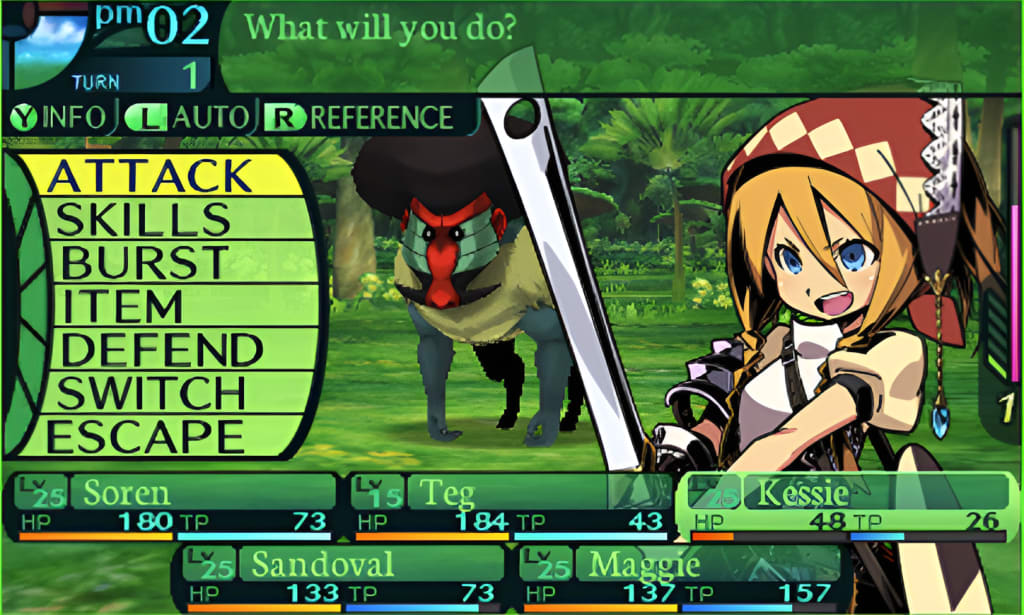
Once or twice a year, I rediscover my Nintendo 3DS in a drawer. I'll take it out, blow off the dust, and look at it with regret. Middle-aged gaming habits mean that console and PC tend to squeeze out everything else.
So I have never given the 3DS the attention it deserves, nor its games. I always make solemn vows about finally changing that.
This time, I've actually followed through. Etrian Odyssey IV: Legends of the Titan has been my gateway drug into what might be the most beautifully punishing gaming experience I've ever encountered.
The Cult of the Labyrinth
The Etrian Odyssey series occupies a unique niche in the JRPG landscape. Created by the equally legendary studio Atlus, these games are love letters to the dungeon crawlers of old. Players have to hand-draw their own maps on the 3DS touch screen as they navigate its treacherous labyrinths. (Well, you can turn on auto-draw and let it draw the maps for you, but you shouldnt.)
It's a series that has cultivated an almost fanatical following, and for good reason.
While other RPGs have streamlined difficulty curves and quality-of-life improvements, Etrian Odyssey remains defiantly old-school, unapologetically complex - and absolutely, utterly, gloriously unforgiving.
Every step forward feels earned. Every successful expedition becomes a story worth telling.
The community that surrounds these games speaks in hushed, reverent tones about character builds, optimal party compositions, and the sacred art of resource management.
There's something in this game's labyrinthine depths that most modern games refuse to provide: genuine consequence.
A Rude Awakening
I came to Etrian Odyssey IV with what I thought was solid turn-based RPG experience. I'd conquered Final Fantasy classics, survived Persona's most grueling encounters. I actually like grinding through random battles. I felt confident in my tactical prowess.
This confidence lasted approximately 5 minutes into the game's first proper dungeon.
The Lush Woodlands is one of the first real labyrinths after the mercifully brief tutorial phase. It became my personal purgatory.
For two real-time weeks and counting, I've now been trapped in what can only be described as the most educational defeat cycle of my gaming life.
The pattern is always the same: stock up on potions, upgrade whatever equipment I can afford, venture confidently into the forest - and then watch helplessly as a series of random encounters dismantles my carefully constructed party.
I've been stuck in this cycle for what seems like forever.
It's pretty wonderful.
The Humbling Truth
What separates Etrian Odyssey from other JRPGs is the way that its difficulty compounds.
In most RPGs, a party member's death is an inconvenience, easily remedied with a revival item or spell. Here, death is a catastrophe. That fallen party member isn't just missing from combat: they're a gaping hole in your strategy, a reduced damage output, a missing healing source.
In a dungeon where every encounter matters and resources are precious, losing even one party member can transform a promising expedition into a desperate retreat.
The game's monsters don't scale politely down to your level. They exist as they are, with their own strengths, weaknesses, and behaviors. That cute-looking Furry Thing (I don't really know their names yet) can inflict one-hit kills on almost your entire party, leaving you helpless as other enemies pick you apart.
Every enemy type demands respect, preparation, and often multiple failed encounters before you understand their patterns.
I'm getting there.
The Magnificent Obsession
And that's the remarkable thing: I keep going back. After each defeat, each reload, each frustrated sigh, I find myself immediately planning the next attempt.
Maybe this time I'll bring more Medicas. Maybe I should rearrange my formation. Maybe that Landsknecht needs a better weapon before we venture deeper. What can I sell to raise the cash needed?
This is where Etrian Odyssey IV reveals its genius. The game educates the player about itself.
Each failure teaches you something new about resource management, party positioning, or enemy behavior.
The mapping system, initially seeming like a nostalgic gimmick, becomes an essential tool for understanding the labyrinth's geography and dangers. You have to know where your nearest place of safety or replenishment is.
Those hand-drawn maps become personal documents, marked with notes about treasure locations, dangerous encounters, and the precious areas of escape.
The Reward of Perseverance
After two weeks of circling the same starting area, I've finally begun to understand what Etrian Odyssey's devoted fanbase has been talking about.
This is more than just a game. This is a meditation on perseverance and planning. It's the satisfaction of overcoming seemingly impossible odds.
When you finally make it past that troublesome enemy formation or reach a new area of the map, the accomplishment feels genuine in a way that few modern games can match.
The series has earned its reputation not despite its difficulty, but because of how that difficulty creates value.
In a gaming landscape increasingly focused on immediate gratification, Etrian Odyssey IV stands as a monument to the idea that the best rewards come to those willing to fail, learn, and try again.
And fail again. And again. And again...
About the Creator
Jack McNamara
I feel that I'm just hitting my middle-aged stride.
Very late developer in coding (pun intended).
Been writing for decades, mostly fiction, now starting with non-fiction.
Keep reading
More stories from Jack McNamara and writers in Gamers and other communities.
Reclaiming Your Gaming
There was a time for you when games were far more than just entertainment. Far more than wastes of time. You can clearly remember the rush of discovering the world of Rapture for the first time. The satisfaction of a perfectly executed stealth sequence in Metal Gear Solid. The way Final Fantasy could make you care deeply about pixelated characters and their impossible quests.
By Jack McNamara6 months ago in Gamers
FC 26 Casual Upgrade Guide: A Consistent Resource-Building Approach Before Winter Events
Over recent weeks, EA has introduced several structural changes to Squad Building Challenges in FC 26. Alongside new upgrade formats, the Advanced Hybrid League Upgrade has received a meaningful revision that quietly reshapes how players can manage their clubs during the regular season.
By hasanzidan4 days ago in Gamers


Comments
There are no comments for this story
Be the first to respond and start the conversation.