
THE BEN JOHNSON DOPING SCANDAL AT THE 1988 SEOUL OLYMPICS
The Victory

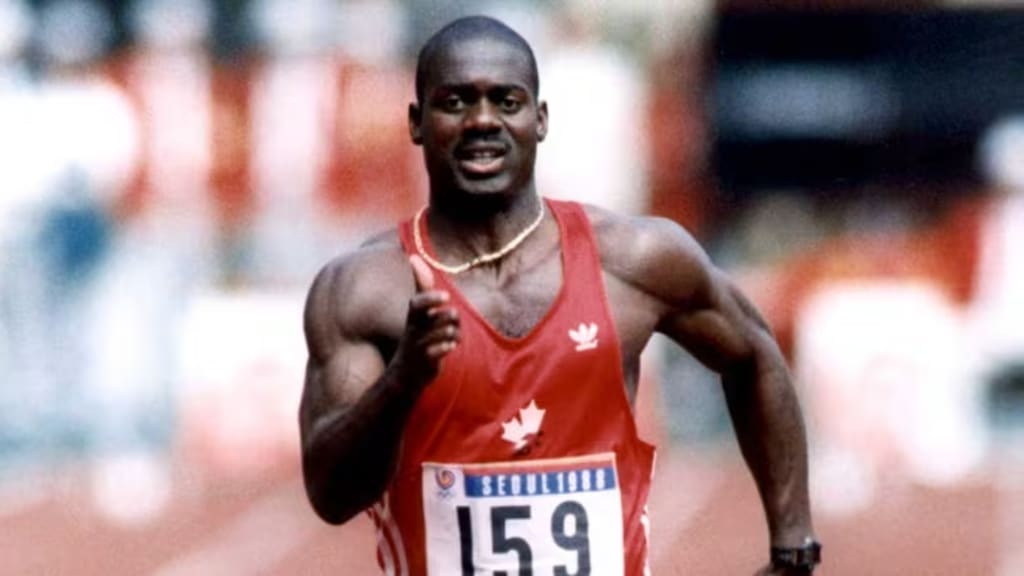
The Ben Johnson doping scandal at the 1988 Seoul Olympics remains one of the most infamous moments in the history of sports. It was a watershed event that highlighted the dark side of athletics, revealing the use of performance-enhancing drugs (PEDs) at the highest levels of competition. The scandal not only shattered the reputation of one of the world's fastest sprinters but also led to major reforms in anti-doping efforts within the global sporting community.
The Rise of Ben Johnson
Ben Johnson, a Canadian sprinter, was one of the leading figures in track and field during the late 1980s. His career had been marked by a series of impressive performances, culminating in the 1988 Seoul Olympics, where he was expected to compete for the gold medal in the 100 meters. Johnson had already gained fame as a sprinter who could rival the American legend Carl Lewis.
The 1988 100-meter final at the Olympics was billed as a showdown between the two fastest men in the world. Johnson had beaten Lewis in previous races, and both athletes were in peak form leading into the final. On September 24, 1988, the highly anticipated race took place at the Seoul Olympic Stadium.
The Historic 100-Meter Final
When the race began, Johnson was explosive out of the blocks. He surged ahead of the competition, running an incredible 9.79 seconds, breaking his own world record and defeating the heavily favored Carl Lewis, who finished second in 9.92 seconds. The result shocked the world and made Johnson an instant global star. However, his triumph was short-lived.
Just hours after his victory, it was announced that Johnson had tested positive for stanozolol, a banned anabolic steroid. The results of the post-race drug test would alter the course of his career and tarnish the reputation of the event itself.
The Doping Scandal Unfolds
The positive drug test came as a result of a random drug test conducted by the International Association of Athletics Federations (IAAF). Stanozolol is a synthetic steroid that is commonly used by athletes to enhance muscle mass and improve strength, thereby providing a significant advantage in explosive events such as sprinting. The test result revealed traces of the substance in Johnson’s urine sample, leading to the immediate stripping of his gold medal.
The news of the positive test was met with widespread disbelief. Johnson had been one of the most dominant sprinters in the world and had achieved unprecedented success in the 100 meters. His disqualification not only robbed him of his gold medal but also cast doubt on the authenticity of his previous records, raising questions about the integrity of the entire field of elite sprinters.
Aftermath and Fallout
In the aftermath of the scandal, the Canadian Olympic Committee (COC) and the International Olympic Committee (IOC) had to act swiftly to address the situation. Johnson was officially disqualified from the 100 meters final, and his world record was nullified. The gold medal was subsequently awarded to Carl Lewis, who had finished second in the final. Linford Christie of Great Britain was promoted to the silver medal, and Frankie Fredericks of Namibia moved into the bronze position.
Johnson's disqualification sparked a wave of public outrage and media scrutiny. The scandal had far-reaching consequences, both for Johnson's career and for the broader track and field community. Johnson, who had previously denied any use of performance-enhancing drugs, faced intense public scrutiny. Although he initially maintained his innocence, Johnson later admitted to having used steroids as part of his training regimen.
Johnson’s reputation was irreparably damaged, and his career was effectively ruined. He was banned from competition for two years, and he did not return to elite competition in a significant way. His association with the scandal also tainted the 1988 Olympics, a Games already marred by the controversy surrounding the Soviet Union’s boycott and East German doping program.
Impact on Anti-Doping Measures
The Ben Johnson scandal served as a wake-up call for the international sporting community regarding the widespread issue of doping in athletics. It was revealed that Johnson was not the only sprinter using banned substances, and many of his contemporaries, including other top sprinters, were suspected of using PEDs. This prompted a renewed focus on anti-doping measures and the need for more rigorous testing protocols.
In the years following the 1988 Seoul Olympics, there was a concerted effort to improve testing methods and establish stricter anti-doping regulations. The World Anti-Doping Agency (WADA) was founded in 1999 in response to the growing concerns about drug use in sports. WADA works globally to enforce anti-doping rules and ensure fair play in athletics and other sports.
Legacy of the Scandal
The Ben Johnson doping scandal remains a defining moment in Olympic history, symbolizing the dangers of cheating in sport and the lengths to which athletes would go to gain a competitive advantage. Despite the shame associated with the scandal, it played a significant role in increasing awareness about doping and the importance of clean competition.
While Johnson’s legacy will forever be intertwined with his doping violation, his career also serves as a cautionary tale about the temptations of performance-enhancing drugs and the consequences of cheating in sports. His story also continues to serve as a reminder of the ongoing battle to preserve the integrity of athletics and all competitive sports.
In the years since the scandal, the use of drugs in sports has remained a major issue, but the efforts to combat doping have significantly strengthened, ensuring that the spirit of fair competition remains at the heart of the Olympic Games and other sporting events.
About the Creator
Badhan Sen
Myself Badhan, I am a professional writer.I like to share some stories with my friends.
Keep reading
More stories from Badhan Sen and writers in Gamers and other communities.
THE OLYMPIC GAMES AND ITS EFFECT ON ICE HOCKEY
The Olympic Games and Its Effect on Ice Hockey The Olympic Games have long been a platform for showcasing the world’s top athletes across a variety of sports. Ice hockey, a high-paced and physical game, has a unique history in the Olympic Games, with significant influence on its development as a global sport. The inclusion of ice hockey in the Olympics has played a pivotal role in shaping the game's popularity, fostering international competition, and elevating its status in both the winter sports world and mainstream sports culture.
By Badhan Senabout a year ago in Gamers
Once Human x Palworld Crossover: A Deep Dive into the Post-Apocalyptic Pal Adventure
The survival gaming landscape witnessed a seismic shift when NetEase Games announced an unprecedented partnership between its supernatural survival title, Once Human, and the creature-collecting phenomenon, Palworld.
By Richard Bailey7 days ago in Gamers
How to Get the Vortex Beater in Palworld: Sealed Realm of Terraria Guide
The endgame of Palworld has evolved significantly with the introduction of the crossover-inspired dungeons, and nothing captures the imagination of players quite like the Sealed Realm of Terraria.
By Richard Baileyabout 4 hours ago in Gamers
Miss Persephone's Manual to a Seemingly Ordinary Life
Miss Persephone was found at the dining table, her blue eyes swollen, her tears arriving and retreating like the tides of the ocean. Earlier that day, her family had visited her in the retirement home where she had lived for eight years. It was her eightieth birthday.
By Imola Tóth2 days ago in Fiction



Comments (1)
This episode makes the athlete think what is at stake if they decide to use drugs in some way. Lessons will be learned from Ben Johnson just depends on what lesson future athletes want to learn. Good work.