
THE 1936 BERLIN OLYMPICS AS NAZI PROPAGANDA
The 1936 Berlin Olympics:A Global Stage for Nazi Ideology and Propaganda.

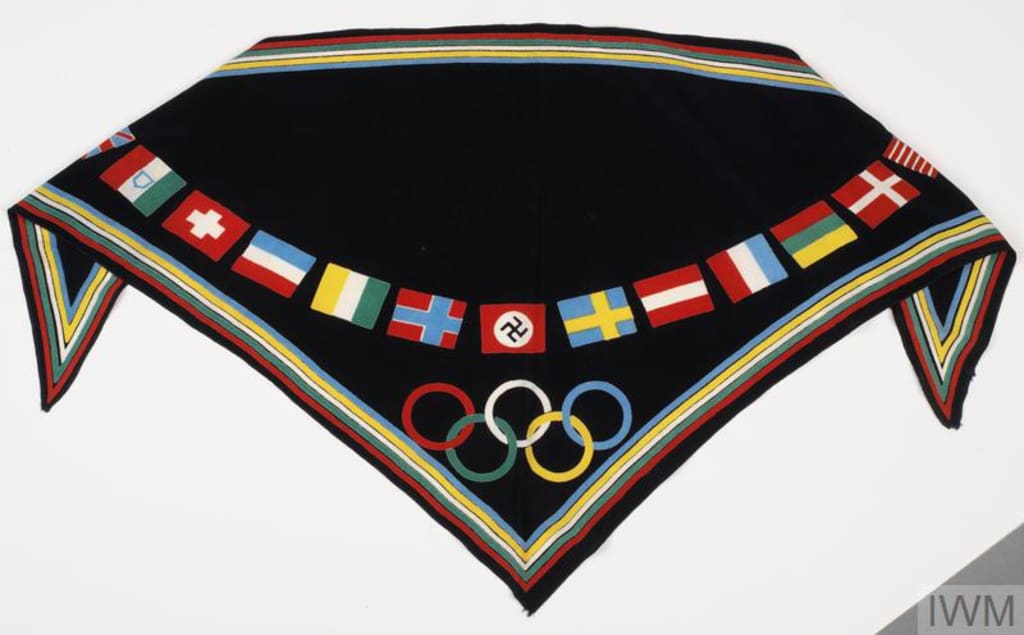
The 1936 Berlin Olympics, officially known as the Games of the XI Olympiad, were a pivotal moment in both sports history and global politics. Hosted in Nazi Germany, these games were not only a showcase of athletic excellence but also served as a powerful propaganda tool for Adolf Hitler and the Nazi regime. By leveraging the global stage provided by the Olympics, the Nazis sought to project an image of strength, unity, and cultural superiority, while masking the regime’s oppressive policies and intentions.
(I)Background and Context
When Berlin was awarded the Olympics in 1931, Germany was under the Weimar Republic, and the choice seemed like an opportunity for the country to reintegrate into the international community after World War I. However, by 1933, Adolf Hitler had risen to power, and the Nazi regime began to reshape the event to align with its ideological goals. Hitler initially viewed the Olympics with skepticism, dismissing them as an internationalist event that contradicted Nazi ideals. However, Joseph Goebbels, the Minister of Propaganda, convinced him of the potential to use the games as a platform to promote Nazi ideology and bolster Germany’s reputation on the global stage.
(II)Preparations for the Games
The Nazis spared no effort in making the 1936 Olympics a grand spectacle. Berlin underwent extensive renovations, including the construction of the massive Reichssportfeld complex, which housed the 100,000-seat Olympic Stadium. Cutting-edge technology was employed, such as the use of television broadcasting for the first time in Olympic history and advanced filming techniques by director Leni Riefenstahl, whose documentary Olympia would become a landmark in propaganda filmmaking.
The Nazi regime also took steps to temporarily soften its discriminatory policies to avoid international criticism. Antisemitic propaganda was toned down, and signs barring Jews from public places were removed from Berlin. A single Jewish athlete, Helene Mayer, was included on the German team as a token gesture, although the majority of Jewish and Roma athletes were excluded.
(III)The Olympics as Propaganda
The Nazis used the Olympics to promote the image of a peaceful, progressive Germany. The opening ceremony was a carefully choreographed event designed to showcase German efficiency, discipline, and cultural heritage. Hitler’s appearance at the ceremony and his frequent presence at events were intended to solidify his image as a strong, benevolent leader.
The Olympic torch relay, introduced for the first time in 1936, symbolized a supposed link between ancient Greece and the Nazi vision of Aryan supremacy. This new tradition was designed to associate the Third Reich with the ideals of classical antiquity, lending an air of legitimacy and historical continuity to Hitler’s regime.
International visitors, including journalists and athletes, were impressed by the organization and scale of the event, often unaware of the darker reality underlying the Nazi regime. Through carefully curated media coverage, the Nazis managed to obscure the ongoing persecution of Jews, political opponents, and other marginalized groups, projecting instead an image of a harmonious and modern society.
(IV)Challenges to Nazi Narratives
Despite the regime’s efforts, the 1936 Olympics also highlighted the limitations of Nazi propaganda. The most notable challenge came from African-American athlete Jesse Owens, who won four gold medals in track and field. Owens’ dominance undermined the Nazi’s racial superiority narrative, as he triumphed in events meant to showcase Aryan athleticism. Owens’ victories were celebrated worldwide, though he faced discrimination upon his return to the United States.
Additionally, some nations had considered boycotting the games, citing the Nazis’ oppressive policies. Though the boycott efforts ultimately failed, they reflected growing international unease with Germany’s political direction. The Spanish Popular Front government, for example, organized an alternative event, the People’s Olympiad, though it was canceled due to the outbreak of the Spanish Civil War.
(V)Aftermath and Legacy
In the short term, the 1936 Berlin Olympics were a propaganda triumph for the Nazis. The games succeeded in portraying Germany as a revitalized and respectable nation, temporarily diverting attention from its militarization and human rights abuses. However, the illusion was short-lived. Within three years, Germany’s invasion of Poland and the outbreak of World War II shattered any notions of peaceful intentions.
The legacy of the 1936 Olympics is a complex one. While they showcased the power of sports to bring nations together, they also demonstrated how international events can be manipulated for political purposes. The games remain a cautionary tale about the intersection of sports and propaganda, highlighting the need for vigilance in ensuring that global platforms are not co-opted to legitimize oppressive regimes.
In The End
The 1936 Berlin Olympics stand as a stark reminder of how sports can be used as a tool for propaganda. By masterfully orchestrating the event, the Nazi regime sought to whitewash its brutal policies and project an image of unity and strength. However, the games also revealed the power of individual athletes like Jesse Owens to challenge such narratives and underscore the contradictions inherent in the Nazi ideology. As one of the most politically charged Olympics in history, the 1936 games continue to serve as a pivotal example of the intersection of sports, politics, and propaganda.
About the Creator
Badhan Sen
Myself Badhan, I am a professional writer.I like to share some stories with my friends.
Keep reading
More stories from Badhan Sen and writers in Gamers and other communities.
THE ROLE OF THE OLYMPICS IN BRIDGING POLITICAL TENSIONS
The Olympic Games are not merely a celebration of athletic excellence but also a potent symbol of unity in a fragmented world. Since their inception in ancient Greece, the Olympics have carried the ideals of peace, cooperation, and understanding among nations. In a world rife with political tensions, the Olympics often emerge as a platform for bridging divides and fostering dialogue, even among adversaries. While the Games cannot resolve deep-seated conflicts, they play a significant role in mitigating tensions and promoting a spirit of global solidarity.
By Badhan Senabout a year ago in Gamers
Diablo IV Season 11 Class Rankings: The Definitive Guide to Picking Your Hero and Avoiding Early-Game Burnout
With the arrival of Season 11, Diablo IV now boasts seven distinct classes: Sorcerer, Necromancer, Rogue, Barbarian, Druid, Spiritborn, and Paladin. Given the steep price of entry—often around $70—choosing the wrong starter can lead to immediate burnout. This review, based on clearing Pit Tier 55 and reaching Torment IV with every class, aims to help you spend your time and money wisely.
By hasan zidan5 days ago in Gamers
Twilight Ranger and Necromancer: Why This Duo is the 2026 Meta King
High-ladder play in Rush Royale has shifted. If you have logged into the competitive circuit lately, you have likely seen it. A specific, shadowy pairing is crushing the leaderboards and leaving traditional "Twins" or "Inquisitor" builds in the dust.
By Richard Bailey5 days ago in Gamers


Comments (1)
This is quite the history lesson you have here. Good work.