
Techniques for live sports broadcasting
Sports broadcasting plays a very important role in conveying the vivid experience of the stadium to the audience.
Introduction
Sports broadcasting plays a very important role in conveying the vivid sense of presence of the stadium to the audience. Sports have dramatic and dynamic characteristics in themselves, but with the development of broadcasting technology, viewers can have a vivid experience as if they were actually in the stadium. In particular, sound effects and background music play a big role in increasing viewers’ immersion and enhancing their understanding and emotion of the game.
Sound effects can maximize the sense of presence by vividly reproducing the sounds of the stadium. By appropriately utilizing various sounds such as the cheers of the audience, the voices of the players, and the whistle of the referee, viewers can feel as if they are actually in the stadium. In addition, background music can effectively convey the atmosphere and emotions of the game. In moments of tension, heightened music can be used, and in highlight scenes, dynamic music can be used to increase viewers’ immersion.
In this way, the use of sound effects and background music in sports broadcasting plays a key role in providing viewers with a realistic experience and enhancing their understanding and emotion of the game. Therefore, this study aims to examine in detail the use cases of these sound techniques and their effects.
Reproducing Real-World Sounds
Reproducing real-world sound plays a key role in enhancing the sense of presence in sports broadcasting. By utilizing various sounds such as stadium noise, referee whistles, and players’ voices, viewers can experience a vivid experience as if they were at the stadium.
To achieve this, it is important to properly adjust the size and balance of the sound. If the cheers of the audience are too loud or the voices of the players are too small, the sense of presence can be reduced. Therefore, by appropriately mixing these sounds to balance them and adjusting the size according to the situation, the atmosphere of the actual stadium can be vividly reproduced.
It is also important to appropriately place various microphones to implement three-dimensional sound. By installing microphones in various locations such as the audience seats, players’ benches, and referee’s stand and adjusting them comprehensively, viewers can be delivered an immersive sound encompassing the entire stadium. This allows viewers to feel a vivid sense of presence as if they were at the actual stadium.
In this way, effective use of stadium sound is essential to enhancing the sense of presence in sports broadcasting. By harmoniously combining various sound elements and implementing them three-dimensionally, viewers can be provided with a vivid experience as if they were at the stadium.
Use of sound effects
The use of various sound effects in sports broadcasting plays an important role in enhancing the sense of presence. By using sounds that are characteristic of each sport, viewers can feel as if they are actually at the stadium. For example, if you appropriately use the sound of the referee's whistle in a basketball game or the sound of the bat and ball colliding in a baseball game, you can vividly convey the atmosphere of the sport.
In addition, in slow-motion scenes, you can add a dramatic feeling by using sound effects that are processed a little longer than general sounds. For example, if you slightly increase the sound of the referee's whistle in a basketball slow-motion scene or slow down the sound of a baseball batter's swing, you can further increase the tension of the scene.
Finally, the appropriate mixing of commentary and broadcasting sounds is also important. You can adjust the volume of the commentary depending on the game situation, and in key scenes, you can emphasize the cheers of the audience or the game sounds to increase the immersion of viewers. In this way, the use of various sound effects and sound techniques plays a key role in maximizing the sense of presence and liveliness of sports broadcasting.
Use of background music
Background music plays an important role in effectively conveying the atmosphere and emotions of the game in sports broadcasting. You can increase viewer immersion and emotion by selecting music that matches the flow of the game, using it in highlight scenes, and controlling the volume
First, it is important to select background music that matches the atmosphere of the game. In tense moments, you can effectively convey the emotions of the game by using music with a high tempo and rhythm, and in relaxed scenes, you can effectively convey the emotions of the game by using calm and lyrical music. For example, in the final moments of a basketball game, you can use music with a fast beat to increase tension and excitement.
In particular, the use of background music in highlight scenes is important to increase viewer immersion and emotion. Appropriate use of background music in scenes that are the climax of the game, such as a comeback goal or dramatic score, can dramatically convey the excitement and joy of that moment.
Lastly, controlling the volume of background music is also important. When a decisive moment approaches at the end of a close game, you can gradually increase the volume of background music to increase viewer tension. On the other hand, in highlight scenes, you can lower the volume of background music to emphasize the game sounds and commentary voices, thereby adding a dramatic feel.
In this way, background music plays a key role in effectively conveying the atmosphere and emotions of the game in sports broadcasts. Appropriate music selection, use in highlight scenes, and volume control can provide viewers with a vivid experience.
Conclusion
Appropriate use of sound effects and background music in sports broadcasts plays a key role in providing viewers with a vivid and immersive experience. Vivid reproduction of stadium sounds allows viewers to feel as if they are at the scene, and the use of background music that matches the atmosphere enhances their understanding and emotion of the game. The use of various sound techniques like this contributes to enhancing the fun and immersion of sports broadcasts, thereby improving viewer experience.
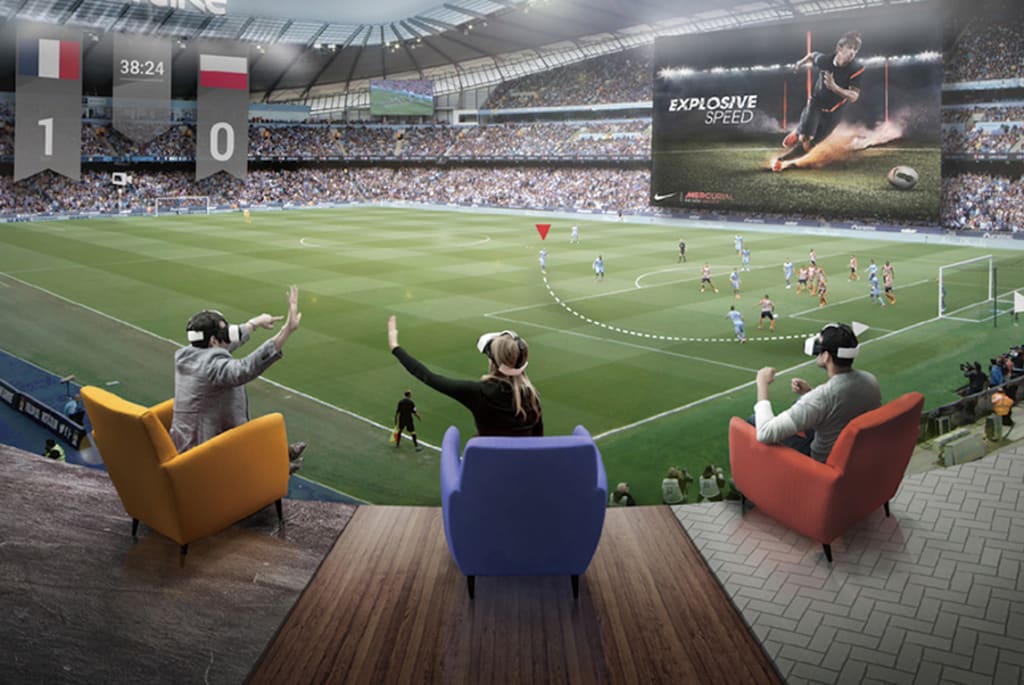
Furthermore, sound techniques are expected to continue to evolve as technology advances. The development of microphone technology and the improvement of sound processing techniques will enable vivid reproduction of stadium sounds, and the use of background music will become more sophisticated. Through this, viewers will be able to experience even more realistic and emotional broadcasts. In addition, when combined with the development of virtual reality or augmented reality technology, it is expected that new opportunities will open up to further enhance viewer immersion. As technology evolves, the sound techniques for sports broadcasting will also continue to evolve to provide viewers with a more vivid experience. Sports Broadcast TV
About the Creator
Mr. choi
I think you can enjoy sports more if you have basic knowledge about sports. I want to create opportunities to learn little by little. I want to provide information such as sports broadcasts and sports news.
How to Get the Vortex Beater in Palworld: Sealed Realm of Terraria Guide
The endgame of Palworld has evolved significantly with the introduction of the crossover-inspired dungeons, and nothing captures the imagination of players quite like the Sealed Realm of Terraria.
By Richard Baileya day ago in Gamers
Forza horizon 5 treasure hunt 30k is the game
What Is a Treasure Hunt in Forza Horizon 5? Treasure Hunts are optional mini-quests in Forza Horizon 5 that send you on a simple scavenger hunt using clues. Completing one earns 30,000 Credits (30K), which you can use to buy cars, upgrades, or cosmetics.
By Games Mode Onabout 19 hours ago in Gamers
Miss Persephone's Manual to a Seemingly Ordinary Life
Miss Persephone was found at the dining table, her blue eyes swollen, her tears arriving and retreating like the tides of the ocean. Earlier that day, her family had visited her in the retirement home where she had lived for eight years. It was her eightieth birthday.
By Imola Tóth3 days ago in Fiction




Comments
There are no comments for this story
Be the first to respond and start the conversation.