
Steam Machine: What To Know
Valve’s Cube-Shaped Living-Room Gaming PC

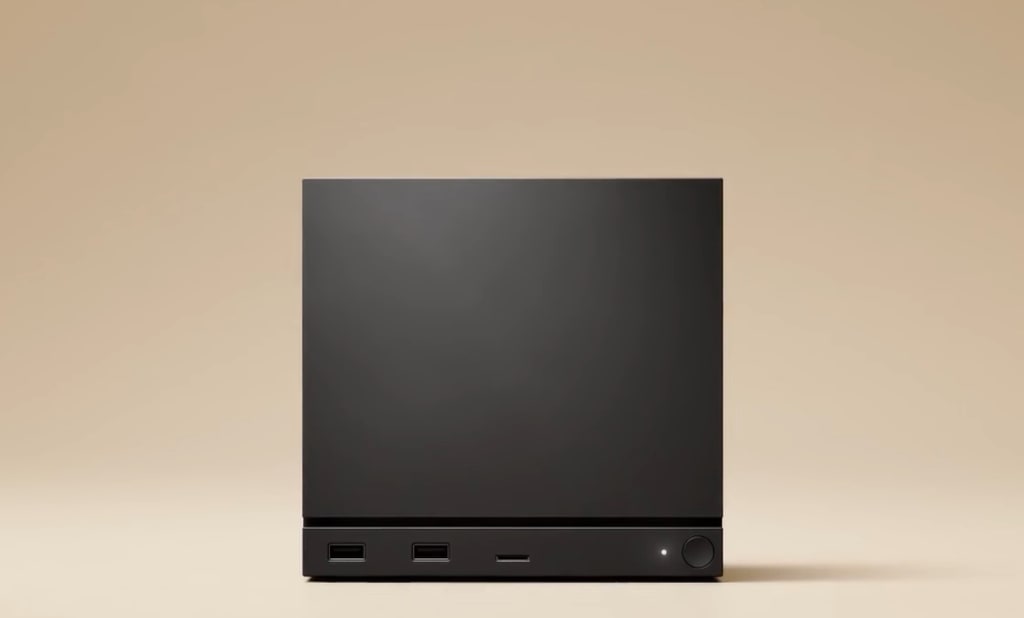
The Steam Machine is a new home gaming device announced by Valve. It’s designed to bridge PC gaming and console simplicity. In contrast with traditional gaming PC towers, this box is made for the living room: compact, console-friendly, and optimized for TV-based play. The design is effectively a cube, emphasising minimal footprint and placement flexibility.
Under the hood it runs SteamOS (Valve’s Linux-based operating system) and supports the vast Steam game library thanks to compatibility layers that allow many Windows games to run.
Key Specifications
Here are the major specs so far. These give a good idea of where the device stands in terms of performance and design.
CPU: Semi-custom AMD Zen 4 architecture, 6 cores / 12 threads, up to ~4.8 GHz, ~30 W TDP.
GPU: Semi-custom AMD RDNA 3, 28 Compute Units, up to ~2.45 GHz sustained clock, around ~110 W TDP, 8 GB GDDR6 VRAM.
Memory & Storage: 16 GB DDR5 system RAM; two launch options for SSD storage: 512 GB or 2 TB (M.2 2230 form factor); there is also a microSD slot for expansion.
Outputs & Connectivity: DisplayPort 1.4 (supports up to 4K@240Hz or 8K@120Hz in some modes) and HDMI 2.0 (up to 4K@120Hz); WiFi 6E; Bluetooth; Gigabit Ethernet; USB-C and USB-A ports.
Form Factor & Design: Approximate dimensions roughly 162 × 156 × 152 mm (≈ 6.4 × 6.1 × 6.0 inches) making it almost a perfect cube in shape. The internal cooling utilizes a large, single-fan/heatsink design optimized for quiet living-room operation.
Software: SteamOS, with support for Proton (a Windows compatibility layer), allowing many PC games to run with minimal or no modification.
Why It Matters?
- PC Games in the Living Room: Many gamers have extensive Steam libraries on desktops but yearn for couch/TV play. This device lets you use those games with the ease of a console.
- Compact Size with Serious Power: The cube form means it fits easily into a media centre without dominating space, yet under the hood it delivers hardware that approaches modern console/PC performance (according to leaks and previews).
- Valve Ecosystem Advantage: For users invested in the Steam platform the device adds a native living-room client that directly ties into your ecosystem: friends, cloud saves, controllers, library.
- Hybrid Approach: It sits between console and full desktop PC—giving upgrade flexibility for storage, smoother couch setup, and higher performance than many consoles while being smaller and more approachable than a full tower.
Things to Consider Before Buying
- Price & Region Availability: Although many specs are public, the final retail price (especially for Canada) has not yet been widely confirmed. Until price is clear the value proposition is speculative.
- 8 GB VRAM Limitation: Some analyses raise concerns that 8 GB of VRAM may become a limiting factor for future AAA games (especially at 4K settings).
- Upgradeability Limits: Unlike a fully modular PC tower, the cube design restricts GPU upgrades, and while SSD and possibly RAM might be user-upgradeable, options are more constrained.
- Performance vs Expectations: While the target is 4K@60fps (with upscaling like FSR), realistically many games at ultra settings may push the hardware hard, meaning you may need to compromise settings for full resolution.
- Living Room Environment: Quiet operation, ventilation, cable management, placement in entertainment centres matter. Even though the design is optimized for living rooms, real-world environment can impact experience (shelf clearance, airflow, heat build-up).
Who Should Consider It?
- Gamers who already own a significant Steam library and want a simpler living-room experience rather than building a large tower PC or switching to a console.
- Users with smaller spaces (apartments, dens) who want serious gaming performance without the bulk of a full desktop tower.
- Those who want the flexibility of PC-gaming (mods, open ecosystem, multitude of titles) but prefer the comfort of sofa/TV relaxation rather than desk setup.
- On the flip side, if your priority is maximum GPU head-room, full DIY upgradeability, or ultra-settings at 4K/120fps+, you might still lean toward a high-end desktop PC.

The Steam Machine represents a smart pivot by Valve: take PC-level hardware and adapt it for the living room. The cube design is not just about aesthetics—it’s about meeting performance, thermal and placement requirements in a home entertainment setting. If the pricing is competitive and compatibility strong (which early previews suggest), this could be a compelling option for gamers wanting the best of both worlds: PC-game library + console room convenience.
About the Creator
Md. Nurul Afsar
Online marketer, passionate kayaker and gamer. By day, I connect brands with audiences; by night, I navigate rapids and virtual worlds. Seeking new adventures on water and screen.
Keep reading
More stories from Md. Nurul Afsar and writers in Gamers and other communities.
Games Like Teenage Mutant Ninja Turtles: Shredder’s Revenge
Teenage Mutant Ninja Turtles: Shredder’s Revenge brought classic beat ’em up gameplay back into the spotlight with fast-paced combat, pixel-art visuals, cooperative multiplayer, and nostalgic charm. Inspired by arcade legends of the 80s and 90s, the game feels both modern and retro, making it appealing to longtime fans and new players alike. If you enjoyed battling waves of enemies, chaining combos, and teaming up with friends, there are several other games that deliver a similar experience. Below is a curated list of games like TMNT: Shredder’s Revenge that capture the same spirit of side-scrolling action, teamwork, and old-school fun.
By Md. Nurul Afsar2 months ago in Gamers
10 Horror Video Games Loved by Women
Horror video games have increasingly become a space where female players find engaging narratives, strong characters, and immersive experiences. Here are ten horror games that are particularly favored by women, along with the virtues that make them appealing.
By Ninfa Galeano6 days ago in Gamers


Comments
There are no comments for this story
Be the first to respond and start the conversation.