
Small Form Factor Motherboards - (Complete Guide)
Discover everything about small form factor motherboards, their types, benefits, and best uses. Learn how these compact boards power gaming PCs, home offices, and creative setups.

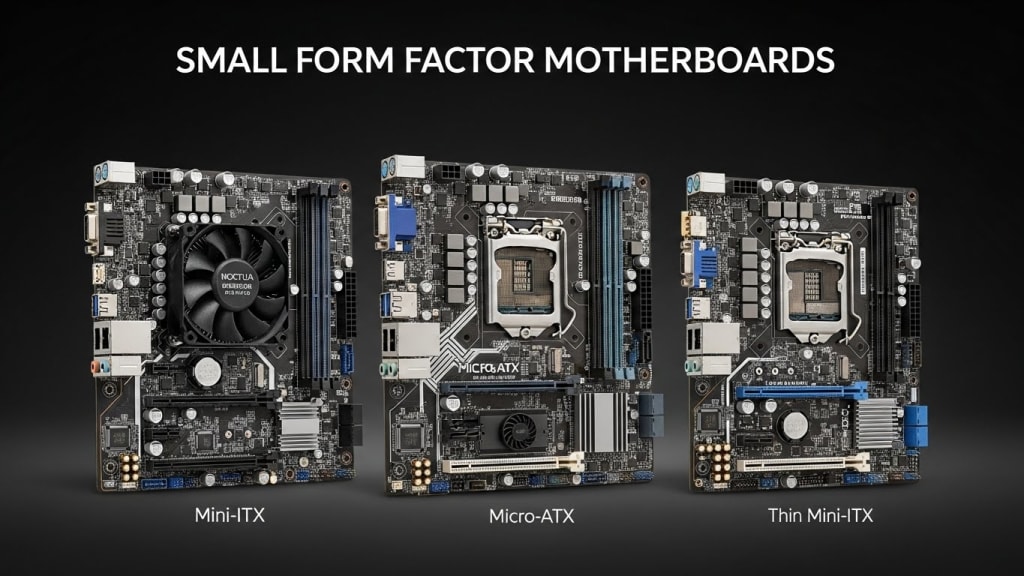
Small form factor motherboards are the heart of compact computers. They are designed to fit into smaller cases while still offering powerful performance. Because technology keeps getting smaller and faster, these motherboards are now popular among gamers, creators, and everyday users. In this guide, we will explore what small form factor motherboards are, why they matter, and how you can choose the right one for your needs.
What Are Small Form Factor Motherboards?
Small form factor motherboards are reduced-size versions of standard motherboards. They are built to save space while still supporting modern processors, memory, and storage. Although they are smaller, they can still deliver strong performance.
Mini-ITX: The most common type, measuring 6.7 x 6.7 inches.
Micro-ATX: Slightly larger, offering more expansion slots.
Nano-ITX and Pico-ITX: Even smaller, often used in embedded systems or industrial devices.
Because of their size, these boards are perfect for small cases, portable PCs, and stylish setups.
Why Choose Small Form Factor Motherboards?
There are many reasons people prefer small form factor motherboards:
Space Saving: They fit into compact cases, making them ideal for small desks or entertainment centers.
Portability: Easy to move around, great for LAN parties or mobile workstations.
Style: Many users love the clean, minimalist look of small PCs.
Efficiency: Despite their size, they can handle powerful CPUs and GPUs.
Therefore, small form factor motherboards are not just about size—they are about flexibility and design.
Types of Small Form Factor Motherboards
Mini-ITX Motherboards
Mini-ITX is the most popular small form factor motherboard. It supports modern CPUs, has two RAM slots, and usually one PCIe slot for a graphics card.
Micro-ATX Motherboards
Micro-ATX boards are slightly larger but still considered small form factor. They offer more expansion slots, making them a good balance between size and flexibility.
Nano-ITX and Pico-ITX
These are very small boards used in industrial machines, smart devices, and embedded systems. They are not common for gaming or home PCs but are important in specialized fields.
Advantages of Small Form Factor Motherboards
Compact Design: Perfect for small cases.
Energy Efficiency: Often consume less power.
Modern Features: Support USB-C, Wi-Fi, Bluetooth, and fast storage.
Customization: Many cases allow creative builds with RGB lighting and water cooling.
Because of these benefits, small form factor motherboards are now a mainstream choice.
Limitations of Small Form Factor Motherboards
Although they are great, small form factor motherboards do have some limits:
Fewer RAM slots (usually two).
Limited expansion options.
Smaller cooling space.
Higher prices for premium models.
However, these limits are often outweighed by the benefits for most users.
Best Uses for Small Form Factor Motherboards
Gaming PCs: Compact builds with powerful GPUs.
Home Offices: Quiet, space-saving computers.
Media Centers: Small PCs for streaming and entertainment.
Creative Workstations: Stylish setups for designers and video editors.
Because they are versatile, small form factor motherboards can fit almost any lifestyle.
Choosing the Right Small Form Factor Motherboard
When buying a small form factor motherboard, consider:
CPU Compatibility: Intel or AMD support.
RAM Capacity: Usually up to 64GB.
Storage Options: M.2 slots for SSDs.
Connectivity: Wi-Fi, Bluetooth, USB ports.
Expansion Needs: Graphics card support.
Therefore, always match the motherboard with your case size and usage goals.
Popular Brands Offering Small Form Factor Motherboards
ASUS: Known for ROG Strix Mini-ITX gaming boards.
MSI: Offers compact boards with strong performance.
Gigabyte: Affordable options with modern features.
ASRock: Innovative designs for small builds.
These brands are trusted worldwide and provide reliable small form factor motherboards.
Building a PC with Small Form Factor Motherboards
Building a compact PC requires planning:
Choose the Case: Mini-ITX or Micro-ATX case.
Pick the CPU: Match with motherboard socket.
Select RAM: Usually two sticks for dual-channel.
Add Storage: SSDs for speed, HDDs for capacity.
Install GPU: Ensure it fits the case.
Cooling: Compact air or liquid coolers.
Because space is limited, cable management is very important in small builds.
Future of Small Form Factor Motherboards
Technology is moving toward smaller, faster, and more efficient designs. In the future, small form factor motherboards will likely support even more powerful CPUs and GPUs. They may also include advanced AI features, faster wireless connections, and improved cooling systems.
Conclusion
Small form factor motherboards are changing the way people build PCs. They combine compact size with powerful features, making them perfect for gaming, work, and entertainment. Although they have some limits, their benefits far outweigh them. If you want a stylish, space-saving, and efficient computer, small form factor motherboards are the right choice.
FAQ
Q1: What is the difference between Mini-ITX and Micro-ATX? Mini-ITX is smaller with fewer slots, while Micro-ATX offers more expansion options.
Q2: Can small form factor motherboards support gaming? Yes, they can support powerful CPUs and GPUs, making them great for gaming PCs.
Q3: Are small form factor motherboards more expensive? Some premium models are costly, but affordable options are available from brands like Gigabyte and ASRock.
Q4: Do small form factor motherboards overheat easily? Not if you use proper cooling solutions. Compact cases require good airflow.
Q5: Which brands make the best small form factor motherboards? ASUS, MSI, Gigabyte, and ASRock are among the most popular and reliable brands.
About the Creator
Perfect Tech Views
Welcome to Perfect Tech Views—your go-to source for clear, unbiased, and insightful tech knowledge. Whether you're a pro, a beginner, or just exploring gadgets, we've got you covered with expert guidance!
Keep reading
More stories from Perfect Tech Views and writers in Gamers and other communities.
Cheapest AM5 CPU (Discover the Best)
The cheapest AM5 CPU is one of the most searched topics among PC builders in 2026. When AMD first launched the AM5 platform with its Ryzen 7000 series, many people thought it was too expensive. The new socket required DDR5 memory and modern motherboards, which raised costs. However, prices have dropped a lot since then, and now AM5 is more affordable than ever.
By Perfect Tech Views2 months ago in Gamers
‘I Belong to Saudi Arabia’ – Ronaldo Committed to Al-Nassr
Football icon Cristiano Ronaldo has declared his long-term commitment to Al‑Nassr, stating, “I belong to Saudi Arabia,” in a powerful affirmation of loyalty that signals his intention to continue shaping the future of football in the kingdom. Speaking after a decisive league victory, Ronaldo addressed growing speculation about a possible return to Europe or a move to another global league. Instead, the five-time Ballon d’Or winner made it clear that his focus remains firmly with Al-Nassr and the Saudi football project he has helped elevate onto the world stage. “I feel at home here,” Ronaldo said. “This club gave me trust, and Saudi Arabia gave me a new challenge. I belong to Saudi Arabia now, and I want to build something special with Al-Nassr.” A New Chapter of Legacy Since arriving in Riyadh, Ronaldo has transformed not only Al-Nassr’s profile but also the international perception of the Saudi Pro League. His presence has attracted worldwide media attention, new sponsorships, and a wave of elite players who followed him into the league. Club officials credit Ronaldo with raising professional standards both on and off the pitch. Training intensity, fan engagement, and commercial visibility have all increased significantly since his signing. “Cristiano changed everything,” said an Al-Nassr executive. “He didn’t come here to retire. He came to compete and to lead.” Ronaldo has continued to deliver on the field, scoring consistently and guiding younger teammates through his relentless discipline and experience. More Than Football Ronaldo’s statement goes beyond sporting commitment. He has repeatedly praised Saudi Arabia’s culture, hospitality, and ambition to grow football as part of its wider national development plans. In interviews, he has spoken positively about life in Riyadh, describing it as safe, welcoming, and family-oriented. His children now attend school in the city, and he has become a familiar public figure beyond the stadium. “People here respect me and my family,” Ronaldo said. “That matters more than trophies.” His message aligns with Saudi Arabia’s broader strategy to position itself as a major destination for global sport, hosting high-profile football matches, boxing events, and motorsport competitions. Silencing Transfer Rumors Recent months saw rumors linking Ronaldo to clubs in Europe and North America, with speculation that he might seek one last Champions League run. His declaration effectively shuts down those stories, at least for the foreseeable future. Football analysts believe Ronaldo’s commitment offers stability to Al-Nassr and strengthens the Saudi league’s credibility. “Ronaldo staying sends a message to the football world,” said sports analyst Marco Silva. “It shows that Saudi football is not a temporary stop but a serious long-term project.” Mentor and Leader Inside the dressing room, Ronaldo has taken on a mentorship role, particularly with young Saudi players. Coaches say his influence is visible in their professionalism and confidence. One teammate noted, “He pushes everyone. If you arrive late, he notices. If you train badly, he challenges you. He makes us better.” This leadership has helped Al-Nassr remain competitive domestically and in regional tournaments, even as expectations continue to rise. Looking to the Future Ronaldo has hinted that his future plans may extend beyond playing. He has expressed interest in football development and possible ambassadorial roles within Saudi sports structures once his career ends. “I want to help grow football here,” he said. “Not only for today, but for the next generation.” For Al-Nassr supporters, his commitment brings renewed optimism. Fans filled the stadium chanting his name after the match, waving banners that read, “Our legend, our future.” A Defining Statement Ronaldo’s declaration, “I belong to Saudi Arabia,” marks a defining moment in his late-career journey. Once seen as a controversial move, his transfer to Al-Nassr now appears central to his evolving legacy — not just as a footballer, but as a global sporting figure shaping new frontiers. As the season continues, Ronaldo’s message is clear: his story with Al-Nassr is far from over.
By Fiaz Ahmed 5 days ago in Gamers
FC 26: King of the Knockouts Unleashed – Meta Evolutions and SBC Hits & Misses
The latest King of the Knockouts promo has officially landed in FC 26, bringing a massive wave of live cards, legendary Icons, and a game-changing "Double Gold" Evolution system. While the community is buzzing over 12-million-coin pulls like Ultimate Dynasty Hamm, the tactical meta is shifting toward specific SBCs and high-value Evolution paths. Here is the full breakdown of the February 14th content and how to optimize your squad.
By hasan zidana day ago in Gamers



Comments