
Shinji Mikami’s Legacy and the Mystery of Ghostwire
It’s finally arrived
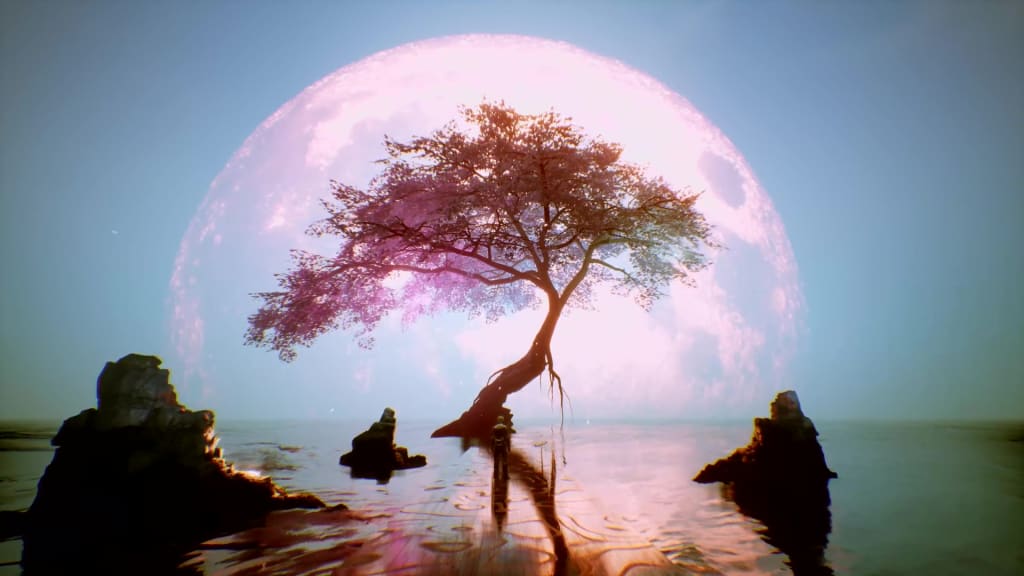
It’s finally arrived. In a year that has already seen several major releases like Horizon: Forbidden West, Dying Light 2, and the nearly universally praised Elden Ring, Ghostwire: Tokyo had some big expectations to meet. Anyone who has followed me on FG over the past few months knows I’ve been steadily building excitement for Ghostwire’s launch, despite the flood of other excellent games we’ve been treated to.
Shinji Mikami – Ghostwire’s director – is often regarded as the grandfather of survival horror by many in the community. This is unsurprising given a portfolio that includes Dino Crisis, Resident Evil, and more recently, the Evil Within series. Naturally, for his latest project, he opted for a first-person perspective. The lead-up to Ghostwire’s release, with its cryptic and puzzling trailers, only helped to heighten curiosity, with the mystery surrounding the actual gameplay approaching Hideo Kojima levels.
But finally, Ghostwire: Tokyo is here. It exists, and we can now play it. So, does this journey into Shibuya’s supernatural realms live up to the pre-release hype, or does it fall victim to the forces of evil, like the quiet anticipation right before you buy cheap PS4 games and jump into a new adventure?
The world and story of Ghostwire: Tokyo were what stood out to me most in the lead-up to its release, so it makes sense to begin there. Akito is the young protagonist, whose fate takes a grim turn at the start of the game. However, he is promptly rescued and paired with the unpredictable and rather brusque KK, a spirit who chooses to reside within Akito’s body.
As might be expected when one invades another’s physical form, their initial partnership is far from friendly. KK openly disdains Akito’s goals and intentions, taking only what he needs, while Akito must reluctantly accept KK’s assistance to face the dangers now surrounding him. I assumed their relationship would stay mostly static throughout the story, but I’m happy to report that it undergoes significant development as the two—one human, one spirit?—begin to understand and relate to one another.
Though their alliance begins tense, marked by disputes over control and differing agendas, they gradually evolve into an unexpected partnership, eventually becoming true partners who respect and support each other. This arc reaches a satisfying conclusion, with both personalities learning from one another and showing growth that seemed unlikely at the start. Their banter, whether through casual comments in the open world or short exchanges in story dialogue, further enriches this interpersonal development.
Akito is motivated by the goal of finding and rescuing his sister, Mari, while KK is driven solely by the desire to defeat Ghostwire’s mystical foe, Hannya. Wearing a suitably eerie mask, with unclear intentions and seemingly limitless magical power, Hannya is an imposing presence throughout Akito’s journey.
From Uneven to Unforgettable
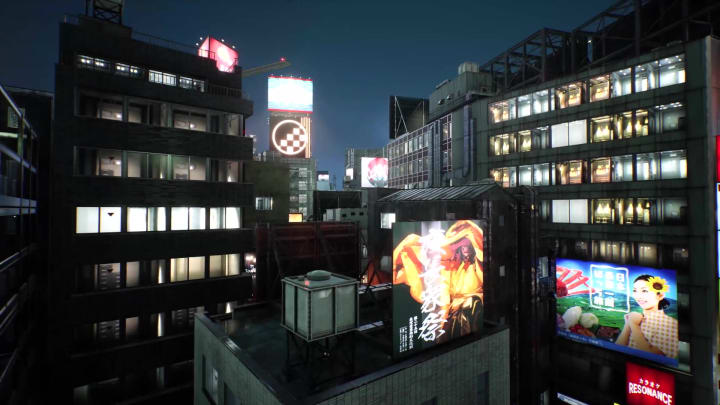
Hannya appears just as a paranormal force releases a wave of magical energy, causing the entire population of Shibuya to vanish instantly. As you explore, you’ll encounter traces of the people who were there—umbrellas, suitcases, clothing, and everyday items scattered through the streets where people once walked. In an instant, this once lively city becomes a ghost town, stripped of the life and energy it once had, like the quiet anticipation right before you buy cheap PS5 games and step into a world that immediately feels lived-in.
In their place, Hannya and the Visitors establish themselves, clearly up to sinister activities. Naturally, given Akito’s dangerous predicament and KK’s thirst for revenge, the story pushes you toward stopping whatever mystical schemes they are plotting. Along the way, you’ll encounter a few of KK’s former associates as well as Hannya’s chief gang of henchmen.
The story quickly gains momentum, with numerous cutscenes and exposition missions introducing a variety of plot points and relationships to follow. It slows somewhat in the middle section, losing a bit of urgency when you’re distracted by the engaging city of Shibuya. However, the ending delivers genuinely emotional and heartfelt moments. The exploration of various characters’ pasts and the resolution of plot threads involving both the protagonists and Hannya is surprisingly effective.
Heading into the final sequence, I appreciated what Ghostwire had accomplished but wasn’t particularly impressed. That changed after the final reveals, cutscenes, and resolutions, which conclude in a deeply satisfying way and even evoke some heart-wrenching emotions. If you feel lost in the middle, it’s worth pushing through, because when the pieces come together, the experience is remarkable.
It’s also worth noting that all of Ghostwire’s dialogue is in native Japanese with English subtitles. As someone comfortable with either dub or sub, I found the voice acting generally strong and the translation clear. Overall, the writing is solid and supports the narrative well. Just keep in mind that there is a lot of reading involved, which means you might miss a line or two during intense battles.
Dynamic Combat Keeps Ghostwire Engaging
Make no mistake, despite the numerous cutscenes, you’ll spend plenty of time battling the bizarre and terrifying creatures that now inhabit Shibuya. KK isn’t just a charming spirit who can possess bodies—he also wields some impressive abilities through Ethereal Weaving.
Each power comes with its own strengths and limitations. Wind acts like a rapid-fire machine gun from your fingertips. Water functions as a makeshift shotgun, ideal for close-quarters combat. Fire, on the other hand, is a weapon of pure devastation, perfect for clearing groups or delivering powerful magical hammer strikes to troublesome spirits. You unlock each power fairly quickly and will need to learn how to switch between them mid-combat to effectively fend off the Visitor hordes.
You can aim freely or use a semi-lock-on system, though it’s not always precise. I found that straightforward shots could sometimes miss, and the lock-on could be inconsistent. Still, the system is generally satisfying and impactful. The thrill of slicing through four spirits with a powered-up water blast, or the satisfying audio feedback when a fireball explodes among enemies, is fantastic. The haptic and audio responses to hits further reinforce a strong combat experience.
After taking enough damage, enemies reveal their cores—a glowing weak point akin to a heart, but far more sinister. Once exposed, you can either press your attack to finish them in the heat of battle, or hold L2 to lasso onto their cores, tearing them apart in a visually spectacular way that even Doomguy would envy. This mechanic also restores energy for your powers, since running out of energy makes that element temporarily unusable. It works much like ammunition and functions similarly to a glory kill.
The variety of Visitor types across the city keeps combat engaging. Heavier, bulkier enemies can endure more punishment before being staggered, while smaller, faster foes rush in with deadly close-range attacks. Later enemies may teleport, execute game-ending two-hit combos, or even separate you from KK, leaving you vulnerable and forced to flee for survival. I would have liked one or two additional power elements around the midpoint to prevent combat from feeling too repetitive, but overall the system is fluid, punchy, and very satisfying, like the quiet thrill right before you buy cheap PS4 games and dive into a game that keeps you hooked.
When Separation Sparks Tension and Tactics
Yes, you read that correctly. At times, you and the ever-present spectral KK may become separated. In these tense moments, you might wonder how you can survive without access to Ethereal Weaving and Spectral Vision. Fortunately, Akito is highly skilled with a supercharged bow—a weapon powerful enough to take down almost any enemy with a few well-placed headshots. Arrows are limited, so you’ll need to scavenge or purchase them and choose your shots carefully.
Some encounters therefore require stealth, and depending on how you explore the open world, you’ll spend a fair amount of time sneaking through the shadows. Stealth mechanics are… a mixed bag. Enemies often had the frustrating tendency to turn around just as I was crouching toward them, even when they had only just arrived at their destination. Detection also seemed inconsistent, with a headless girl spirit spotting me clearly through solid geometry while I couldn’t see her.
Still, sneaking up behind an enemy to perform a Quick Purge (tearing out their core in style) was extremely satisfying when it worked. Later, you’ll also gain access to Talismans that offer a variety of effects, helping both with stealth and direct combat. I won’t spoil their uses, but they are equally useful and entertaining. They’re pricey to replace, so don’t waste them.
If stealth fails, you can rely on a block and perfect block system, common in many action games, to reduce damage. The input response is immediate, and pulling off a perfect block to nullify all damage and open an enemy for a counterattack feels fantastic. The timing is intuitive and much easier to execute consistently than in, for example, Kena: Bridge of Spirits. On normal difficulty, you won’t need to rely on it much until later in the game.
Akito’s journey through the paranormal-stricken Tokyo requires you to guide him across Shibuya, as this is, like many games nowadays, an open-world experience. While the map covers a sizable, self-contained city, Shibuya isn’t overwhelmingly large, which I consider a positive.
Ghostwire’s map is big enough to host dozens of side-quests, hundreds of collectibles, and thousands of spirits to be sent to the other side. The difference is that all this content is packed into a smaller area, meaning less busywork and less aimless wandering through empty spaces that plague some other open-world titles.
There are no vehicles—you traverse the map entirely on foot, expanding it by cleansing Torii gates, which are usually guarded by Visitors in progressively larger numbers and increasing difficulty. Each gate you cleanse removes a significant portion of the surrounding fog, unlocking new side missions and collectibles. It works similarly to towers in Far Cry or viewpoints in Assassin’s Creed.
This creates an incredibly satisfying feedback loop, encouraging exploration while supporting the narrative of Akito’s and KK’s growth as heroes. Side quests fit seamlessly into this, with thoughtful and meaningful stories to uncover. By the end of my 15-hour playthrough, I’d completed every side quest, rescued about 100,000 of 240,000 souls, and collected roughly half of all collectibles—showing just how much content there is.
During my adventures, I helped a child remove visions of an evil spirit woman who had haunted the man who donated his cornea, reunited a lost child with their mother, lifted a curse from a building responsible for the suicides of its tenants, and helped a child piano prodigy play the song she loved but was cursed to never play. The idea that spirits cannot pass on until their earthly issues are resolved is a brilliant narrative hook, giving side content both emotional weight and meaningful stakes. Of course, some are more whimsical, like delivering toilet paper to a spirit stuck in the bathroom, but you can’t win them all.
The developers also seem to have learned from the mistakes of Fallout 76, where an NPC-less world felt barren. Ghostwire: Tokyo fixes this brilliantly: dogs and cats were immune to the fog, so they roam the streets. You can pet them, read their minds, and even feed them. Treat them well, and they’ll dig up money (sometimes from concrete) or help with quests. Truly, this is game-of-the-year content. The Shibe dogs and Yokai cats are a gift to gaming—embrace them!
A Love Letter to Japanese Folklore and the Supernatural
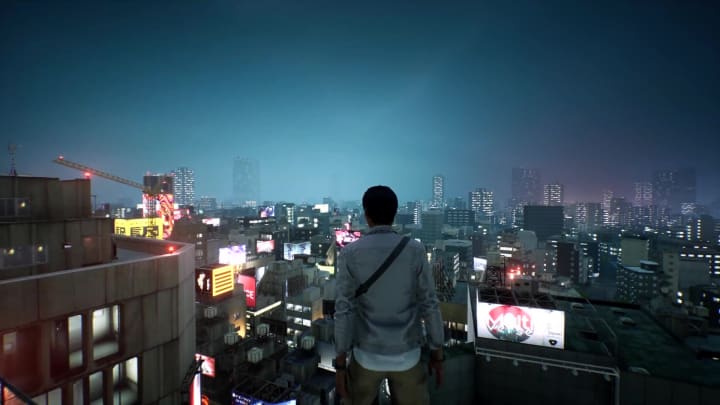
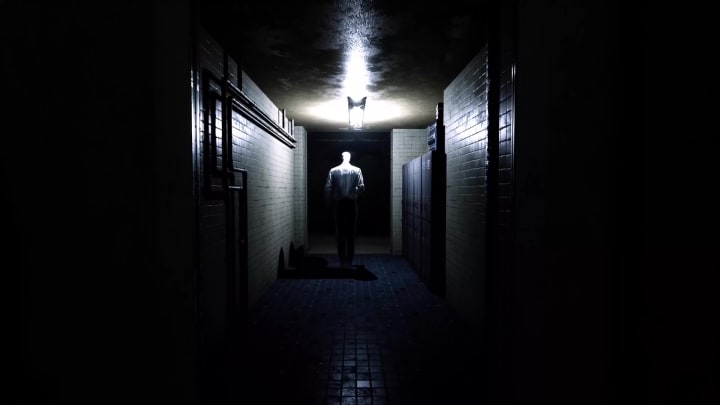
Ghostwire: Tokyo’s visuals hit some impressive highs, though there are a few minor drawbacks. Unlike titles such as Horizon or Returnal that often wow players with technical prowess, Ghostwire isn’t a technical showpiece. However, its lighting and atmosphere, dripping from this neon-soaked city, are exceptional.
Exploring the streets, you’ll notice a wealth of detail—from entertainment advertisements to the individual items inside the flats you enter, to puddles reflecting the glow of surrounding billboards. Despite the city being completely devoid of life, Shibuya somehow feels inhabited by the souls of its former residents. Rich in detail and nuance, it’s a carefully crafted environment to explore.
At times, the lighting is spectacular. When rain pours down, Visitors fling objects at you, and you shoot luminescent green plumes through the darkness, Ghostwire can look absolutely stunning. Creative set-pieces constantly challenge your eyes to keep up with the chaos unfolding, and the darker, brooding corners of the city can be genuinely haunting.
And those enemy designs are incredible. Slenderman-like business men charging with eyeless voids and black umbrellas, headless schoolchildren cackling, a towering, crazed woman with a bloody grin in a trench coat—the game delivers a range of horrifyingly stylish aesthetics. Hannya and his inner circle are also visually imposing. Seeing what new visual horror Ghostwire had in store kept me playing alone.
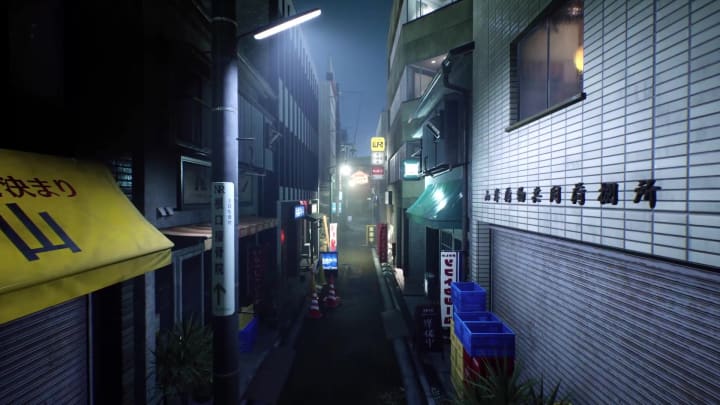
That said, some areas do feel muted. Interior locations repeat frequently, and much of the city, while beautifully lit and designed, has repetitive alleyways and streets. Textures and backdrops aren’t as impressive when compared to high-production games like Dying Light 2. Ghostwire may not be a graphical marvel, but its visuals excel at establishing atmosphere and a strong sense of place, which for me more than makes up for polygon limitations.
My only regret with Ghostwire: Tokyo is that, in order to have this review ready today, I had to play it non-stop for a day and a half. I wish I’d had more time to fully savor and appreciate every moment of this unique, creepy, and remarkable game. It has its flaws, certainly, but its charm and the things it does exceptionally well allowed me to easily overlook its fairly standard open-world design.
There’s a genuine authenticity in the way the developers crafted this game, something you can’t fully grasp without experiencing it yourself. I learned what an Oni really is, discovered the careful nature of the Kappa, and got thoroughly spooked by the appearance of a Karakasa-Kozo. Ghostwire is a beautifully crafted tribute to Japanese tales and folklore, handled with such care and finesse that I constantly wanted to see and uncover more of what the fog had in store.
I’ve mostly avoided massive open-world games recently because of their repetitive design and endless busywork, but Ghostwire: Tokyo has renewed my appreciation for how the genre can still inspire creativity and engaging entertainment, even when using familiar mechanics. I came for the premise of a wacky, scary, and mysterious journey, but I stayed for the compelling story, flashy combat, and the unique tales rooted in Japanese folklore. Plus, you can pet ALL THE DOGS—not just one… what more do I need to say?
About the Creator
topgenconsole
I',m a gamer and writter.
Keep reading
More stories from topgenconsole and writers in Gamers and other communities.
Marvel's Midnight Suns - A must-play on PS5
Marvel's Midnight Suns is the story of a journey belonging to the Hunter, or simply Hunter, a legendary fighter who battled her mom and the deformed "Mother of Demons," Lilith. Their precious last battle culminated in the two murderings each other. They are, however, part of the Marvel universe for everyone, which is why an evil entity arrived, discovered Lilith's coffin, and revived her to commit evil. The prophecy states that Hunter is simply able to intercept her mother, so Marvel's most spooky characters team up to bring back the hero and create the Midnight Suns, a group of teenage characters who are committed to standing against the supernatural. It isn't way before the Suns as well as the Avengers team up to save the universe from real danger. But Lilith, at her maximum dynamism, maybe too much when it comes to the most powerful heroes on Earth.
By topgenconsole3 years ago in Gamers
Rsvsr Helldivers 2: Entrenched Division Warbond Brings Trenches, Tactics, and Explosive Firepower
Helldivers 2 is taking combat to a whole new level with its latest Premium Warbond update: Entrenched Division, set to launch on March 17, 2026. Designed for both solo adventurers and coordinated squads, this update introduces a full suite of new weapons, tactical gadgets, and immersive WW1-inspired gear, creating the ultimate trenches warfare experience.
By Billo Nali5 days ago in Gamers
7 Intelligent Automation Skills That Define AI Digital Assistants
AI Digital assistants or virtual assistants are smart software applications/programs that use Artificial Intelligence to help you with your daily tasks. The software functions as a personal assistant that operates through voice and text commands. These tools use natural language processing and machine learning to understand exactly what you need. They can manage your schedule, emails, or even control your smart devices.
By Arthur Leo4 days ago in Gamers



Comments
There are no comments for this story
Be the first to respond and start the conversation.