
Role-Playing Tips for Introverted D&D Players: Embrace the Game on Your Own Terms
Practical strategies to help introverted D&D players role-play with confidence, creativity, and comfort at the game table

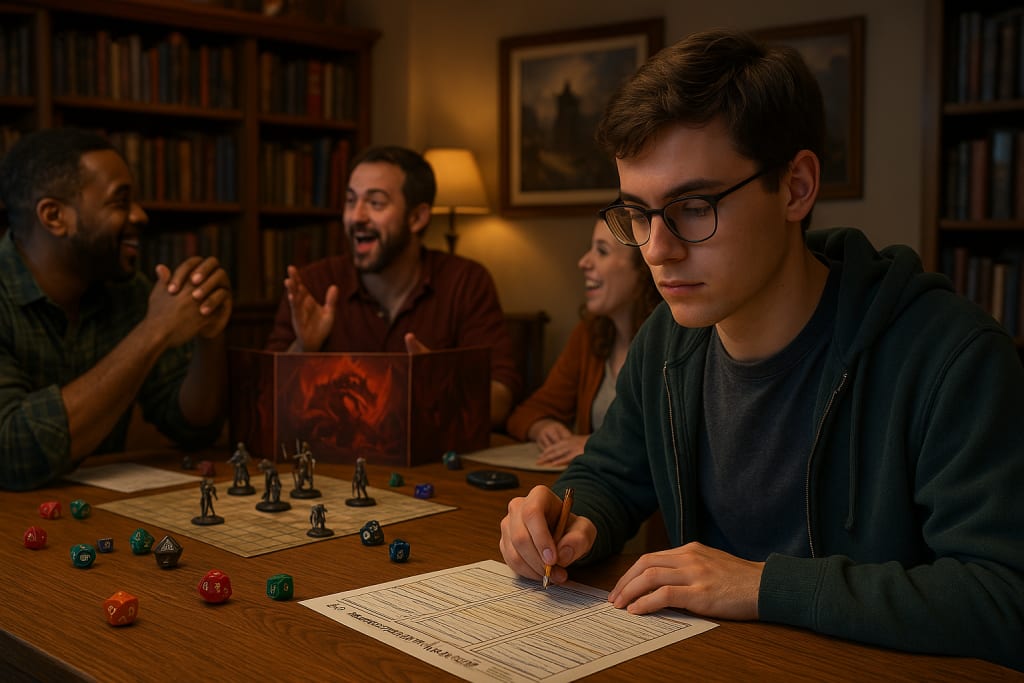
Dungeons & Dragons (D&D) is a game built on storytelling, collaboration, and imagination. But for many introverted players, the role-playing aspect can feel intimidating—especially when you're sitting at a table with outgoing personalities or performing in front of a group. The good news? You don’t need to be a spotlight-loving thespian to enjoy rich, meaningful role-play. In fact, introverts often make some of the most thoughtful, creative players at the table.
In this guide, we’ll explore practical and empowering role-playing tips for introverted D&D players, helping you feel more confident, comfortable, and connected in your next campaign. Whether you’re new to the game or a seasoned player looking to grow, this article will help you shine in your own quiet way.
Why D&D Is Great for Introverts
Before diving into specific strategies, it’s worth acknowledging why D&D can be a perfect fit for introverts:
- Structured Social Interaction: The rules and roles in D&D offer a framework that helps reduce the anxiety of open-ended social scenarios.
- Character Separation: Playing through a character allows for emotional distance and expression in a safe, fictional setting.
- Creative Outlet: Many introverts thrive in imaginative, creative spaces—exactly what D&D provides.
- Small Group Dynamics: Most games involve only 4–6 people, allowing for more intimate and manageable interactions.
1. Start with a Character That Feels Comfortable
Tip: Play a character aligned with your natural tendencies.
If you're nervous about role-playing, start with a character that feels like an extension of yourself. You don’t have to leap into the role of a boisterous bard or chaotic sorcerer unless you want to. Try building a thoughtful ranger, a stoic monk, or a wise cleric—characters that can naturally fit a quieter, more observant personality.
Character creation tips for introverts:
- Choose a backstory that supports your comfort zone (e.g., a mysterious traveler, a reluctant hero).
- Pick a class or background that doesn’t require constant verbal engagement.
- Use your character’s silence or aloofness as a feature, not a flaw.
2. Communicate with Your Dungeon Master
Tip: Set expectations before the game begins.
A good Session Zero can be a lifesaver for introverted players. Use this time to let your Dungeon Master (DM) know how you’d like to engage with the game. Whether you prefer more private role-play moments, less spotlight during social scenes, or more time to process decisions, your DM can accommodate you—if they know what you need.
What to talk about:
- Your comfort level with in-character speaking.
- Preferred spotlight time or role-play intensity.
- Support for quieter character arcs or development.
3. Use Description Instead of Dialogue
Tip: Narrate what your character does or thinks instead of acting everything out.
Not all role-playing has to be theatrical. You can simply describe your character’s reactions and choices without slipping into a different voice or speaking dramatically. For example:
Instead of: “I draw my sword and say, ‘You’ll regret that!’”
Try: “My character draws her sword, eyes narrowing as she prepares to strike.”
This technique lets you engage with the story without pressure to perform, while still enriching the group’s experience.
4. Lean on Written Role-Play
Tip: Engage between sessions through text, notes, or journals.
If speaking up during the game feels overwhelming, you can still express your creativity and character through written role-play. Some ideas include:
- Writing letters from your character to NPCs or other players.
- Keeping an in-character journal of your adventures.
- Sharing character thoughts or decisions through group chat or post-session emails.
This allows you to contribute at your own pace—and can actually add depth to your character that others appreciate.
5. Focus on One-on-One Interactions
Tip: Build connections with one character or NPC at a time.
Large group conversations can be draining, especially if you feel like you’re competing to speak. Instead, look for opportunities for smaller, more personal interactions:
- Role-play with one or two other characters during downtime.
- Talk to NPCs during quieter moments.
- Build a character relationship (like a sibling, rival, or best friend) that creates natural scenes.
These one-on-one moments often lead to some of the most memorable and emotionally resonant experiences in D&D.
6. Use Props or Visual Aids
Tip: Let physical objects help you express yourself.
If you’re nervous about role-playing verbally, try using props, miniatures, or visual cues to support your storytelling. A hand-drawn character sketch, a quote written on your character sheet, or a signature item (like a special dice pouch or a symbolic trinket) can give you a tangible connection to your character and help communicate aspects of their personality without words.
7. Take Your Time
Tip: It’s okay to pause before responding.
One of the strengths of introverts is that we often think before we speak—so honor that! If you need a moment to reflect or craft your next move, let your DM know. Most groups will respect that you’re putting care into your choices.
You can also rehearse or plan ahead for scenes you know are coming. Jot down a few phrases, write out what you want to say, or even practice a few lines if that helps. There’s no shame in preparing your role-play like a mini script if that eases your nerves.
8. Play with the Right Group
Tip: Choose a table that values your playstyle.
Not every group is the right fit—and that’s okay. Look for a D&D group that:
- Encourages collaborative storytelling over competition.
- Respects boundaries and celebrates all player types.
- Doesn’t pressure anyone into the spotlight.
- Provides time and space for everyone to contribute.
When you’re playing with people who value your input, you’ll feel more empowered to participate—in your own unique way.
Your Voice Matters
Role-playing as an introvert doesn’t mean shrinking into the shadows. It means playing in a way that feels authentic, comfortable, and empowering. Your quiet contributions, subtle choices, and creative insights add richness and balance to the game.
So embrace your pace. Speak when you’re ready. And remember: every adventurer has a place at the table—even the soft-spoken ones.
About the Creator
Richard Bailey
I am currently working on expanding my writing topics and exploring different areas and topics of writing. I have a personal history with a very severe form of treatment-resistant major depressive disorder.
Keep reading
More stories from Richard Bailey and writers in Gamers and other communities.
D&D 5e: Best Feats for Each Class (Ultimate Optimization Guide)
Feats in Dungeons & Dragons 5th Edition (D&D 5e) are powerful tools that allow players to customize their characters beyond class and background choices. While not every game includes feats (as they are technically optional), most players and Dungeon Masters agree they add exciting dimensions to gameplay. In this guide, we break down the most effective feats for each class, helping you optimize your character for both mechanical advantage and thematic depth.
By Richard Bailey11 months ago in Gamers
Knights of the Old Republic II
A long time ago, on a writing platform far, far away, I wrote a review for Knights of the Old Republic. It was part of my Star Wars content for May 2024. My final verdict on that one was that it was great fun. It wasn't perfect, but I had a great time playing it. Now, it's time to look at the sequel - yes, there's a sequel.
By Greg Seebregts5 days ago in Gamers
Author’s Advice
If you would’ve asked me 20 years ago did I know I’d become a writer and an author, I would’ve said “nope, ain’t happening”. As fate would have it I did become an author and I can honestly say I’m loving it so far. It really does feel good to be a writer. I’ve learned a lot on this journey and I feel like with even me being as new to this world as I am, there’s some wisdom I need to share with every other aspiring author.
By Joe Patterson5 days ago in Journal



Comments
There are no comments for this story
Be the first to respond and start the conversation.