
PIERRE DE COUBERTIN AND THE REVIVAL OF THE OLYMPICS
The Visionary Who Revived the Ancient Tradition.

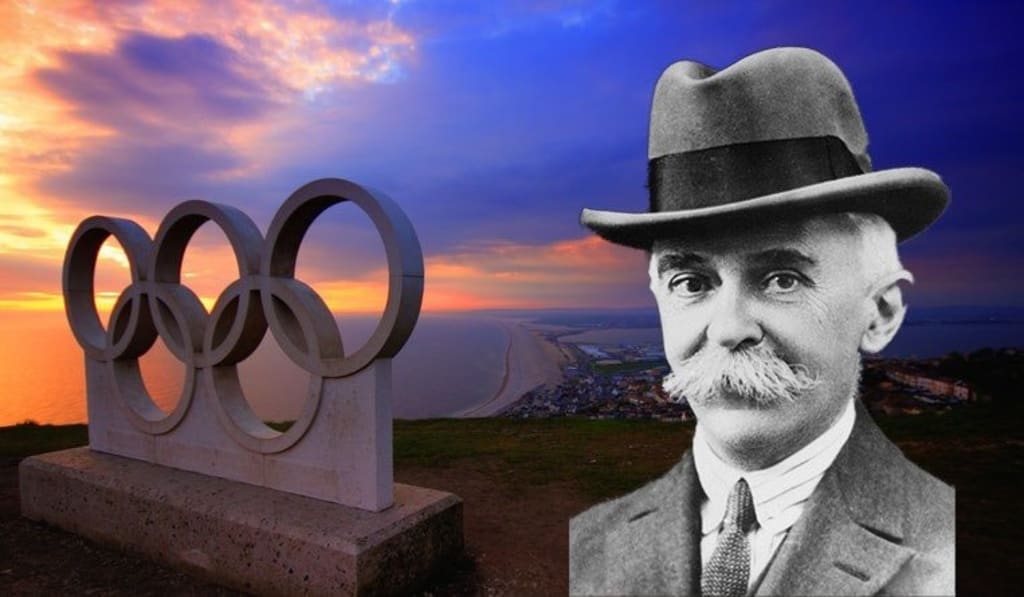
Pierre de Coubertin and the Revival of the Olympics
The revival of the Olympic Games in the modern era is largely attributed to the vision and determination of a French educator and historian, Pierre de Coubertin. His passionate belief in the importance of sport, education, and international unity laid the foundation for the rebirth of the Olympics, transforming it from an ancient Greek tradition into a global sporting event that continues to captivate the world today. This article explores the life and contributions of Pierre de Coubertin, highlighting how he revived the Olympic Games and shaped their modern form.
Early Life and Background
Pierre de Coubertin was born on January 1, 1863, in Paris, France, to an aristocratic family. Although he came from a noble background, he was deeply interested in the ideas of social reform and the development of youth through physical education. Growing up, Coubertin was fascinated by the relationship between sport and education, recognizing its ability to shape character, improve health, and bring nations together. However, it was his exposure to the educational systems in other countries, particularly in England, that had a profound impact on his later work.
Coubertin was greatly influenced by the British educational philosophy, which emphasized the role of physical activity in developing well-rounded individuals. In particular, he admired the British public schools, where sport was a key component of education. This belief in the importance of physical education led Coubertin to become a tireless advocate for the inclusion of sport in the academic curriculum, which eventually became a central focus of his life’s work.
The Revival of the Olympic Games
In the late 19th century, the idea of reviving the ancient Olympic Games became a growing topic of interest among intellectuals and educators, including Coubertin. His vision was to create a global sporting event that could promote peace, cultural exchange, and mutual understanding among nations. In 1894, Coubertin convened a congress in Paris, gathering scholars, athletes, and Olympic enthusiasts from around the world to discuss the revival of the Games. This meeting marked the official beginning of the modern Olympic movement.
Coubertin was convinced that an international athletic competition would foster goodwill between nations and serve as a tool for promoting physical education and sportsmanship. The key to this revival, he believed, was a return to the Olympic spirit of competition, honor, and unity. After much discussion and planning, it was agreed that the first modern Olympic Games would be held in Athens, Greece, in 1896.
The First Modern Olympics in 1896
The first modern Olympic Games took place in Athens from April 6 to April 15, 1896. Although the event was modest in comparison to the sprawling multi-sport spectacles we witness today, it was a significant milestone in the history of international sport. There were 13 countries represented, and athletes competed in 43 events across nine sports, including athletics, gymnastics, and wrestling. The Games were a symbol of international collaboration and peace, aligning with Coubertin’s vision.
Coubertin played a critical role in organizing the 1896 Olympics, ensuring that the event would live up to its historical and cultural significance. Despite the challenges faced, including financial difficulties and logistical issues, the Games were hailed as a success. The spirit of the Olympics was alive, and the foundation for future competitions had been set.
The Establishment of the International Olympic Committee
One of Coubertin’s major achievements in the revival of the Olympics was the establishment of the International Olympic Committee (IOC) in 1894, prior to the 1896 Games. The IOC was created to oversee the planning and execution of the Olympic Games and to ensure that they adhered to the principles of fairness, equality, and amateurism. As the founding father of the IOC, Coubertin served as its first president from 1896 to 1925, guiding the organization through its early years and expanding the Olympic movement.
Under Coubertin’s leadership, the IOC began to grow, and the number of participating countries increased. His vision of using the Olympics as a tool for global unity and peace resonated with nations across the world. The Games became a platform for international cooperation, and the IOC’s work extended beyond the Olympics themselves, promoting the values of sport and physical education worldwide.
Coubertin's Legacy and the Evolution of the Olympics
Pierre de Coubertin’s contributions to the Olympics did not end with the first modern Games. He continued to serve the Olympic movement, advocating for the inclusion of more countries, expanding the range of sports, and ensuring the Games remained rooted in the ideals of amateurism and fair play. He also pushed for the inclusion of women in the Olympic Games, although it took many years before female athletes were allowed to participate in certain events.
Coubertin’s vision for the Olympics was built on the idea that sport had the power to transcend national boundaries and promote peace. His emphasis on education, cultural exchange, and physical activity shaped the direction of the Games throughout the 20th century and continues to influence the Olympics today.
Today, the Olympic Games are one of the world’s largest and most prestigious sporting events, bringing together athletes from nearly every nation to compete in a wide array of sports. Pierre de Coubertin’s legacy is immortalized in the Olympic movement, which continues to inspire millions around the globe. His belief in the power of sport to promote understanding and peace remains a core principle of the Games, making the Olympics a celebration of human achievement and unity.
Conclusion
Pierre de Coubertin’s work in reviving the Olympic Games has left an indelible mark on the world of sport. His vision, dedication, and leadership laid the foundation for the global sporting event that continues to bring people from different cultures together. The Olympics are not just about athletic excellence; they embody the ideals of peace, unity, and the pursuit of a better world. Thanks to Pierre de Coubertin, the Olympic Games remain one of the most enduring symbols of human endeavor and international collaboration.
About the Creator
Badhan Sen
Myself Badhan, I am a professional writer.I like to share some stories with my friends.
Keep reading
More stories from Badhan Sen and writers in Gamers and other communities.
ANCIENT OLYMPIC GAMES IN GREECE
Ancient Olympic Games in Greece The Ancient Olympic Games were held in Olympia, Greece, and are considered the predecessor of the modern Olympic Games. These games were more than just athletic competitions; they were deeply rooted in the religious and cultural traditions of the ancient Greeks. The history of the Ancient Olympic Games offers fascinating insights into Greek civilization, their values, and their devotion to the gods.
By Badhan Senabout a year ago in Gamers
Palworld TCG Guide: Release Date, How to Play, and Bushiroad Card List
The survival gaming world was recently rocked by an announcement that many saw coming but few expected to be this ambitious. Pocketpair has officially pulled back the curtain on the Palworld Trading Card Game, a physical tabletop experience developed in partnership with the industry giants at Bushiroad.
By Richard Bailey2 days ago in Gamers
From Stories to Systems
For a long time, this space has been a bit… quiet. If you’ve stumbled across this blog before, you might have seen short stories, poems, or bits of fiction—creative experiments written at different points in my life. That part of me hasn’t disappeared. I still love storytelling, world-building, and exploring ideas through narrative.
By D. E. King2 days ago in Gamers
The Devil's Cut
“Comrade, finally you’re awake.” The voice was smooth, sensual. A flickering incandescent bar was all that lit the white, sterile room. All Vladimir remembered was everything going black. He tried to move his arms and found them strapped to the gurney.
By Matthew J. Fromm4 days ago in Fiction


Comments (1)
What a great historical article you have written. I wonder what he would think now that professional athletes are allowed to participate.