
Monopoly Go: Examining the Evolution of Digital Board Games
Monopoly Go

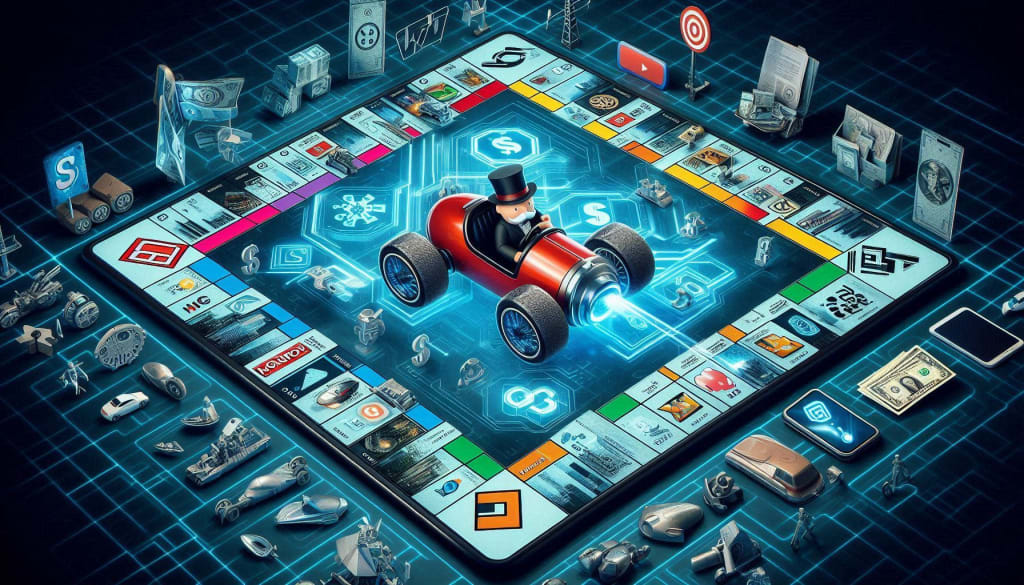
Monopoly Go represents more than just a digital adaptation of a classic board game. It reflects a broader trend in the gaming world, where traditional tabletop experiences are being reimagined for the mobile era. This article takes a closer look at the game’s mechanics, its role in reshaping digital board games, and how it caters to modern players while maintaining the essence of Monopoly.
The Core Mechanics: Familiarity Meets Innovation
At its heart, Monopoly Go keeps the core of Monopoly intact: rolling dice, buying properties and attempting to bankrupt opponents. However, the game introduces new mechanics that significantly alter the pace and strategy. Unlike the traditional board game, where dice rolls are slow and strategic, the Monopoly Go dice mechanics are streamlined for quick, high-stakes gameplay. Players roll virtual dice to determine movement, but the emphasis is on speed and strategy, with each roll affecting the game’s dynamic events and bonuses
One noticeable shift is the reduced emphasis on negotiation and deal-making, which was a key aspect of the original board game. In Monopoly Go, there’s less player-to-player interaction over property trades and more focus on optimizing strategies to take advantage of the game’s system-generated opportunities, such as special bonuses or event-based rewards.
The Gamification of Progress: Levelling Systems and Rewards
One major difference between Monopoly Go and its physical predecessor is the introduction of a progression system, a hallmark of many mobile games. Players earn rewards through daily logins, special events, and reaching milestones. This shifts the focus away from pure competition and toward personal advancement, creating a more individualized experience. For many players, the goal is no longer just to "win" a game, but to continuously unlock new rewards and upgrades.
This system incentivizes daily play and microtransactions, aligning with broader trends in mobile gaming. While this structure helps maintain player engagement, it also raises questions about how much these mechanics shift the game’s focus from skill and strategy to repeated play and in-game purchases. The shift toward gamification turns Monopoly Go into an experience of constant progression rather than isolated rounds of competition.
The Social Element: Cooperation vs. Competition
One of the most striking aspects of Monopoly Go is its social framework. Unlike traditional Monopoly, where face-to-face interactions often lead to heated negotiations, the digital format softens that aspect. While multiplayer modes exist, interactions are limited to joining leaderboards, sharing rewards with friends, or occasionally sabotaging opponents with in-game power-ups. This fundamentally changes how competition works, replacing the direct player conflict with a more passive, asynchronous system.
This shift reflects a larger trend in mobile gaming, where the social component is often more about forming loose networks than fostering intense head-to-head rivalries. The cooperative aspects, such as sharing bonuses with friends or forming teams, cater to the growing demand for games that blend social connection with individual progress. However, this can dilute the competitive edge that many players enjoyed in the original board game.
The Monetization Model: Microtransactions and Free-to-Play Dynamics
Like many free-to-play mobile games, Monopoly Go relies on microtransactions for revenue. While players can enjoy the game without spending money, the option to purchase in-game currency, power-ups, and other items creates a dual experience: one for paying players and another for free players. The monetization model is subtle but ever-present, influencing the pace at which players can progress or access premium features.
For traditional Monopoly players, this model introduces a new dynamic—one where financial investment outside the game can affect outcomes within the game. This raises concerns about fairness, particularly when real money can give players a competitive edge, a departure from the original game’s reliance on strategy, luck, and negotiation. While Monopoly Go doesn’t overtly "pay-to-win," it does reward those willing to spend money with faster progression and additional resources, reshaping the balance of competition.
Cultural Impact: Shaping the Future of Digital Board Games
Monopoly Go is not just a reflection of how a classic game can be adapted for mobile devices; it represents a larger cultural shift in how we experience board games. The transition from physical to digital has transformed Monopoly from a game played around a table into an ongoing, personalized experience on a mobile phone. This shift is emblematic of a broader trend in the digitization of traditional games, where the need for immediacy and constant engagement reshapes the player experience.
In many ways, Monopoly Go is less about recreating the board game and more about translating its essence into a form that fits contemporary mobile gaming habits. This transformation is likely to influence future adaptations of board games, where traditional mechanics will be modified to fit digital platforms that demand shorter playtimes, microtransactions, and social connectivity.
Conclusion: A Game Caught Between Two Worlds
Monopoly Go is a fascinating case study of how traditional board games are evolving in the mobile era. It retains enough of the original game’s DNA to be recognizable but has adapted to meet the demands of a modern, mobile-first audience. While it may disappoint purists who long for the negotiation-heavy, strategy-driven nature of the original, it succeeds in creating an engaging, fast-paced experience for today’s players.
Ultimately, Monopoly Go reflects a broader trend where classic games are no longer confined to their original formats. As more board games are digitized, we can expect to see similar shifts—where the essence of a game is preserved, but the experience itself is shaped by the demands of mobile gaming culture.
About the Creator
Rsvsr GTA Online Mansion Mode: Big Rewards & Strategy
I just jumped back into GTA Online, and Rockstar is kicking off 2026 with style. From January 15th to January 21st, Mansion Mode Event Week transforms Los Santos into a playground of opulent estates and high-stakes battles. Whether you’re a veteran or a newcomer, this week offers action, strategy, and some seriously sweet rewards.
By Billo Naliabout 21 hours ago in Gamers
GTA 6 Budget
most talked-about video games of the decade — and its soaring budget is a major part of that conversation. As anticipation peaks with the release scheduled for late 2026, discussions about how much Rockstar Games and its parent company Take-Two Interactive have spent to develop and market this franchise-defining title have generated intense speculation, conflicting figures, and wild online rumors. �
By shaoor afridi4 days ago in Gamers



Comments
There are no comments for this story
Be the first to respond and start the conversation.