
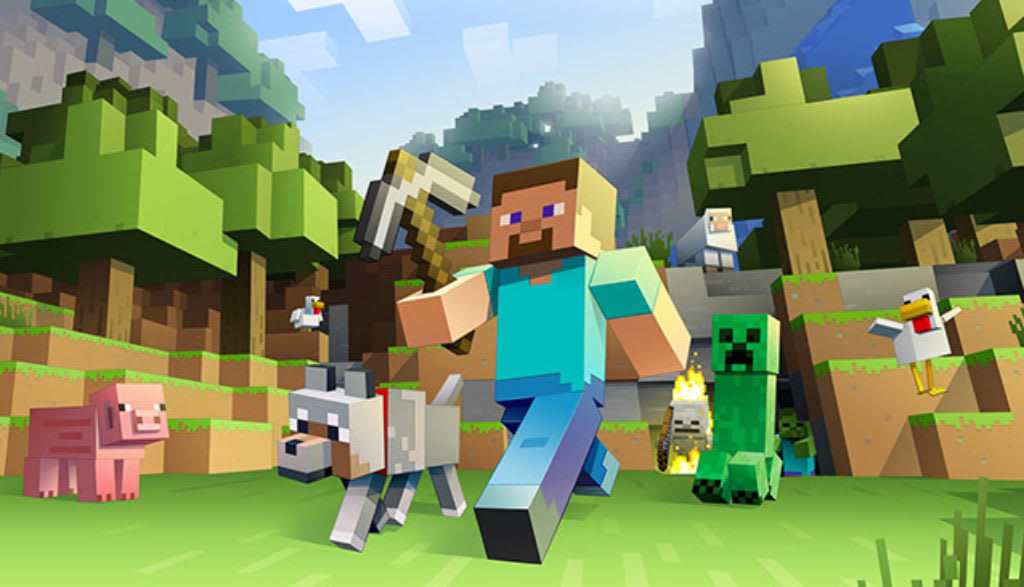
Minecraft: The Blocky Game That Changed the World
Introduction
In the ever-evolving landscape of video games, few titles have left as profound a mark as Minecraft. Originally developed by Markus Persson, also known as "Notch," and released to the public in 2009, Minecraft has grown from a small indie project into one of the best-selling video games of all time. Its simplistic, blocky graphics belie the complex and limitless world that lies within. Minecraft is more than just a video game; it is a global phenomenon with more than 300 million copies sold as of 2023 and a large online community. The Story of Minecraft's Birth Minecraft was first developed by Swedish programmer Markus Persson. Inspired by games like Dwarf Fortress, RollerCoaster Tycoon, and Infiniminer, Notch sought to create a game that offered open-ended creativity and exploration. The game’s first version, known as “Classic,” was released to the public on May 17, 2009. It quickly gained traction due to its unique gameplay style that encouraged building, mining, and survival.
In 2011, Minecraft officially launched as a full game and continued to evolve rapidly. That same year, Persson founded Mojang, a studio dedicated to the game's development. Eventually, in 2014, Mojang was acquired by Microsoft for $2.5 billion, a move that expanded the game's reach and resources significantly.
Gameplay: Simple Mechanics, Infinite Possibilities
Minecraft is fundamentally a sandbox game. Players are dropped into a procedurally generated world made up of blocks representing materials like dirt, stone, wood, and more. These blocks can be mined and placed, allowing players to build structures, craft tools, and shape the environment as they see fit.
There are several key gameplay modes:
Survival Mode: Players must gather resources, manage hunger, and fend off hostile mobs like zombies, skeletons, and the infamous Creeper. Death can be costly, and exploration is rewarded with valuable resources and secrets.
Creative Mode: This mode gives players unlimited resources and the ability to fly, removing all survival challenges. It’s perfect for building intricate structures, cities, machines, and even working computers using the game’s redstone system.
Adventure Mode: Designed for custom maps and experiences, Adventure Mode restricts some actions to enhance the storytelling and gameplay in player-created content.
Hardcore Mode: Similar to Survival but with a twist—death is permanent, and the world is deleted upon the player’s demise.
Players can also explore different dimensions, like the Nether—a hellish realm filled with danger—and the End, home to the game’s final boss, the Ender Dragon.
A Platform for Creativity
Minecraft stands out from other games because it encourages creativity. From tiny cottages to massive replicas of real-world landmarks, players can construct anything. Redstone, the game’s in-game circuitry system, enables players to create complex contraptions like automated farms, calculators, and even working computers.
This creative freedom has led to awe-inspiring projects like:
A full-scale model of Earth
Working 16-bit CPUs
Replicas of Hogwarts, Middle-earth, and even the USS Enterprise
Functioning versions of other games, like Pac-Man and Tetris, inside Minecraft
Educational institutions have taken note of Minecraft's potential as well. Microsoft released Minecraft: Education Edition, tailored for classroom use, allowing students to learn subjects like history, math, coding, and teamwork in an interactive environment.
The Online Community and Modding
The Minecraft community is one of the largest and most active in gaming history. With a huge ecosystem of YouTubers, streamers, modders, and server hosts, the game's longevity is largely due to its fans.
Dream, Technoblade (in memory), and DanTDM, well-known creators of content, have made careers out of Minecraft, boosting the game's appeal across generations. Events like Minecraft Championships and community-driven Survival Multiplayer (SMP) servers draw millions of viewers regularly.
Mods (modifications) have also kept the game fresh. Gameplay is improved, new dimensions, creatures, technology, magic systems, and more are added by thousands of community-created mods. Some popular modpacks, like SkyFactory, Feed the Beast, and RLCraft, provide entirely new ways to play the game.
Cultural Impact
Minecraft’s influence stretches far beyond the gaming world. It has become a cultural icon. Its music, composed by Daniel Rosenfeld (aka C418), is recognized worldwide. Its pixelated visuals have inspired merchandise, clothing lines, toys, books, and even LEGO sets.
Children around the globe play Minecraft to learn, socialize, and express themselves. It is one of the few games that appeals to adults as well as children, crossing generations and bridging the gap between casual and avid gamers. In 2021, Minecraft was inducted into the World Video Game Hall of Fame, cementing its place in history.
Evolution and Updates
One of the reasons Minecraft has remained relevant is its constant evolution. Mojang regularly releases updates that expand the game’s content and improve mechanics. Some notable updates include:
The Nether Update (1.16): Revamped the Nether with new biomes, materials, and hostile mobs.
Caves & Cliffs (1.17 & 1.18): Overhauled world generation, adding massive cave systems and towering mountains.
The Wild Update (1.19): Introduced the deep dark biome and the terrifying Warden mob.
Trails & Tales (1.20): Focused on storytelling, with archaeology features, cherry blossom biomes, and camels.
Mojang’s transparent development process, including regular snapshots and community feedback, ensures players feel involved in shaping the game's future.
Why It Still Matters
Unlike many games that come and go with trends, Minecraft has staying power. Its accessibility, creativity, and educational value give it an enduring appeal. Parents trust it, schools use it, and gamers of all ages return to it time and again.
It’s not just a game—it’s a tool for imagination, collaboration, and exploration. Minecraft has something for everyone, whether you want to dig for diamonds, build a medieval castle, survive the night, or just relax in a quiet village. Conclusion
From humble beginnings to a global empire, Minecraft has proven that great games don’t need flashy graphics or complex narratives. At its heart lies a simple premise: give players the freedom to build, explore, and survive. Minecraft is a timeless classic because of its simplicity and limitless depth. And with an active community and steady updates, its story is far from over.
About the Creator
Mirage League Coins Deserve More Attention
In PoE 3.28 Mirage League, many players collect Coins of Power, Knowledge, and Skill without much thought. At first glance, they seem like minor items, and it’s easy to just stash them. That’s a mistake. These coins can significantly improve level 20 skill gems by adding a hidden bonus. They act as a form of controlled corruption, giving your gems extra utility and making skills feel stronger. For players running red maps or refining builds, this system can noticeably change gameplay and make abilities more effective.
By Smsankar Goswamiabout 21 hours ago in Gamers
U4gm ARC Raiders 1.19.0: Stand Out with the Devotee Outfit and New Hairstyles
The ARC Raiders 1.19.0 update has officially arrived, and it’s bringing more than just bug fixes and balance tweaks. Players now have exciting new ways to stand out in the heat of battle with a brand-new cosmetic outfit and two distinct hairstyles.
By Billo Nali4 days ago in Gamers
My First Time Skiing and I Got Lost, Alone, in the French Alps
Looking back, I can trace some of my life’s biggest adventures to a simple action from my sister. She’d introduced me to Tommy (a very long time ago), a colleague of hers, who had overshared his penchant for Italian-looking women, and I ticked that box.
By Chantal Christie Weissa day ago in Humans


Comments
There are no comments for this story
Be the first to respond and start the conversation.