
Life Is Strange: Double Exposure — Review
Max Caulfield returns to the Life is Strange franchise

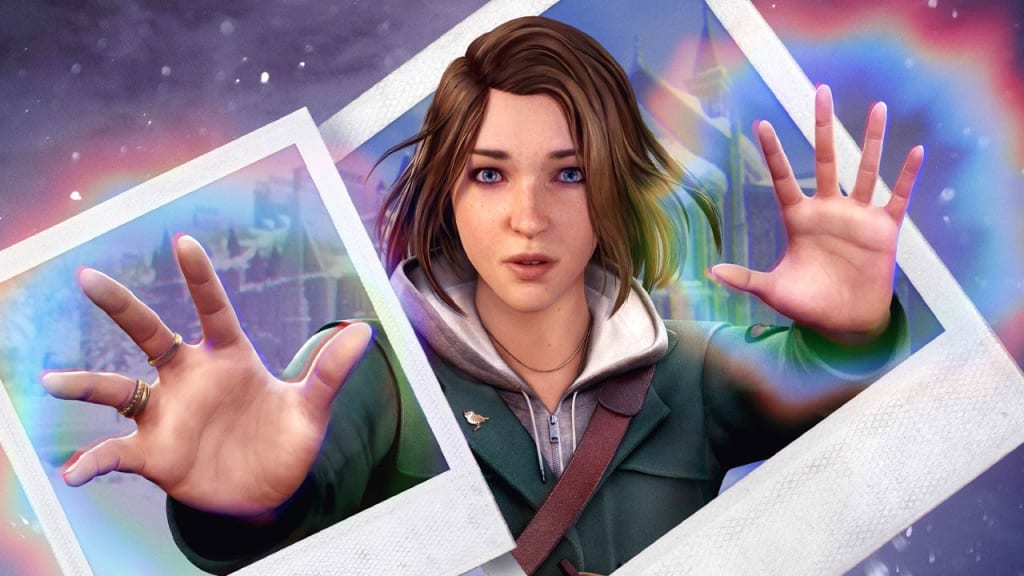
Today’s review is for the fourth installment in the Life is Strange series and particularly, the direct sequel to the original game which sees Hannah Telle reprise her role as time travelling photographer Max Caulfield a decade after the devastating storm in the first game.
When Max Caulfield, photographer-in-residence at the prestigious Caledon University, finds her friend Safi dead in the snow, she tears open the way to a parallel timeline. Here, Safi is still alive, and still in danger. With her new power to Shift between two timelines, can Max solve and prevent the same murder?
While each game has its own standalone story with loose ties to the original with the odd recurring character or references, I have always had a nostalgic soft spot for the first Life is Strange game. Its episodic style, a small town murder mystery, supernatural threats, poignant scriptwriting and characters I immediately became invested in as a first-year university student way back in 2015. Max was a character I instantly connected with – the creative introvert – and the time travelling mechanism was such a unique ability as a gamer.
Diving into Double Exposure, we meet a Max who is still haunted by the consequences of that final choice gamers had to make. Staying true to my original gameplay for this first playthrough Max sacrifices Chloe, her high school sweetheart to save Arcadia Bay and that grief is very present throughout the writing and Hannah Telle’s performance.
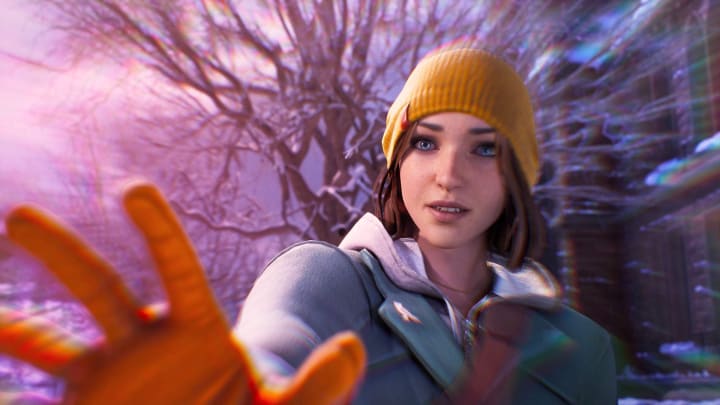
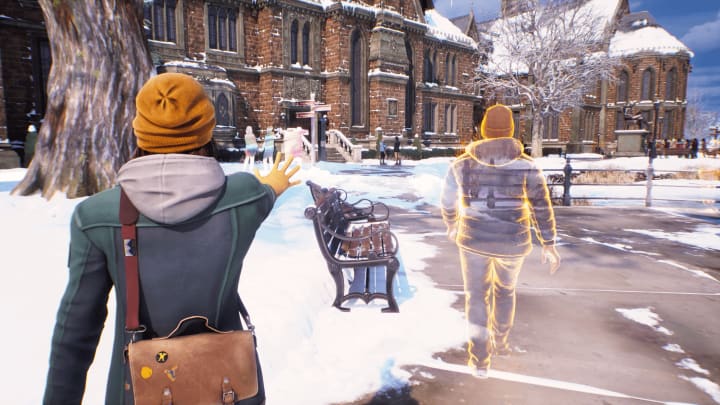
The graphics in this game are absolutely stunning. As the first game was set in autumn, it was very fitting that this game would take place during winter. Caledon University is an absolutely beautiful location, still somehow capturing that sense of isolation in this wintery setting. Max and the player never leave the campus in either timeline, but the attention to detail in the set design was so good. I would have liked to see the world outside the university, but instead the game keeps the player isolated with the small group of characters choosing to stay on campus during the Christmas break.
While I admire the director’s commitment to paying respect to both choices that defined the first game’s finale, the murder mystery lacked the suspense of the Rachel Amber disappearance or emotional pull between Max and Chloe. As I played through the first few episodes, I quickly realised how little time we had with Safi in the Alive Timeline, even though I was running around the university trying to solve her potential impending murder. Which made the reveal and its therefore logic somewhat underwhelming. If we had more time with Safi before the big reveal, I think it would have made much more of an impact.
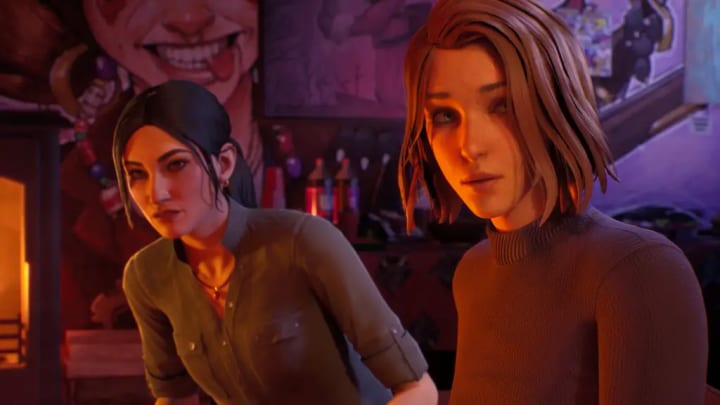
There’s also another mystery which revolved around a former student which I really liked in terms of storytelling, but I think the writers should have made it a more recent tragedy – a lot of students hadn’t met or even known this character, whereas with the Rachel Amber storyline in the previous game, it had more weight because her disappearance was so fresh on the community’s minds. That storyline should have happened a year before the start of Double Exposure, thus having a bigger influence of the faculty and students because they knew Maya.
As I previously said, Telle gave a stellar performance in her reprisal of Max. Her time-travelling powers have since evolved into time… hopping? Jumping? Going between the timelines was a very interesting concept, but I didn’t love it when compared to previous characters’ powers. It was a much slower mechanism which took some time to get used to. So, that meant there was no rewind options. Decisions somehow felt a lot more final and in this game in particular, had me second-guessing every decision I made for Max. However, I did enjoy the photography aspect of the game, especially as the main character is a photographer. It was a nice creative repreive from the intense drama throughout the game.
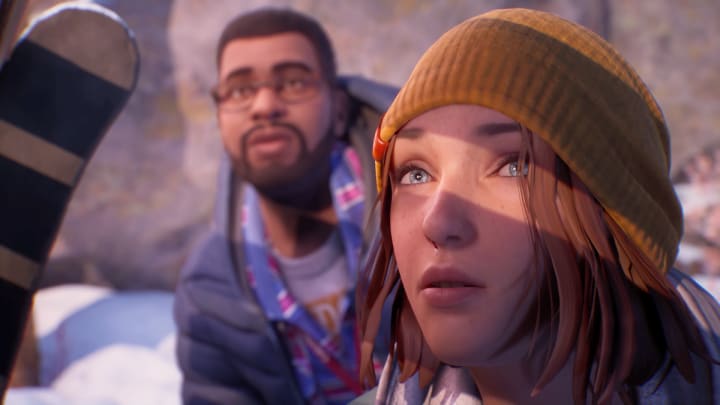
With a great ensemble cast, particularly Olivia AbiAssi (Safi Llewellyn-Fayyad) and Blu Allen (Moses Murphy) who served as the two-halves of Max’s trio of friends. This game felt a lot more like a platonic love story, but we did have romantic options. Based on the choices I had previously made, I played this playthrough with Samantha Bowling’s Amanda Thomas as Max’s love interest – she needed someone nice after the chaos I put her through as a player. In my next playthrough, I’ll see how the romance with Vinh Lang (voiced by Sam Oguma) plays out.
With the Save Arcadia Bay storyline being my Max’s backstory, flashbacks of her relationship with Chloe are frequently heard as Max is haunted by the loss. Dialogue from the original game are re-recorded with Rhianna DeVries rather than Ashley Burch reprising the role. Although I was initially disappointed that Burch was not back for this game, DeVries did a great job recreating the emotional moments of the first game’s final moments.
Having played through the game in its entirety, I had mixed feelings about the finale. Even with the stunning visuals, solid voice acting and even the nostalgic twists and turns – the ending was a bit underwhelming when compared to the previous three games. There was so much that felt… unfinished. Perhaps because the development team are planning a follow-up game, but the ending in itself did not stand on its own. As a gamer, this really does feel like I need to play the next game to get a definitive conclusion and that made the final scene a bit disappointing.
I am definitely intrigued by where this game will go next and this is genuinely a beautiful game, but given how beloved a character this is, I think she deserves better than being left on a cliffhanger. There’s definitely more questions than answers and only time will tell how Max’s story will continue or end.
My rating of Life Is Strange: Double Exposure (Playstation 5) - ★★★★
About the Creator
Ted Ryan
Screenwriter, director, reviewer & author.
Ted Ryan: Storyteller Chronicles | T.J. Ryan: NA romance
Socials: @authortedryan | @tjryanwrites | @tjryanreviews
The Author Diaries #1: The Storyteller’s Curse — Exclusive Prologue Reveal
Author’s Note: Dear Readers, Thank you for being here — for reading, subscribing, and stepping back into the world of The Storyteller Chronicles. When I finished Book One, I truly thought the story was done. Silas was defeated. The grimoire was safe. Lauren had saved the day — in two worlds — and her family were reunited.
By Ted RyanExclusive • 8 months ago
Essential Golf Tips Every Beginner Needs to Improve Their Game
Golf is a rewarding sport that combines skill, patience, and strategy. For beginners, the game can feel challenging because it requires mastering several techniques at once. Many new golfers focus too much on hitting the ball far instead of learning the fundamentals that lead to consistent performance. Improvement comes from developing good habits early, practicing with purpose, and understanding how each part of the game works together. With the right approach and consistent effort, beginners can build confidence and steadily improve their performance on the course.
By Daniel Ladner3 days ago in Gamers
7 Methods to Earn MLB The Show 26 Stubs Fast
In MLB The Show 26, stubs are the in-game currency that players use to purchase packs, cards, and other valuable items. Earning stubs can be challenging, but with the right strategies, you can accumulate them efficiently. Here are seven methods to help you earn stubs quickly without feeling overwhelmed.
By Snow maner2 days ago in Gamers


Comments
There are no comments for this story
Be the first to respond and start the conversation.