
Lichess Transforms Your Mistakes into Puzzle Challenges
Sharpen Your Skills by Turning Blunders into Learning Opportunities


Lichess is a fantastic platform for chess enthusiasts, offering a wide range of tools to help players improve their skills. One of the most useful features is the "Learn From Your Games" tool, which provides an interactive way to analyze your completed games. This feature allows players to revisit their moves, understand their mistakes, and learn from their blunders. Below is a comprehensive guide to using this feature effectively.

Step 1: Select the Game
Your completed games are stored in your Lichess profile. To start, log in to your account and navigate to your game archive. Locate the game you want to review and click on it to open the game view. This will display the full game board along with the move history on the side panel.
Selecting a game for analysis is crucial because reviewing games where you made mistakes can help you identify patterns and areas for improvement. Choose games that you found challenging or where you suspect you made significant blunders.
Step 2: Request Computer Analysis
Once you have selected the game, the next step is to request a computer analysis. Look for the “Analysis Board” button, usually located near the game interface. Click on it, and then select “Request a Computer Analysis.”
The Lichess engine will evaluate your game and provide detailed feedback on each move. This process typically takes a few seconds to a few minutes, depending on the length of the game. Once the analysis is complete, the engine will highlight inaccuracies, mistakes, and blunders, and suggest better moves.
Step 3: Access the "Learn From Your Games" Feature
After the computer analysis is complete, look for the option labeled “Learn From Your Mistakes” or a similar prompt. Clicking this will activate the interactive learning mode.
In this mode, the system guides you through your game, focusing specifically on moves where you made mistakes or blunders. Instead of simply showing you the correct moves, Lichess challenges you to find better alternatives, turning the analysis into a learning experience.
Step 4: Analyze and Solve the Puzzles
The "Learn From Your Games" feature effectively transforms your blunders into mini-puzzles. For each mistake, Lichess will present the position and prompt you to find a better move. This hands-on approach is invaluable for reinforcing proper decision-making and pattern recognition.
Take your time with each puzzle. Think about why your original move was suboptimal and what strategic or tactical considerations you may have overlooked. This reflective process is essential for long-term improvement.
Step 5: Review the Engine's Suggestions
After attempting each puzzle, Lichess will reveal the engine's suggested move. Compare this move with your original choice and the move you attempted during the puzzle. Try to understand the logic behind the engine’s recommendation. Was it a tactical sequence, a positional consideration, or simply a more efficient way to achieve an advantage?
Make notes if necessary, especially if you notice recurring themes in your mistakes. For example, you might frequently overlook pins, miss opportunities for development, or make premature pawn moves.
Step 6: Apply Lessons to Future Games
The true value of the "Learn From Your Games" feature lies in applying what you learn to future games. After reviewing several games and solving the associated puzzles, you should start noticing improvements in your gameplay. Your ability to spot blunders and choose better moves will become more intuitive.

Tips for Effective Use
Be Consistent: Regularly review your games to reinforce good habits and address weaknesses.
Focus on Critical Games: Prioritize analyzing games where you struggled or faced strong opponents.
Take Notes: Keep a chess journal to record key lessons and recurring mistakes.
Combine with Other Study Methods: Use Lichess studies, practice puzzles, and watch instructional videos to complement your game analysis.
Limitations of the Feature
One drawback of the "Learn From Your Games" feature is that it does not work for games saved in Lichess Study chapters. This limitation can be frustrating for players who rely on Study chapters for organized learning and analysis. Hopefully, Lichess will address this issue in future updates.
About the Creator
Alo
Hey there! I’m here to share stories that will make you feel, think, and maybe even change your perspective."
Education in The Sims: A Real-Life Insight into Learning Through Virtual Worlds
In today's digital age, education is evolving beyond traditional classrooms. Surprisingly, one of the most intriguing platforms for learning is found in the virtual world of The Sims, a life simulation game where players create characters, build homes, and navigate daily lives. While often dismissed as mere entertainment, The Sims has become an unexpected educational experience that mirrors real-life scenarios.
By Aloabout a year ago in Motivation
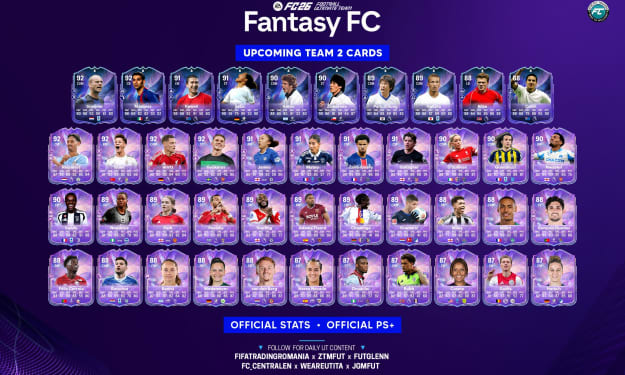
FC26 Daily Update: Fantasy Team 2 Is Live! Forlán & Sterling SBCs and Premier League Tracker Analysis
Hello everyone, welcome to today's FC26 Daily Briefing. We have an action-packed Friday as we move into the second week of the FC Fantasy promotion. Today’s highlights include the reveal of Fantasy Team 2, new SBCs for Diego Forlan and Raheem Sterling, and the high-stakes Champions League knockout draw.
By hasan zidan2 days ago in Gamers
Minecraft Will Change How You See Creativity, Survival, and Infinite Worlds Forever
Few games have reached the level of influence and longevity achieved by Minecraft. Created by Markus Persson and later developed by Mojang Studios under Microsoft, the game has become a global phenomenon available on platforms including Xbox. Its simple visual style hides an incredibly deep and flexible gameplay experience that continues to inspire millions of players worldwide.
By Lukáš Hrdlička5 days ago in Gamers



Comments
There are no comments for this story
Be the first to respond and start the conversation.