


NVIDIA (NVDA) — one of the most influential tech companies in the world right now
Overview
NVIDIA Corporation is a U.S.-based tech company best known for designing graphics processing units (GPUs). It was founded in 1993 by Jensen Huang (current CEO), Chris Malachowsky, and Curtis Priem.
How NVIDIA Works NVIDIA started off making GPUs for gaming, but today it's a powerhouse across multiple industries, including:
🎮 Gaming
Their GeForce line of GPUs dominates PC gaming.
NVIDIA technologies like DLSS (Deep Learning Super Sampling) and RTX ray tracing enhance graphics and performance.
🧠 AI & Machine Learning
For training and running AI models (like the one you're talking to right now!), NVIDIA GPUs are the industry standard. They make data center GPUs like the A100 and H100, used in AI, scientific research, and cloud computing.
Their software platform CUDA allows developers to harness GPU acceleration.
🚘 Automotive
NVIDIA's DRIVE platform powers autonomous driving systems and in-vehicle AI for companies like Mercedes-Benz, Volvo, and others.
☁️ Data Centers & Cloud
GPU acceleration is provided by NVIDIA in collaboration with cloud giants like AWS, Azure, and Google Cloud. Their GPUs are utilized in everything from scientific simulations to ChatGPT, making them indispensable for AI inference and training. Expertise in Visualization Workstation GPUs (Quadro series) are used in industries like architecture, film, and engineering.
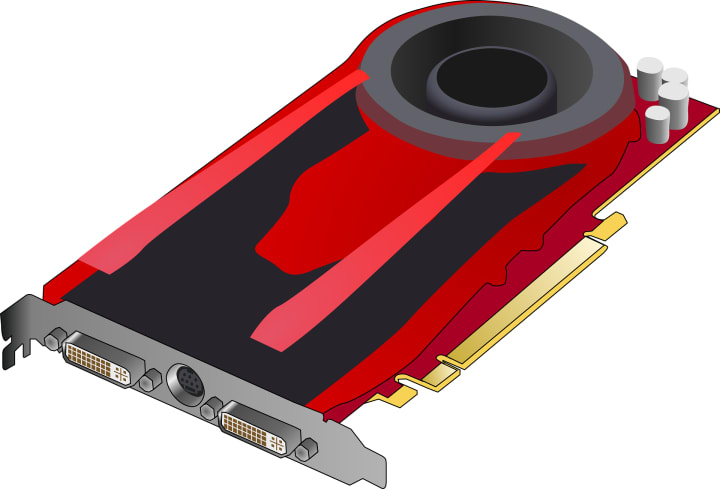
Lets take a look at the list of Graphic Card's released by NVDIA by the years:-
NVIDIA has released a wide array of graphics cards since its inception, catering to various market segments from gaming enthusiasts to professional workstations. Below is a comprehensive list of NVIDIA's desktop graphics card series along with their respective release years:
GeForce Series (Gaming and Consumer Graphics Cards):
GeForce 256 Series: 1999
GeForce 2 Series: 2000
GeForce 3 Series: 2001
GeForce 4 Series: 2002
GeForce FX Series (GeForce 5): 2003
Windows Central
GeForce 6 Series: 2004
GeForce 7 Series: 2005
GeForce 8 Series: 2006
GeForce 9 Series: 2008
GeForce 200 Series: 2008
GeForce 300 Series: 2010 (OEM only)
GeForce 400 Series: 2010
GeForce 500 Series: 2010
GeForce 600 Series: 2012
GeForce 700 Series: 2013
GeForce 800 Series: 2014 (OEM only)
GeForce 900 Series: 2014
GeForce 10 Series: 2016
GeForce 20 Series (RTX 20xx): 2018
GeForce 30 Series (RTX 30xx): 2020
GeForce 40 Series (RTX 40xx): 2022
GeForce 50 Series (RTX 50xx): 2025
Quadro Series (Professional Workstation Graphics Cards):
Quadro: 2000
Quadro FX Series: 2003
Quadro NVS Series: 2003
Quadro FX (x300) Series: 2004
Quadro FX (x400) Series: 2005
Quadro FX (x600) Series: 2006
Quadro FX (x700) Series: 2007
Quadro FX (x800) Series: 2008
Quadro FX (x900) Series: 2009
Quadro x000 Series: 2010
Quadro x100 Series: 2011
Quadro x200 Series: 2012
Quadro x300 Series: 2013
Quadro x400 Series: 2014
Quadro x500 Series: 2015
Quadro x600 Series: 2016
Quadro x700 Series: 2017
Quadro GVxxx Series: 2018
Quadro RTX Series: 2018
Tesla Series (High-Performance Computing and AI):
Tesla (Original): 2007
Tesla 10 Series: 2008
Tesla 20 Series: 2010
Tesla K Series: 2012
Tesla M Series: 2015
Tesla P Series: 2016
Tesla V Series: 2017
Tesla T Series: 2018
NVIDIA TITAN Series (High-End Enthusiast and Professional GPUs):
GeForce GTX TITAN: 2013
GeForce GTX TITAN Black: 2014
GeForce GTX TITAN Z: 2014
NVIDIA TITAN X: 2015
NVIDIA TITAN Xp: 2017
NVIDIA TITAN V: 2017
NVIDIA TITAN RTX: 2018
The latest Graphics Card by NVDIA:-
The GeForce RTX 50 Series, NVIDIA's most recent graphics card line, was unveiled on January 6, 2025, at CES. This lineup introduces significant advancements in AI-driven rendering and ray tracing, powered by the new Blackwell architecture.
About the Creator
Khairul Hasan
Hello! I am a curious and driven individual with an insatiable thirst for knowledge in the ever-evolving world of technology. I am always on the lookout for reliable, cutting-edge information.
Keep reading
More stories from Khairul Hasan and writers in Gamers and other communities.
Lets Know About AI
A subfield of computer science known as artificial intelligence (AI) aims to develop machines that are capable of performing human-like activities like learning, problem-solving, and decision-making. It encompasses various technologies, including machine learning and deep learning, which allow systems to learn and adapt from data.
By Khairul Hasan11 months ago in Education
10 Board Games That Aren’t Boring
Ethnos This game is a mix between Lord of the Rings and Risk, but I do not like Risk and I love this game. With certain cards, you put a token on a city and gain points each round from how many tokens you put on that certain city or other cities. If you play with more than two people, you get three rounds. Depending on the types of cards you choose, you can steal others, play twice, place tokens wherever you want, etc. This game is very entertaining and strategic.
By Rich Burtonabout 14 hours ago in Gamers
The Legend of Zelda: Ocarina of Time Is Still the Greatest Game Ever Made
Few games in history have achieved the level of admiration and lasting influence as The Legend of Zelda: Ocarina of Time. Released by Nintendo, it set a new benchmark for game design, storytelling, and innovation. Even today, its impact can be felt across modern titles, including those available on Xbox.
By Lukáš Hrdlička7 days ago in Gamers
Guard Your Battery
Why are some people so attractive just by standing there? It’s not because they are "likable," but because they don’t need everyone to like them. I realized later that truly charismatic people allow themselves to be criticized, but they never criticize themselves. They never try to please the world; instead, the world stops to watch them.
By Emily Chan - Life and love sharing7 days ago in Poets


Comments
There are no comments for this story
Be the first to respond and start the conversation.