
I have no life, but I can die. What am I?
Riddle about Battery

Riddles have long captivated the human imagination with their ability to spark curiosity, provoke thought, and entertain through clever wordplay. One such riddle that leaves many pondering is:
"I have no life, but I can die. What am I?"
At first glance, this riddle seems contradictory. How can something without life also experience death? To solve this puzzle, we need to dig into the meanings of the words and the context in which they’re used. But first, let’s reveal the answer:
✅Answer: A battery.
Let’s break it down and explore why this answer fits perfectly—and why this riddle is more profound than it appears.
Understanding the Riddle: "I Have No Life"

The first part of the riddle, “I have no life,” seems to clearly refer to something that is not alive in the biological sense. It’s not a human, animal, or plant. It doesn’t breathe, eat, or grow. This rules out anything that we typically associate with living organisms. So we're clearly dealing with an inanimate object.
This line sets the tone and tells us that the object in question is something mechanical, digital, or manufactured—something non-living.
"But I Can Die" – A Deeper Twist
Now comes the clever part: “but I can die.” This is the twist that makes the riddle intriguing.
In common language, “to die” usually refers to the end of life, but the word can also be used metaphorically. In the context of inanimate objects, “to die” often refers to something stopping, failing, or no longer functioning.
For example:
* A car battery **dies**.
* A phone **dies** when it runs out of charge.
* A flashlight **dies** when the batteries are depleted.
* A machine **dies** when it stops working.
This metaphorical use of “die” applies to things that never had life to begin with. So now we start to see the possible answer forming.
Why a Battery Fits Perfectly
A battery is not alive—it has no consciousness, no breath, and no organic processes. Yet we commonly say a battery “dies” when it runs out of power.
The idea of a battery “dying” is widely understood:
* You try to turn on your remote control, and nothing happens. “The batteries are dead.”
* Your smartphone shuts off because it’s out of charge. “My phone died.”
* Your car won’t start, and the mechanic says, “The battery’s dead.”
These phrases are so common in modern language that we rarely pause to consider how unusual it is to use the word “die” for something inanimate. And that’s precisely what makes the riddle clever—it uses a familiar metaphor in a poetic and mysterious way.
Why the Riddle Works
This riddle is effective because it relies on **double meanings** and **metaphorical language**. It plays on the reader's expectations. The word “die” is loaded with emotional and literal significance, usually associated with living things. But here, it’s used in a non-living context, leading to confusion—and then delight—when the answer is revealed.
Also, the structure of the riddle is elegant. It’s short, it rhymes slightly, and it’s easy to remember. Like many classic riddles, it hides the answer in plain sight through the use of ordinary language in an unexpected way.
Other Possible Interpretations (And Why They Don’t Fit As Well)
When faced with a riddle like this, it’s natural to think of other possible answers. Could it be a computer? A machine? A robot?
* A **computer** can crash, but we usually don’t say it “dies.”
* A **robot** is a possibility, especially in science fiction, but robots are often personified and may be said to have a kind of “life,” making them not quite right.
* A **lightbulb** might burn out, but again, we don’t say it “dies” as often as we do with batteries.
Among all these, **battery** is the most accurate, poetic, and widely understood fit.
Riddles and Human Creativity
Riddles like this one are more than just puzzles—they’re reflections of how language evolves and how metaphors enter our everyday lives. Saying a battery “dies” is such a common metaphor that it no longer surprises us—until a riddle like this brings it back into focus.
This is one reason riddles endure. They make us re-examine familiar things. They challenge our thinking and reward us with an “aha!” moment. In this case, the riddle also highlights how much we anthropomorphize our tools and technology. We speak of our phones and devices as if they were alive, reflecting our deep connection to the machines we depend on.
Check out More: I’m tall when I’m young and short when I’m old. What am I?
Final Thoughts
“I have no life, but I can die” is a beautifully crafted riddle that plays on language, logic, and metaphor. The answer—**a battery**—is simple, yet it surprises us because it makes us question how we use words and assign meaning. It’s a reminder that even the most mundane objects in our daily lives can carry poetic significance when viewed through the lens of a riddle.
So next time your phone runs out of charge, and you say, “It died,” you’ll smile—knowing that you’ve just lived the answer to a riddle.
About the Creator
pestosol
Hi.
I am Hmimda 30 years old From Algeria. I am a blogger. I like to share articles about decoration and designs
30k Tressure Hunt Forza Horizon 5
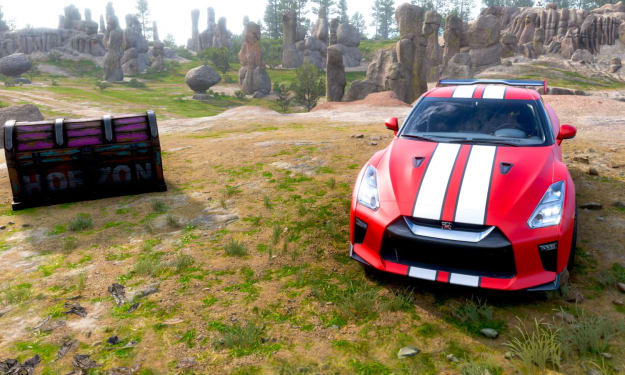
Forza Horizon 5 has become one of the most popular open-world racing games in the world, not only for its stunning visuals and realistic driving mechanics but also for its engaging side content, like Treasure Hunts. One of the most talked-about challenges in the game is the “30K Is The Game” Treasure Hunt, which rewards players with Forzathon Points and progression toward seasonal rewards.
By Games Mode Onabout 2 hours ago in Gamers
Rsvsr Mega Evolutions Are Coming to Pokémon TCG Pocket – Get Ready!
If you’re a Pokémon fan, chances are you’ve been hooked on Pokémon TCG Pocket, the digital card game that lets you collect, trade, and battle Pokémon right from your phone. Well, there’s exciting news: the game is about to get a major update with Mega Evolution cards! And yes, that means Pokémon like Mega Gyarados, Mega Blaziken, and Mega Altaria are coming to your decks.
By Dangyc Ding5 days ago in Gamers


Comments
There are no comments for this story
Be the first to respond and start the conversation.