
How to Write a D&D One-Shot Adventure (Fast and Fun Templates)
Step-by-Step Guide to Creating Exciting D&D One-Shots Quickly, with Ready-to-Use Adventure Templates

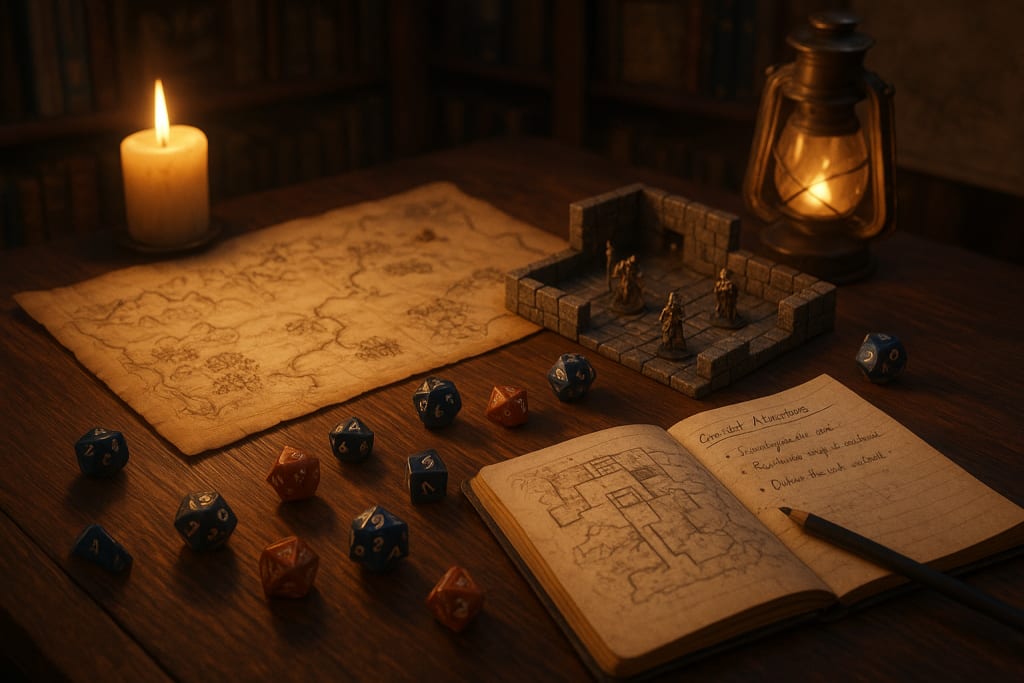
Running a Dungeons & Dragons one-shot is a special kind of magic. You have one session—just a few hours—to hook your players, pull them into the story, challenge them, and give them a satisfying ending. No sprawling campaign arcs. No months of downtime. Just concentrated storytelling and fun.
The good news? One-shots don’t need to take weeks of prep. In fact, with the right framework, you can design one in a single evening. Here’s how to craft a tight, engaging adventure that’s easy to run and leaves your players talking about it long after the dice stop rolling.
Why One-Shots Work (and When to Use Them)
One-shots shine because they’re self-contained. They work perfectly for:
- Introducing new players without overwhelming them.
- Filling gaps when your main campaign can’t meet.
- Testing homebrew rules or worlds before committing to a long story.
- Special events like holidays or themed sessions.
The limited timeframe forces you to trim the fat, which often results in a punchier, more memorable game.
Step 1 – Start With the Core Concept
Before you think about maps or monsters, you need one strong, clear idea.
Ask yourself:
- What’s the hook?
- What’s at stake?
- Why do the characters care right now?
For example:
“A cursed lighthouse is sending ghost ships into the bay, and the village will be destroyed by dawn unless someone stops it.”
It’s urgent, it’s visual, and it gives players a reason to act immediately.
Tip: Keep your premise short enough to pitch in a single sentence. If you can’t sum it up quickly, you’re drifting into campaign territory.
Step 2 – Limit the Scope
The number one mistake new Dungeon Masters make? Too many locations, too many encounters, too many plot twists.
For a four-hour session, you need:
- One central location (with maybe one or two small offshoot areas).
- Three to five key encounters (mix of combat, exploration, and roleplay).
- One climactic showdown or decisive moment.
This keeps the pace moving and makes sure you finish before everyone’s yawning over the pizza boxes.
Step 3 – Use the Three-Act One-Shot Structure
A simple structure keeps you from over-prepping.
Act One – The Hook (30–45 minutes)
Introduce the setting, the problem, and a quick early challenge. Give the players something strange or dangerous to interact with immediately.
Act Two – Rising Tension (90 minutes)
Drop in obstacles, reveal complications, and introduce NPCs who can help or hinder them. This is where exploration and social scenes shine.
Act Three – The Climax (60 minutes)
A single memorable final encounter. It could be a battle, a tense negotiation, or a desperate puzzle to stop the world from ending.
Step 4 – Pre-Built Templates for Fast Creation
Here are two plug-and-play templates you can use to create a one-shot tonight.
The “Race Against Time” Template
Premise: A disaster will strike in a set number of hours.
Act One: The party learns about the coming event and faces an early obstacle.
Act Two: They gather resources, clues, or allies while under pressure.
Act Three: They confront the source of the disaster in a tense, high-stakes encounter.
Perfect for: volcano eruptions, demonic portals, assassinations, or cursed objects.
The “Twist in the Middle” Template
Premise: The mission changes halfway through.
Act One: A straightforward job is set up (escort, investigation, or heist).
Act Two: A shocking twist flips the party’s understanding of the situation.
Act Three: The players decide who to side with and face off against the new enemy.
Perfect for: betrayal by a patron, discovering the villain is a victim, or realizing the “monster” is protecting something important.
Step 5 – Build NPCs With Purpose
You don’t have time for a sprawling cast. Pick two to four NPCs and make them memorable through:
- Distinct motivations (each wants something different).
- Clear personality quirks (speech pattern, mannerism, or physical trait).
- Immediate relevance to the story (they must matter now, not “later”).
One ally, one rival, one wildcard—that’s often enough to give roleplay depth without bogging down the pace.
Step 6 – Balance Encounters for Speed
Combat in one-shots should feel exciting but never drag on for an hour. Use:
- Fewer but more dangerous enemies.
- Environmental hazards that push players to act fast.
- Clear objectives beyond “kill everything.”
For example, maybe the floor is collapsing, or the villain is trying to complete a ritual while the fight rages.
Step 7 – Make the Ending Count
A one-shot ending needs punch. It should:
- Resolve the main conflict clearly.
- Reward clever play and bold risks.
- Leave room for a “what happens next” epilogue.
Even a silly or chaotic one-shot benefits from a satisfying resolution, whether it’s saving a kingdom, preventing a murder, or accidentally becoming rulers of a goblin village.
Step 8 – Run It Like a Tight Ship
Time management is critical. Keep an eye on the clock and move scenes forward if players stall. Don’t be afraid to summarize travel or skip filler encounters.
The goal is momentum. Every scene should feel like it matters.
A great one-shot is like a great short story: a sharp hook, rising tension, and a strong ending. With a single clear premise, a tight structure, and a few well-chosen encounters, you can create an adventure that delivers the full D&D experience in one sitting.
And the best part? Once you’ve run it once, you can tweak it, rename it, and drop it into your rotation anytime you need a quick, fun game night.
About the Creator
Richard Bailey
I am currently working on expanding my writing topics and exploring different areas and topics of writing. I have a personal history with a very severe form of treatment-resistant major depressive disorder.
Keep reading
More stories from Richard Bailey and writers in Gamers and other communities.
Diablo Immortal Class Choice Guide: Which Class Is Right for You?
Choosing a class in Diablo Immortal is more than picking a playstyle. It’s a decision that defines how you’ll fight, survive, and thrive in the game’s sprawling world of demons, dungeons, and relentless battles.
By Richard Bailey7 months ago in Gamers
GTA 6 Pre Order: Release Date, Prices, and PS5 Leak Secrets
The wait for the most anticipated game in history is reaching a fever pitch. With the official GTA 6 release date locked in for November 19, 2026, fans are scouring the internet for any scrap of info on when they can finally put their money down.
By Bella Anderson6 days ago in Gamers
Rise of the Tomb Raider - A Story of Legacy
I've been playing and reviewing the Tomb Raider games for the last couple of years - as I'm sure everyone and their mother has noticed by now. Last time around, we looked at the 2013 reboot. We've got two more chapters to go, and then we've covered all 12 mainline entries.
By Greg Seebregts7 days ago in Gamers
Becca
"Everything is so... flat." Denille said stupidly as she looked around her new neighborhood. She looked around at the muted desert where even the smallest sign of life seemed to have given up. The plant life was shrubs that were half cooked by the heat and where there should have been a lawn, a mess of white rocks laid glistening in the sun. Even the sky looked stretched thin, like the sun had ironed it smooth. She’d moved from Riverside, where at least there were hills, but here in Barstow, everything felt baked and brittle.
By Sara Wilson7 days ago in Fiction


Comments
There are no comments for this story
Be the first to respond and start the conversation.