
How to Handle Problem Players in D&D (Without Killing the Vibe)
Practical Tips for Dungeon Masters to Manage Disruptive Players, Set Boundaries, and Keep the Game Fun for Everyone

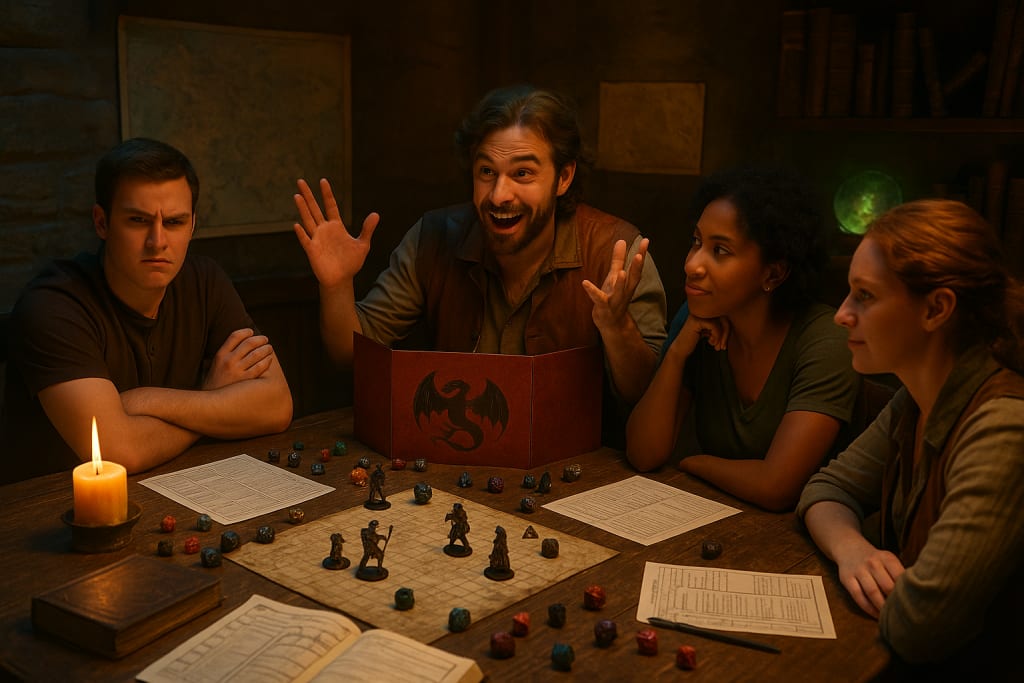
Being a Dungeon Master is a rewarding but challenging role. You're the storyteller, referee, world-builder—and occasionally, the conflict mediator. While most game nights are filled with laughs, creativity, and epic moments, every DM eventually faces a difficult truth: problem players happen. Whether it’s the spotlight hog, the rules lawyer, or the player who treats the game like a PvP battle royale, disruptive behavior can derail even the best campaigns.
But here’s the good news: you don’t have to sacrifice the fun to maintain order. In this in-depth guide, we’ll show you how to handle problem players in Dungeons & Dragons without killing the vibe. These practical strategies will help you create a respectful, engaging game environment where everyone—yes, everyone—can have a good time.
1. Identifying Problematic Behavior
Before you can fix a problem, you need to recognize it. Not all disruptions are obvious, and some may stem from misunderstandings or mismatched expectations. Here are common signs of problematic behavior:
- Interrupting other players or monopolizing the spotlight.
- Arguing over rules mid-session.
- Consistently derailing the plot or ignoring social cues.
- Out-of-character trolling or inappropriate jokes that make others uncomfortable.
- Playing PvP or antagonizing other players without consent.
These behaviors don’t always mean someone is a bad person—they might just be unfamiliar with table etiquette or unaware of how they’re affecting others.
2. The Golden Rule: Talk Before You Act
Open communication is your most powerful tool as a DM. If you notice disruptive behavior, start with a calm, private conversation. Try something like:
- “Hey, I noticed during last session that things got a bit tense. I want to make sure everyone’s having fun. Is everything okay?”
- Avoid confrontation during game time. Addressing the issue privately shows respect and gives the player space to reflect and respond.
3. Setting Expectations with a Session Zero
One of the best ways to prevent problem behavior is to set the tone early with a Session Zero. This pre-game session lets you:
- Establish table rules and boundaries.
- Discuss play styles and tone (serious, silly, combat-heavy, RP-heavy).
- Agree on house rules and safety tools like X-Cards or Lines & Veils.
- Make sure everyone is on the same page about what kind of game you're running.
Having this foundation helps reduce misunderstandings and gives you a reference point if behavior becomes disruptive later.
4. Types of Problem Players and How to Handle Them
Let’s break down common archetypes of disruptive players and offer actionable solutions for each.
The Spotlight Hog
Behavior: Dominates every conversation, rushes ahead, or constantly acts without consulting the group.
Solution: Use initiative or a speaking order during roleplay scenes.
Prompt quieter players directly: “What does your character think, Elira?”
Set time limits for turns during exploration or social scenes.
The Rules Lawyer
Behavior: Constantly corrects you or other players on rules, often mid-session.
Solution:
- Politely say, “I’ll make a call for now and we’ll look it up later.”
- Assign a post-session "rules lookup" time for recurring questions.
- Consider giving them a role—like party rules expert—to channel their energy productively.
The Disruptive Jokester
Behavior: Cracks inappropriate jokes, breaks immersion, or turns every scene into a meme.
Solution:
- Remind them gently of the group’s tone.
- Offer in-game comedic moments to satisfy their humor without derailing serious scenes.
- Use Session Zero or mid-campaign check-ins to talk about tone.
The Lone Wolf
Behavior: Avoids group interaction, creates edgy backstories, or refuses to cooperate with the party.
Solution:
- Collaborate with them to find narrative reasons to stick with the group.
- Tie their backstory to the party’s goals or NPCs.
- Encourage cooperative character creation during Session Zero.
The PvP Troll
Behavior: Steals from, attacks, or sabotages party members.
Solution:
- Establish a clear no-PvP rule unless all players opt in.
- Use in-game consequences (e.g., NPC guards arrest them for theft).
- Speak directly about the impact of their actions on group dynamics.
5. Using In-Game Tools to Redirect Behavior
Sometimes, you don’t need to stop the game to address a problem—you can redirect it from within.
- NPCs as moral compasses: Use trusted NPCs to express concern or suggest more cooperative behavior.
- Consequences for actions: Let the world react logically to player behavior (e.g., if they kill a shopkeeper, the city guards respond).
- Inspiration points: Reward positive behavior like team cooperation, creative problem-solving, or stepping back to share spotlight.
6. When to Step Outside the Game
If in-game nudges don’t work, it’s time to pause the action and have a meta-conversation. Frame it constructively:
“Hey, I noticed there’s some tension between your character and the others. Is that intentional, or is there something we should talk about?”
This lets players explain their intent and gives you the opportunity to redirect future behavior.
7. Establishing a Group Code of Conduct
A clear, written code of conduct helps everyone know what’s expected. Keep it simple:
- Respect everyone’s time and voice.
- No harassment, hate speech, or disruptive behavior.
- Support each other’s fun—D&D is a team game.
You can include this in your campaign notes or group chat as a pinned message.
8. Knowing When to Say Goodbye
Sometimes, despite your best efforts, a player just isn’t a good fit. If someone repeatedly disrespects boundaries, upsets others, or refuses to adapt, you may need to remove them from the group.
This conversation should be private, direct, and compassionate:
“I really appreciate your enthusiasm, but I don’t think this campaign is the right fit for you. I want the group to have fun, and that doesn’t seem to be happening for everyone.”
It’s tough, but protecting the group’s vibe is more important than holding onto one disruptive player.
9. Protecting the Table's Fun
Every DM faces problem players eventually. The key is not to panic or overcorrect but to respond thoughtfully and consistently. With open communication, clear expectations, and a few smart tools in your kit, you can handle disruptive behavior without killing the vibe.
Remember, your job isn’t just to tell a story—it’s to foster a space where everyone gets to play a hero, share laughs, and build memories together.
About the Creator
Richard Bailey
I am currently working on expanding my writing topics and exploring different areas and topics of writing. I have a personal history with a very severe form of treatment-resistant major depressive disorder.
Keep reading
More stories from Richard Bailey and writers in Gamers and other communities.
Best D&D 5e Backgrounds for Roleplaying Potential: Unlocking Rich Storytelling Beyond Mechanics
In Dungeons & Dragons 5e, character backgrounds are often overlooked in favor of flashy subclasses or min-maxed builds. But for Dungeon Masters and players who value storytelling and immersive roleplay, backgrounds offer a goldmine of narrative depth. The right background can inform a character’s motivations, provide social hooks, and shape how they interact with the world—both in and out of combat.
By Richard Bailey10 months ago in Gamers
Doom Eternal Will Push You Into Chaos You Cannot Escape From
Few shooters deliver pure adrenaline like Doom Eternal. Developed by id Software and published by Bethesda Softworks, the game builds on the legacy of the iconic Doom while pushing the formula to new extremes. Available on Xbox, it represents one of the most intense and demanding action experiences in modern gaming.
By Lukáš Hrdlička6 days ago in Gamers
Building a Borderless Gaming Community: The Mission of Global Games Show
In 2026, gaming is no longer just a hobby; it is the world’s most influential cultural and economic engine. However, despite the billions of players worldwide, the industry remains strangely fragmented. Development silos, regional infrastructure gaps, and platform-locked ecosystems often prevent the gaming world from reaching its true potential as a unified global community.
By Tech Updates4 days ago in Gamers


Comments
There are no comments for this story
Be the first to respond and start the conversation.