
How Club Penguin Secretly Shaped a Generation: Dark Truths Behind the Iconic Kids' Game
Club Penguin wasn’t just snowballs and puffles—it was a chaotic digital playground that taught kids censorship, capitalism, heartbreak, and power. Here's what really happened behind the screens.
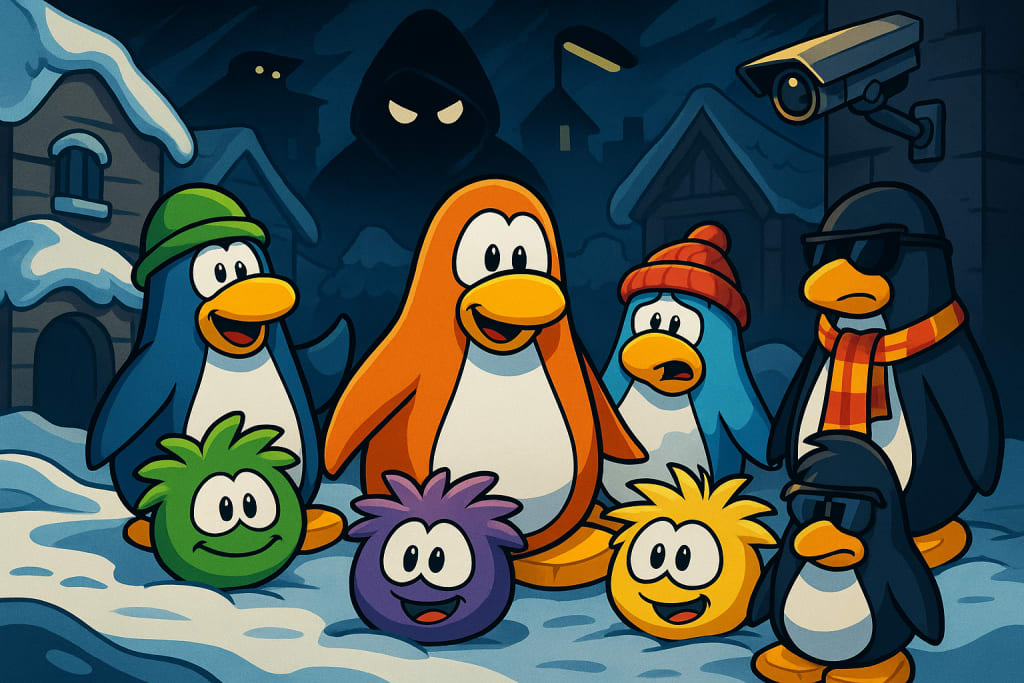
I. Welcome to the Glacier of Madness
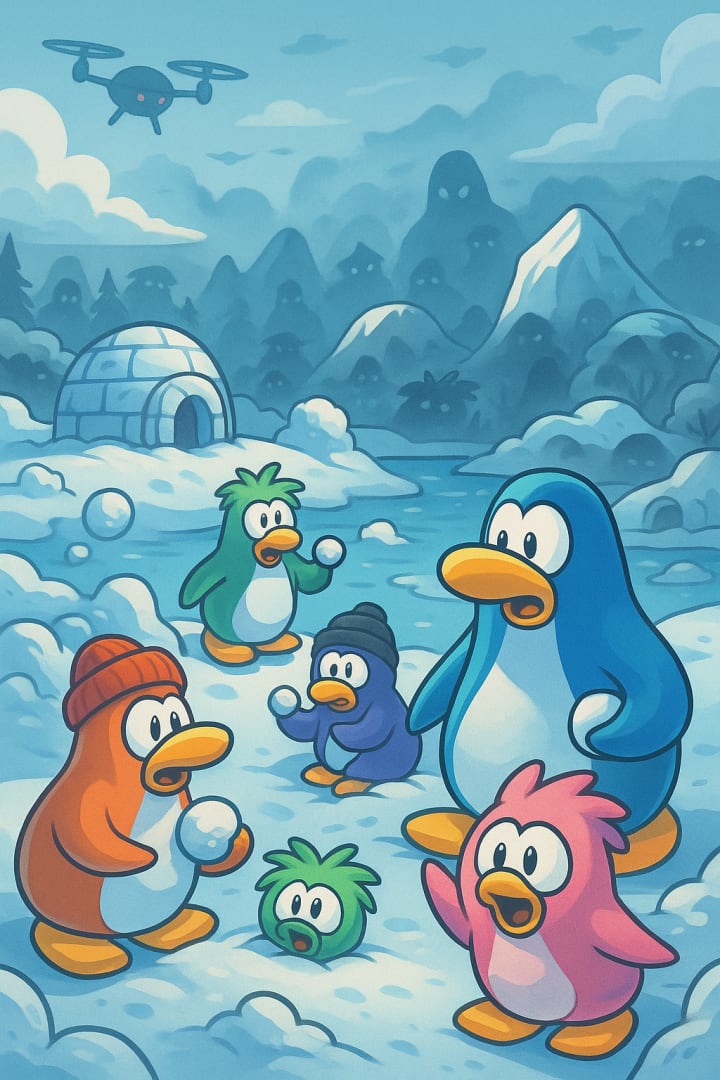
At first glance, Club Penguin looked like innocent digital fluff. A snowy utopia. A place where kids could waddle around as adorable penguins, toss snowballs, adopt puffles, and decorate their igloos. But this wasn’t just a kid-friendly Sims. It was a wild frontier with no real rules—until you crossed an invisible line.
We were just kids, but the game turned us into explorers, outlaws, social schemers, and in many ways, accidental psychologists. In the chaos of snow-covered servers, Club Penguin became the earliest and darkest training ground for navigating human behavior—through pixels, filters, and chat bubbles.
II. The Iceberg That Refused to Tip
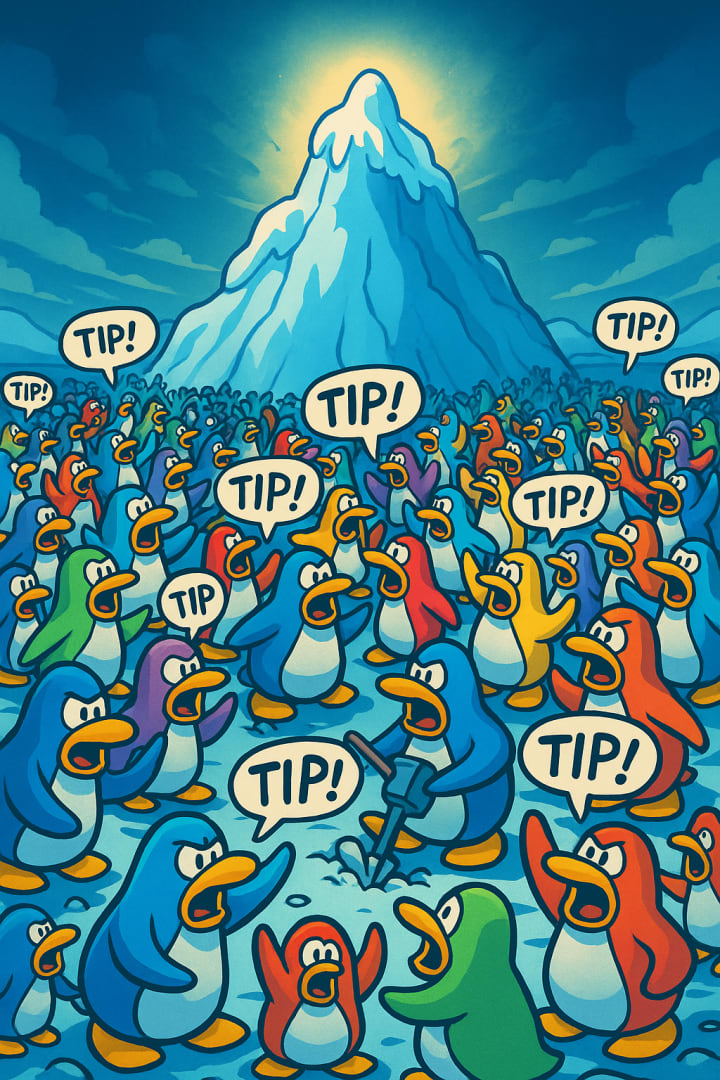
Let’s start with the iceberg.
The greatest myth in the game’s lore: *"You can tip the iceberg if enough people work together."* Entire server revolts happened over this belief. Hundreds of penguins would gather, chanting "TIP! TIP! TIP!" and frantically dancing, drilling, or shouting at the frozen mass like it was a god refusing to move.
But it never tipped. Not until years later, when Disney finally caved and allowed it. And by then, we were grown.
That wasn’t just a digital rumor. It was a **case study in collective delusion**, mob mentality, and how children can form spontaneous faith in the impossible. The iceberg united us, frustrated us, and turned us into pixel cultists.
III. The Ban Hammer Was the True God
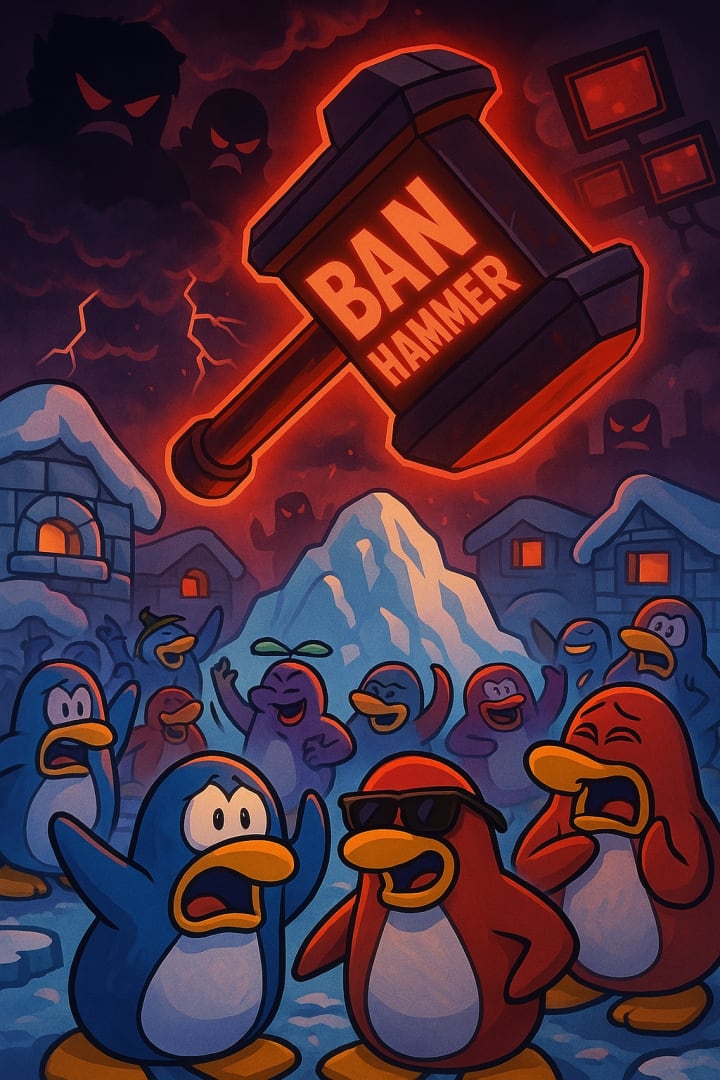
Club Penguin taught us the concept of **authoritarian surveillance** before we even knew what that meant. Type the word "crap" or try flirting too obviously, and within seconds, *bam*—"You have been banned for 24 hours."
It taught us that Big Brother was always watching.
But the truth is—we **didn’t fear it**. We tested it.
We *wanted* to get banned, just to see how far we could push the system. Some of us even wore our bans like digital street cred.
This wasn’t a safe, sanitized experience. This was shadowboxing with authority.
IV. Secret Rooms, Underground Cults, and Digital Conspiracies
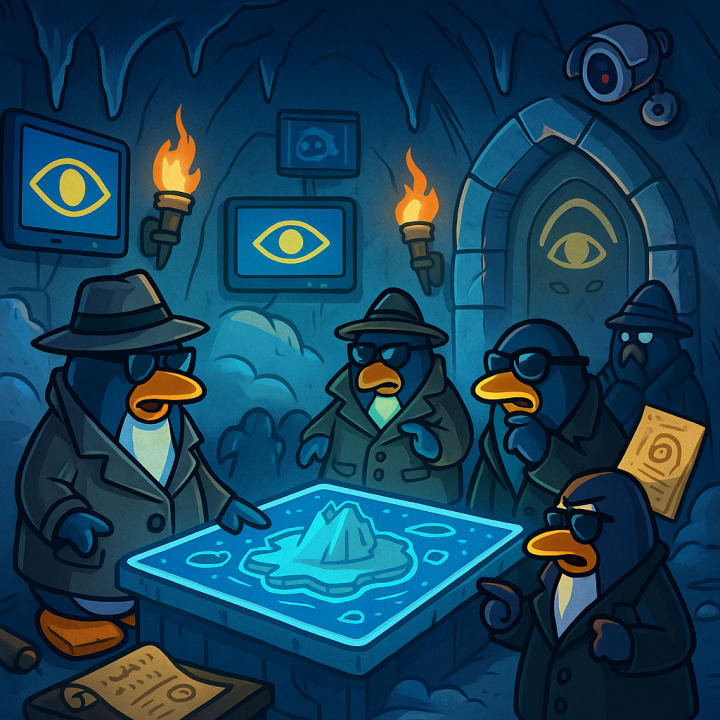
We discovered rooms that weren’t on the map. Hidden doors. Mysterious caves.
The Dojo. The HQ. The Elite Penguin Force.
You weren’t just waddling around. You were recruited. You were a spy. You cracked codes and wore disguises. There were entire **spy networks** of children, forming secret alliances under Disney's nose.
We had penguin Illuminati before we had Instagram.
V. The Psychological Warfare of the Chatbox
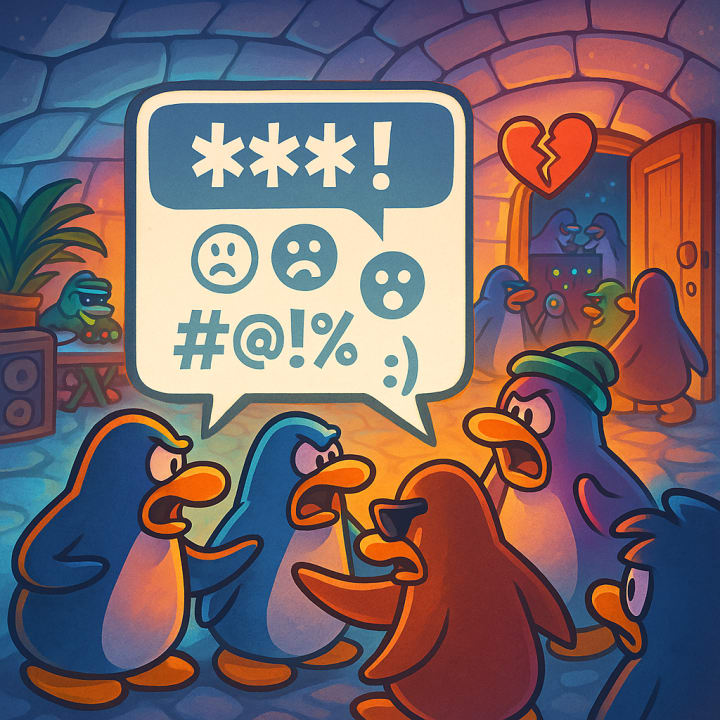
Imagine a world where your words were filtered, but your intentions weren’t.
You had to flirt, insult, negotiate, gossip, or roleplay—all while avoiding auto-ban filters.
We developed **emotional intelligence** by necessity.
Breakups happened in igloos. Fake marriages. Betrayals. Exiles from friend lists. Entire drama cycles unfolded in whispers and emotes.
And don’t forget the *public humiliation* of getting kicked out of someone’s igloo party.
We weren’t just playing. We were **surviving a digital soap opera.**
VI. Puffles, Pets, and the First Taste of Guilt
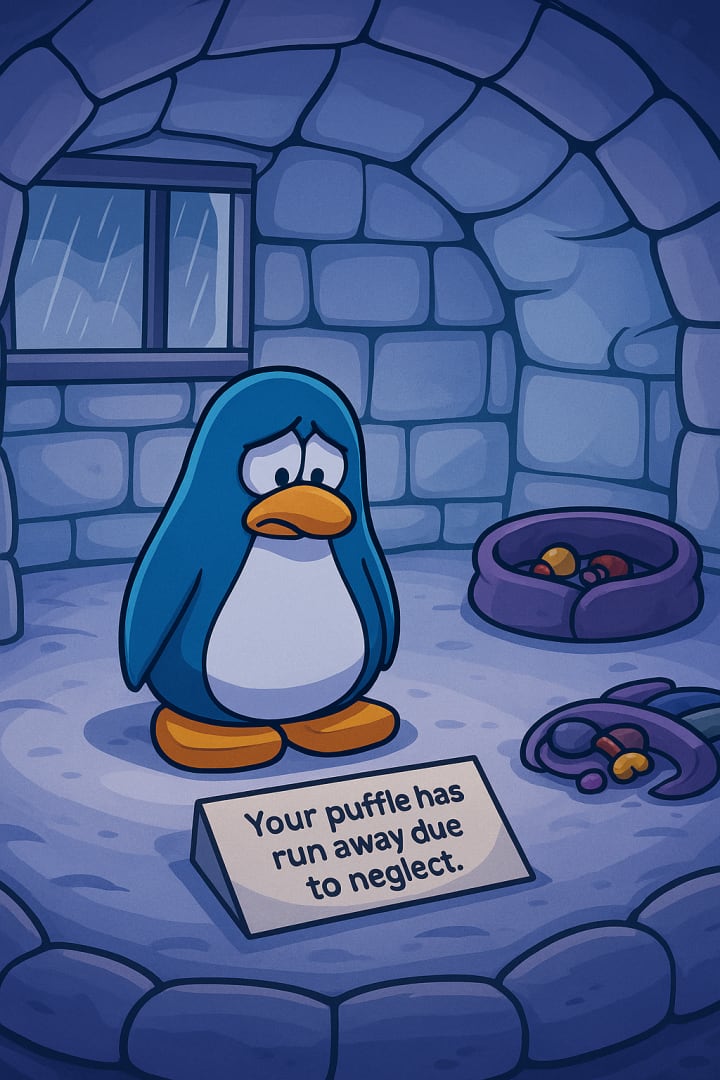
You could adopt a puffle—a fluffy little creature that lived with you in your igloo.
But forget to feed them? **They ran away.**
No warning. No second chances.
You logged in one day, and *poof*—"Your puffle has run away due to neglect."
We experienced the **consequences of emotional abandonment** long before we ever dated anyone. It was pixelated guilt. And it hit hard.
VII. Capitalism in Snow Boots
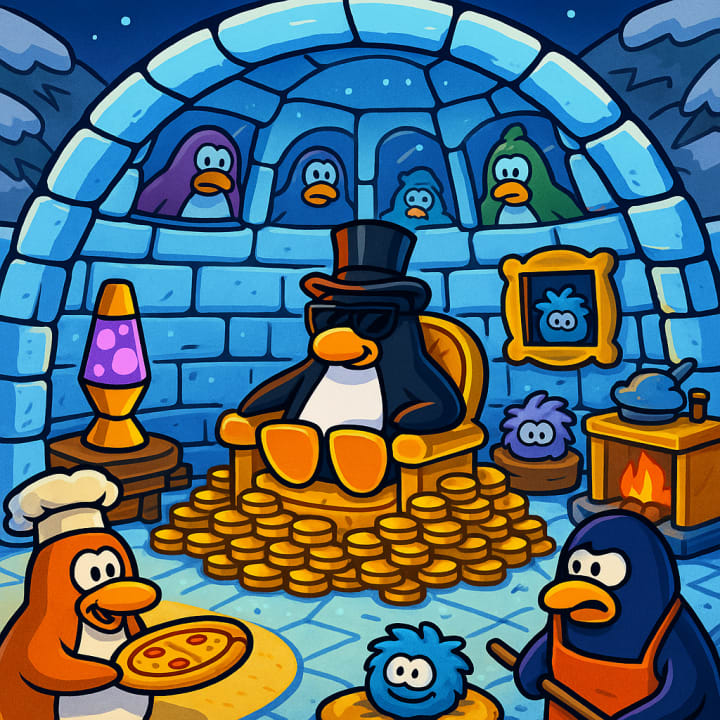
We learned hustle. We grinded games for coins. We ran pizza parlors, danced in nightclubs, sold furniture.
And we *flexed*.
Your igloo wasn’t just your home—it was your **status**. If you had the snow globe house or fire furniture, people knew you were someone.
**Club Penguin created a capitalist hierarchy** that made Wall Street look like child’s play. And ironically, it *was*.
VIII. Social Isolation and the Dance Floor
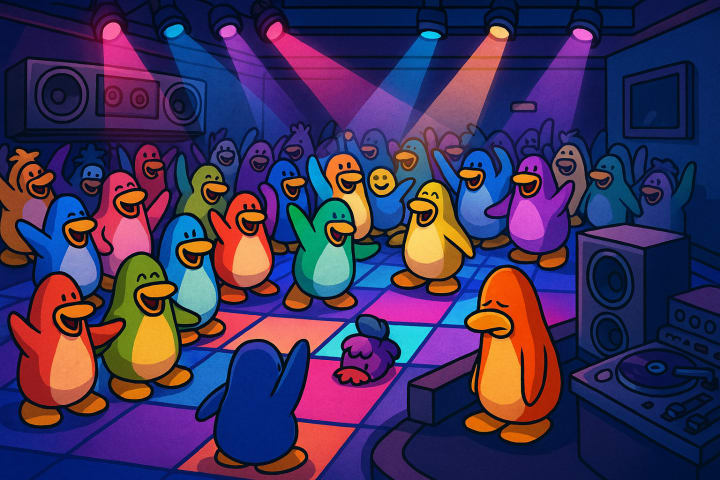
You could dance alone, but the real flex was dancing in a crowd.
You learned early what it felt like to be ignored. To enter a room and no one noticed you.
Club Penguin quietly taught us the **ache of being unseen**.
You either hosted the party or you weren’t invited.
IX. The Final Shutdown: Mourning a Nation
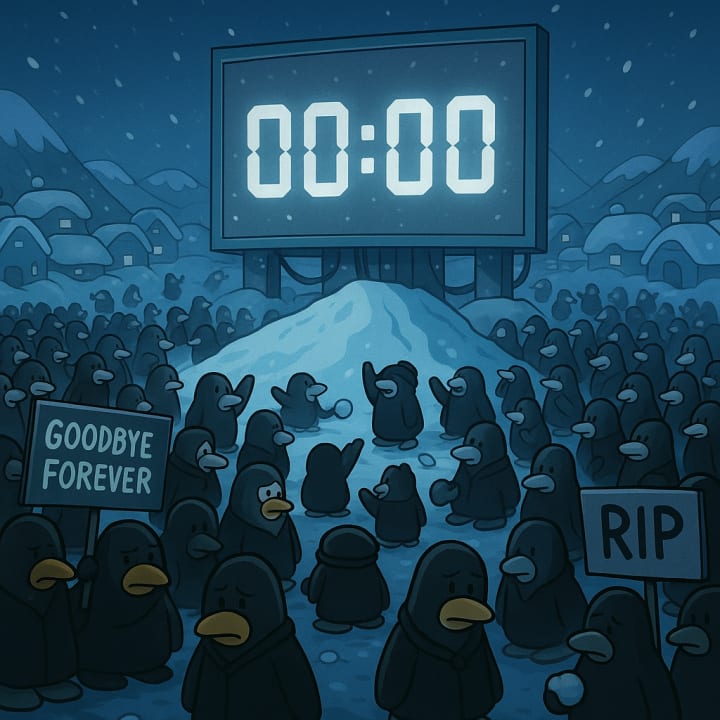
March 29, 2017.
Disney pulled the plug.
We logged in one last time, thousands of us, dressed in black. Penguins crowding every server. Saying goodbye. Throwing one last snowball. Holding vigils.
The moment the servers went down? **That was our 9/11.**
Club Penguin didn’t just shut down. It died. And with it, part of our youth.
X. What They’ll Never Understand
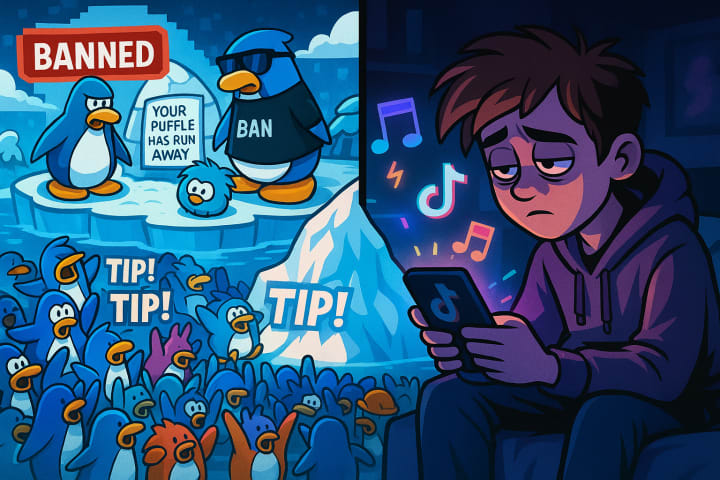
Gen Z and younger will never grasp what it meant to navigate a world built from pixels, pressure, and unfiltered energy.
They have TikTok loops, yes. But they’ll never know what it felt like to be banned for saying "butt" or to be ghosted by a puffle.
They’ll never know the sting of your igloo party getting ignored.
Or the high of tipping the iceberg *finally* in 2017.
We weren’t just playing.
We were coding our minds for the real world.
Club Penguin wasn’t just a game.
It was a **social simulation with no rules and infinite memory.**
Final Thought:
If you survived Club Penguin, you weren’t just a gamer.
You were baptized in ban hammers, raised by puffles, and trained in pixel warfare.
**Drop a snowball 🌨️ in the comments if you’re one of us.**
We weren’t ready for the world.
But thanks to Club Penguin, the world sure as hell wasn’t ready for us.


Comments
There are no comments for this story
Be the first to respond and start the conversation.