
HOSTING THE OLYMPICS:OPPORTUNITIES VS. COSTS
Hosting the Olympics:Weighing the Benefits of Global Exposure Against the Financial and Social Costs.

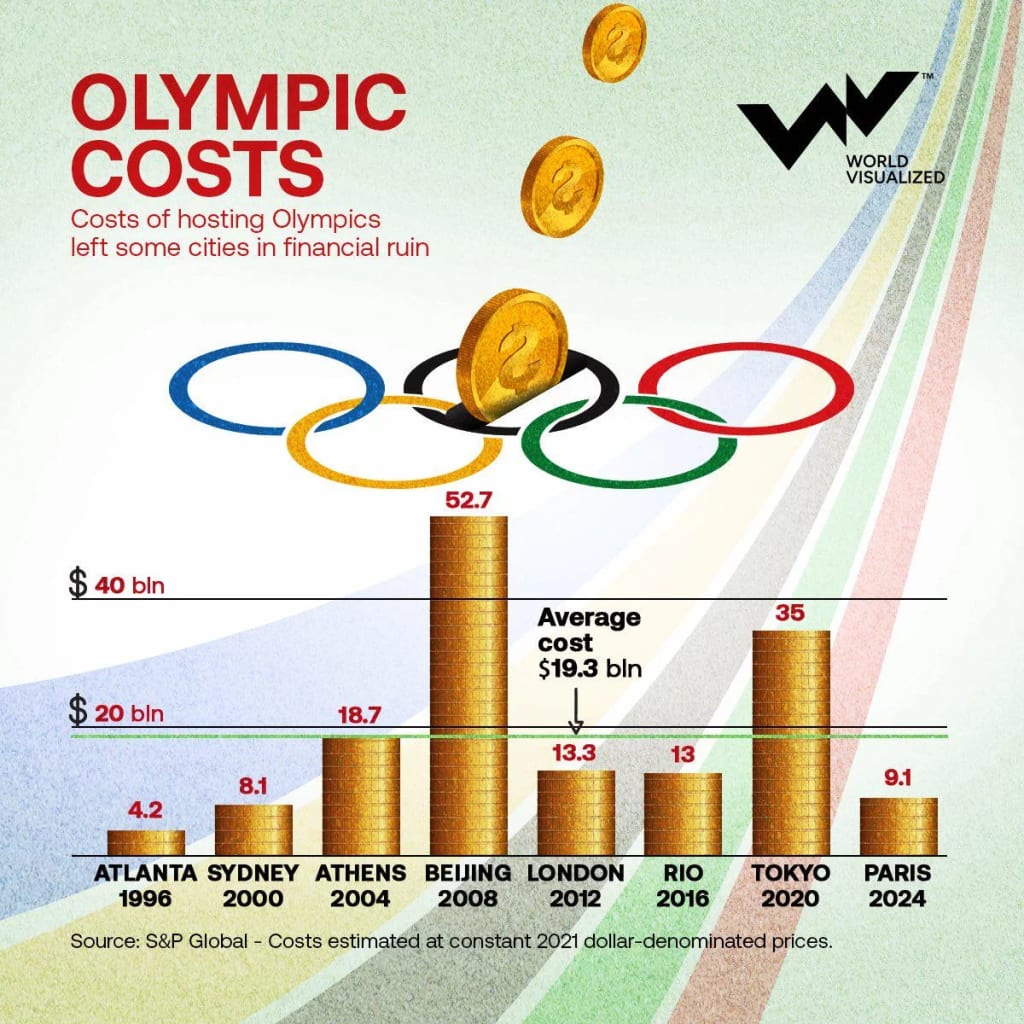
Hosting the Olympic Games is a significant achievement for any city or country, offering both extraordinary opportunities and considerable challenges. The decision to host the Olympics can have far-reaching consequences, from boosting national pride to reshaping local economies. However, the costs—both financial and social—are also substantial. In this essay, we will explore the opportunities and costs involved in hosting the Olympic Games, providing a balanced view of both sides.
(I)Opportunities of Hosting the Olympics
- Economic Boost
Hosting the Olympics often leads to a temporary boost in the local economy. The influx of international visitors, including tourists, media personnel, and athletes, stimulates local businesses such as hotels, restaurants, and retail shops. According to a report by the Brookings Institution, the economic benefits of hosting the Olympics can include increased tourism and spending in the local economyitionally, the construction of Olympic infrastructure (stadiums, transportation systems, etc.) can create numerous jobs and potentially improve long-term economic conditions. For example, London 2012 was credited with providing significant benefits in terms of urban regeneration, particularly in areas that had previously been underdeveloped .
- Exposure and National Prestige
Hosting the Olympics offers a country or city global exposure. It allows the host nation to showcase its culture, innovation, and organizational capabilities to a worldwide audience. Cities like Beijing 2008 and Rio 2016 used the Olympics to demonstrate their growing influence on the global stage. The media coverage of the Games brings attention to the host city, often leading to increased tourism long after the event has ended.
Moreover, hosting the Olympics can foster national pride and unity. The Games serve as a platform for countries to demonstrate their achievements in sport and beyond, leaving a legacy that can last for generations.
- Legacy and Infrastructure Development
Beyond the immediate economic and prestige-related benefits, hosting the Olympics often leads to lasting improvements in a city’s infrastructure. This includes the construction of new sports facilities, public transportation systems, and urban redevelopment. While not all cities effectively capitalize on these improvements, some have used the Olympics as a springboard for long-term urban planning and development. The 2016 Rio Olympics, for example, spurred significant investment in infrastructure that was intended to improve transportation and tourism .
- Promotingd Physical Activity
The Olympics can also have a lasting impact on local sports cultures. The Games inspire young people to take up sports, leading to higher participation rates in various athletic activities. Hosting the Olympics provides an opportunity to invest in youth sports programs and encourage physical fitness across the population. Additionally, it strengthens the local sports infrastructure, which can help future generations of athletes excel on the world stage.
(II)Costs of Hosting the Olympics
- Massive Financial Costs
The most significant cost associated with hosting the Olympics is the financial burden. A study by the University of Oxford found that the average cost of hosting the Summer Olympics has been significantly higher than initial estimates, with cities often facing overruns that extend into billions of dollars . For example, the Sochier Olympics cost Russia an estimated $51 billion, far more than the originally projected budget .
The funding for such a monume typically comes from a mix of public and private sources, and in many cases, taxpayers bear a substantial portion of the cost. These investments in Olympic infrastructure may not always translate into long-term financial benefits, leaving the host city with debt long after the Games conclude.
- Social and Environmental Costs
While the Olympics can lead to infrastructure improvements, these projects often come with significant social and environmental costs. The displacement of local communities and the destruction of existing neighborhoods to make room for Olympic venues has been a major criticism of the Games. For instance, the Beijing 2008 Olympics led to the forced eviction of thousands of residents to build new facilities .
Environmental concerns are also a majoe construction of stadiums and other Olympic infrastructure often results in the destruction of natural habitats. After the Games, many of these facilities are left underused or abandoned, raising questions about the long-term environmental sustainability of the Games.
- Post-Games Economic Impact
After the Olympic Games end, the economic benefits can often fade. The high number of tourists and visitors typically drops, and the demand for temporary infrastructure and services wanes. Cities like Athens 2004 and Montreal 1976 faced financial difficulties in the years following their Olympic Games, burdened by debt and underutilized infrastructure. In many cases, Olympic venues have become “white elephants”—expensive buildings that are rarely used after the Games conclude .
- Security Concerns
The security costs asth hosting the Olympics have also risen dramatically in recent years. The Games require a significant investment in police, military, and security measures, often leading to temporary restrictions on public freedoms. The scale of security operations needed to protect athletes, visitors, and the host city can strain local law enforcement agencies and lead to significant financial costs.
End
Hosting the Olympic Games presents a delicate balance between the opportunities it offers and the costs it incurs. On the one hand, the Games can bring a temporary economic boost, international prestige, infrastructure improvements, and promote physical activity. On the other hand, the financial burden, social and environmental costs, and the risk of unused infrastructure make hosting the Olympics a challenging endeavor.
Ultimately, the decision to host the Games should be carefully considered, with a focus on long-term planning and sustainable development. While the Olympics can leave a positive legacy, the costs associated with such an event can be enormous, making it essential for cities and countries to weigh the potential benefits against the risks involved.
About the Creator
Badhan Sen
Myself Badhan, I am a professional writer.I like to share some stories with my friends.
Keep reading
More stories from Badhan Sen and writers in Gamers and other communities.
THE SIGNIFICANCE OF THE 1932 LOS ANGELES OLYMPICS
The 1932 Los Angeles Olympics marked a significant turning point in the history of the Olympic Games and the development of the modern sports movement. Held from July 30 to August 14, 1932, the event was the 10th edition of the Summer Olympic Games and stands out for several reasons, including its innovative changes in the organization of the Games, its economic impact, and its social and cultural significance.
By Badhan Senabout a year ago in Gamers
Palworld Evolution: Navigating New Mechanics in the Post-Lawsuit Era
The survival gaming landscape shifted significantly when Nintendo and The Pokémon Company officially filed their patent infringement lawsuit against Pocketpair in late 2024. While many feared this legal behemoth would crush the "Pokémon with guns" phenomenon, the reality has been a fascinating masterclass in rapid game design iteration. Pocketpair didn't just retreat; they began a surgical overhaul of Palworld's core systems to ensure the game’s survival while maintaining its chaotic identity.
By Richard Bailey7 days ago in Gamers



Comments (1)
What a great history and economics lecture.