
Healthcare App Development in 2025
Key Features, Costs, Benefits, and Future Trends

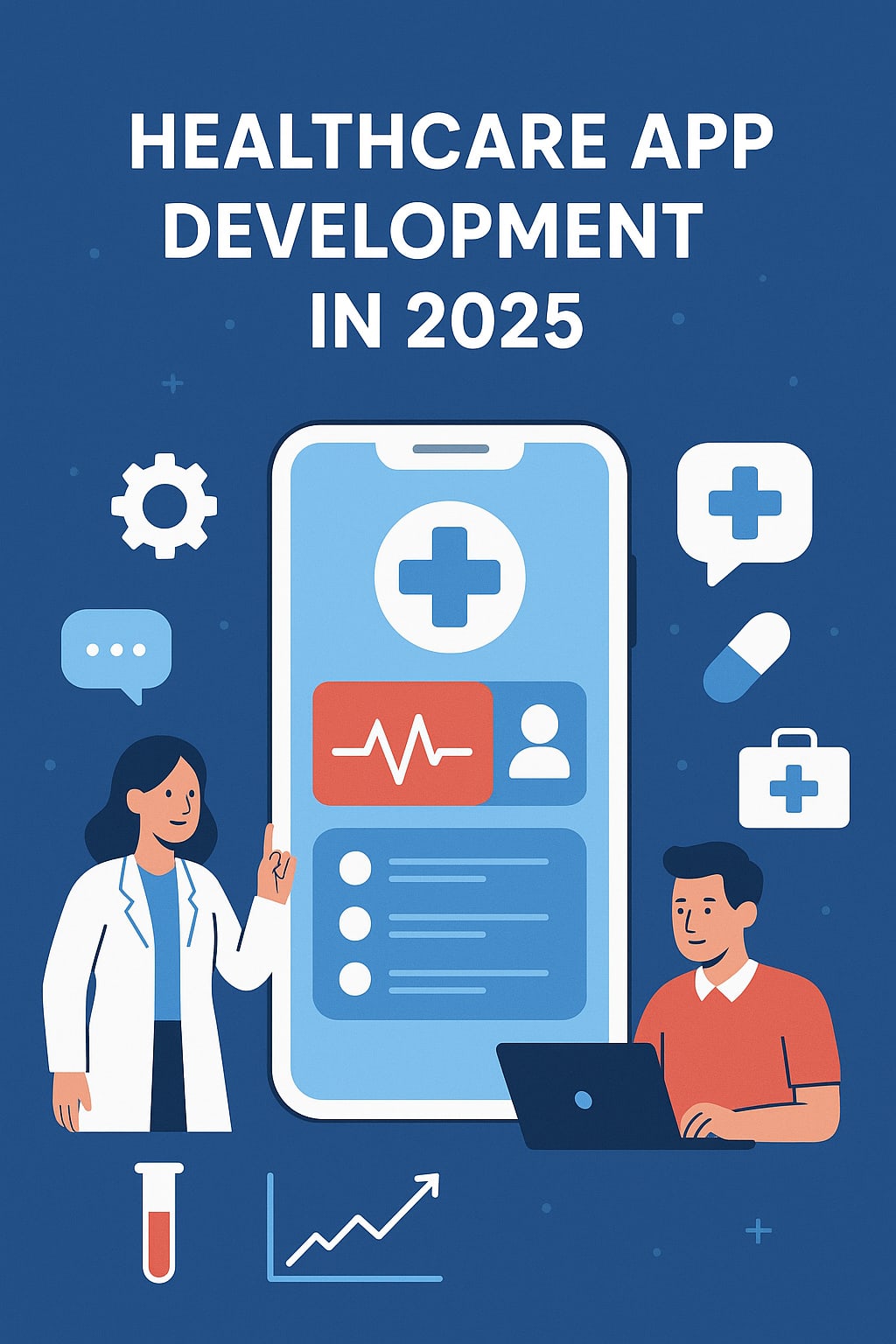
Healthcare apps bridge the gap between patients and providers. They simplify processes like appointment scheduling, medical record management, telemedicine, and health monitoring. As mobile adoption grows, these apps are becoming vital in delivering efficient and personalized healthcare services.
Types of Healthcare Apps
Healthcare apps come in various types, including fitness trackers, telemedicine, medication management, mental health, chronic disease management, hospital management, diagnostic tools, and health education apps, improving patient care and accessibility.
Patient-Focused Apps
- Symptom tracking and self-diagnosis
- Telemedicine and online consultations
- Fitness and wellness monitorin
Provider-Focused Apps
- Electronic Health Records (EHR) management
- Appointment scheduling and reminders
- Remote patient monitoring
Fitness & Wellness Apps
- Diet and nutrition tracking
- Exercise and fitness routines
- Mental health and meditation support
Key Features of a Successful Healthcare App
A successful healthcare app includes user-friendly interface, secure patient data management, real-time consultations, appointment scheduling, reminders, integration with wearables, personalized health insights, telemedicine support, seamless communication, and compliance with healthcare regulations.
- Secure Authentication: HIPAA-compliant login and data protection
- Appointment Scheduling: Easy booking and reminders
- Telemedicine: Video consultations and chat support
- EHR Integration: Centralized access to patient records
- Health Monitoring: Wearable device connectivity and real-time tracking
- AI & Analytics: Predictive diagnostics and personalized care suggestions
- Notifications & Alerts: Medication reminders, follow-up alerts
Technology Stack for Healthcare App Development
Healthcare app development relies on a robust technology stack, including frontend frameworks (React Native, Flutter), backend (Node.js, Django), databases (MySQL, MongoDB), cloud services (AWS, Azure), APIs, security protocols, and AI/ML for advanced healthcare features.
- Recommended Technologies:
- Frontend: React Native, Flutter for cross-platform apps
- Backend: Node.js, Python, Java
- Database: MongoDB, PostgreSQL
- Cloud & Hosting: AWS, Google Cloud, Azure
- AI & Machine Learning: TensorFlow, PyTorch
- Security: HIPAA-compliant encryption, OAuth 2.0, SSL
Cost to Develop a Healthcare App
The cost to develop a healthcare app varies based on complexity, features, platform, and technology stack, typically ranging from $30,000 to $150,000, including design, development, testing, and regulatory compliance.
Factors Affecting Cost:
- App type (patient, provider, fitness)
- Feature complexity (AI integration, telemedicine)
- Platform choice (iOS, Android, or cross-platform)
- Regulatory compliance and security
Estimated Cost Ranges (2025):
- Basic App: $15,000 – $30,000
- Medium Complexity App: $30,000 – $60,000
- Advanced App: $60,000 – $120,000+
Cost-Saving Tips:
- Use cross-platform development frameworks
- Implement core features first, then scale
- Leverage third-party APIs for EHR or telemedicine
Benefits of Developing a Healthcare App
Healthcare apps offer measurable advantages for patients, providers, and healthcare businesses.
- Enhanced Patient Engagement: Easy access to care and health tracking
- Operational Efficiency: Streamlined workflows for providers
- Real-Time Monitoring: Quick interventions via remote monitoring
- Revenue Growth: Telemedicine and digital consultations generate additional income
- Data-Driven Decisions: Analytics improve patient outcomes
Keye Takaways
- Healthcare apps are transforming patient care and provider workflows
- Core features like EHR integration, telemedicine, and AI analytics drive success
- Costs vary depending on app complexity, features, and platform
- Regulatory compliance and data security are critical
- Emerging trends like AI, wearables, and personalized medicine will define future apps
Final Words
Healthcare App Development Company is essential for creating secure, user-friendly, and feature-rich apps. Such companies ensure compliance, integrate AI and telemedicine, and deliver innovative solutions. Investing in professional development boosts patient engagement, streamlines operations, and drives long-term growth in the digital healthcare landscape.
About the Creator
Sophia Parker
Sophia Parker writes top blogs on technology, AR/VR, AI, and APIs, making complex tech easy to understand. Passionate about innovation and helping readers stay ahead in the digital world.
Keep reading
More stories from Sophia Parker and writers in Gamers and other communities.
Custom Software Development Company
Empowering businesses with tailored digital solutions that drive growth, efficiency, and innovation. We craft custom strategies and technologies designed to meet your unique goals, enhance customer engagement, and accelerate digital transformation for long-term success in a competitive landscape.
By Sophia Parker3 months ago in Gamers
Rsvsr How Daily Events and Golden Blitz Help You Progress Faster in Monopoly GO!
At first glance, Monopoly GO! looks like a simple roll-and-move game, but anyone who has played for a while knows there’s much more going on under the surface. Daily events are what turn routine gameplay into something strategic and rewarding. Instead of logging in just to roll dice, players who pay attention to events often progress faster and enjoy the game more overall.
By Billo Naliabout 21 hours ago in Gamers
The Ultimate Guide to Palworld Breeding: Mastering Feybreak and Exploring the New Islands
The landscape of Palpagos Island has shifted dramatically with the latest updates to Palworld. While the early days of the survival phenomenon focused on basic base building and survival, the current meta has evolved into a sophisticated science of genetics and exploration.
By Richard Bailey5 days ago in Gamers


Comments
There are no comments for this story
Be the first to respond and start the conversation.