
Gaming Giant Electronic Arts Acquired in Record $55 Billion Deal — A Landmark Shift in the Industry
The unprecedented $55bn buyout of EA signals a new era for gaming, investors, and players worldwide.

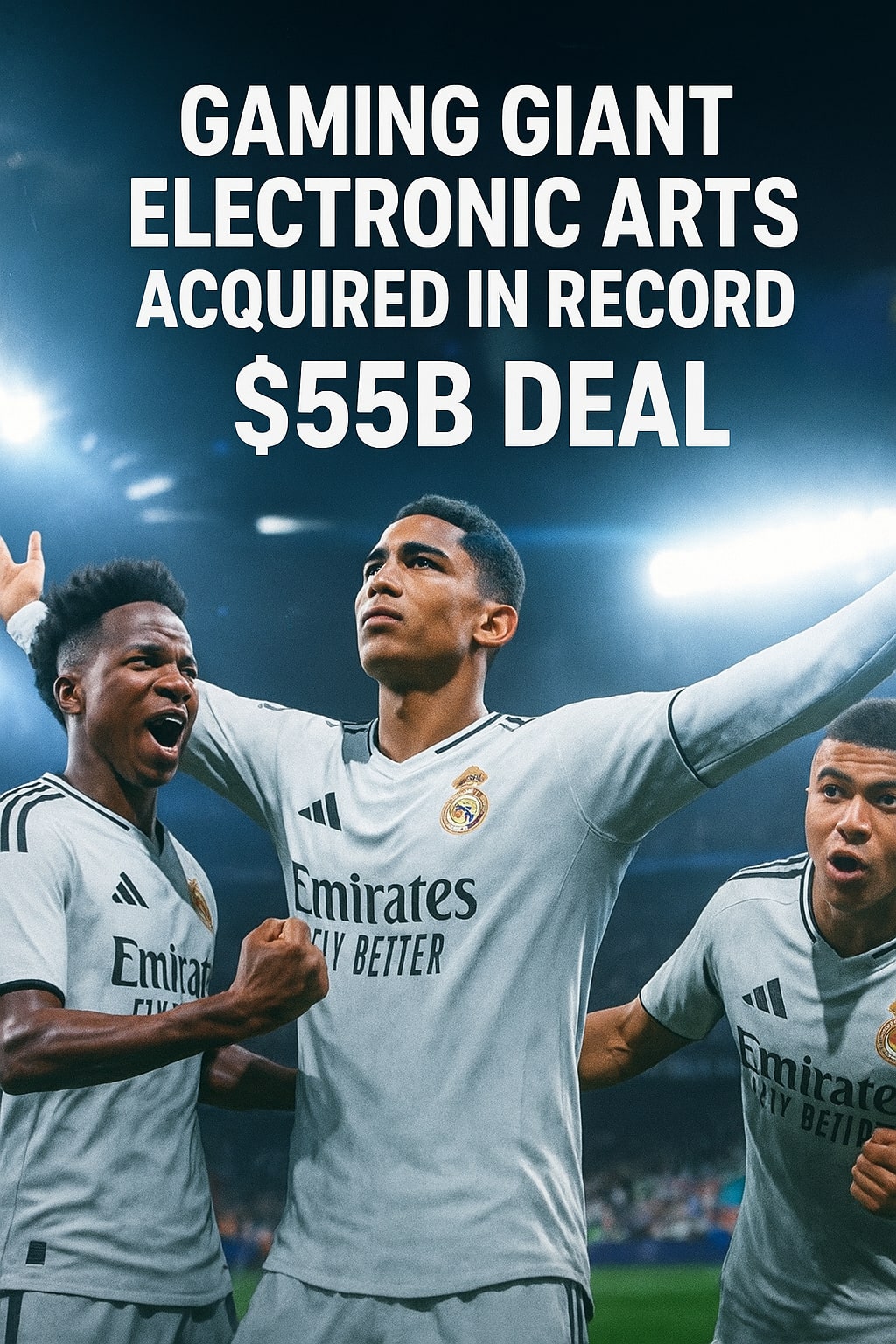
The Unprecedented $55 Billion Acquisition
The global gaming world has been shaken by the announcement that Electronic Arts (EA), one of the biggest names in video game history, has been acquired in an unprecedented $55 billion deal. This staggering takeover represents one of the most expensive buyouts ever in the gaming industry, instantly sparking conversations about the future of gaming, the growing influence of international investors, and the cultural weight that interactive entertainment now carries worldwide.
The deal was led by a powerful consortium of investors including Silver Lake, Affinity Partners, and Saudi Arabia’s Public Investment Fund. Together, they structured the purchase with around $36 billion in equity and $20 billion in debt, valuing EA shares at a premium of approximately $210 each. Once the transaction is completed, Electronic Arts will be taken off public markets and transformed into a private company, a move that could redefine its operational direction. This buyout now sits alongside Microsoft’s $69 billion acquisition of Activision Blizzard as one of the most historic corporate moments in gaming.
The significance of the deal extends far beyond the financials. For EA, this is an escape from the constant pressure of quarterly earnings reports and the relentless scrutiny of Wall Street analysts. For investors, it is a long-term bet on the rapidly expanding global gaming industry, which already outpaces film and music combined in annual revenue. And for players, it is a development that could either mark the beginning of a new golden age of creativity or bring further emphasis on profitability at the expense of innovation.
What This Means for EA and Gamers
EA is a powerhouse in gaming, with globally recognized franchises like FIFA, Madden NFL, The Sims, and Battlefield. With the backing of private investors, the company may have the opportunity to take bigger creative risks, explore emerging technologies like artificial intelligence, and expand into cloud gaming and immersive online platforms. Without the burden of quarterly shareholder expectations, EA could finally commit to projects that take longer to develop but deliver groundbreaking results.
At the same time, the deal introduces significant challenges. Carrying $20 billion in debt means that Electronic Arts must ensure that upcoming releases are commercial successes. Popular franchises will need to deliver strong revenue to keep financial obligations in check. Fans are hopeful that the company will use this new chapter to listen more closely to its player base, especially after years of criticism about aggressive monetization strategies like loot boxes and microtransactions.
Another layer to consider is the impact on industry competition. The consolidation trend is accelerating, with giants like Microsoft, Sony, Tencent, and now this consortium moving aggressively to secure dominance in gaming’s future. This raises important questions about whether smaller studios will struggle to compete and whether creative diversity in the industry might suffer. Regulators may also examine the role of Saudi Arabia’s Public Investment Fund in such a large cultural acquisition, potentially slowing down or reshaping the deal’s approval.
Yet, despite these concerns, EA’s leadership under CEO Andrew Wilson is expected to remain stable. Wilson will continue to lead the company, and its headquarters in Redwood City, California, will stay intact. This continuity provides reassurance that the company’s identity and strategic vision will not be completely overhauled overnight. Instead, we are likely to see gradual but impactful changes in how EA approaches its business, its games, and its global player community.
A Defining Moment for the Gaming Industry
The $55 billion purchase of Electronic Arts is more than just a corporate transaction — it is a cultural milestone. Gaming is no longer a niche market or a sub-branch of entertainment; it is a global phenomenon commanding deals on par with Hollywood and Silicon Valley. This acquisition demonstrates just how much financial power and geopolitical interest are now being directed into video games, an industry with billions of dedicated fans across the world.
For players, the deal is both exciting and uncertain. On one hand, the possibility of bolder games and long-term investments could lead to innovative titles that push the boundaries of storytelling and technology. On the other, the risk of tighter monetization strategies remains, as private equity investors will expect strong returns on their massive investment. The balance between creativity and profitability will determine how this acquisition is remembered.
What cannot be denied is the historical weight of the move. Electronic Arts is no longer just a public gaming company but a privately controlled entertainment titan backed by some of the world’s most influential investors. Whether this heralds a bright new era or a cautious consolidation will depend on how the company manages its newfound freedom and responsibility. One thing is clear: with this $55 billion deal, the gaming world has entered uncharted territory, and the impact will be felt for years to come.
About the Creator
Waqar Khan
Passionate storyteller sharing life, travel & culture. Building smiles, insights, and real connections—one story at a time. 🌍
Every read means the world—thanks for your support! 💬🖋️
Keep reading
More stories from Waqar Khan and writers in Gamers and other communities.
Little League World Series 2025: Scores, Highlights, and Why This Year Feels Extra Special
Every summer, baseball fans turn their eyes to one of the most heartwarming and exciting sporting events of the year: the Little League World Series (LLWS). Unlike major league competitions dominated by seasoned professionals, this tournament showcases kids between the ages of 10 and 12 who play with pure passion, determination, and joy. In 2025, the LLWS has taken on a special spotlight, with record-breaking plays, emotional stories, and international rivalries that remind us why this event is so beloved across the globe.
By Waqar Khan5 months ago in Gamers
From Battle Royale to a Global Digital Platform
When Fortnite first gained popularity, it was known mainly as a fast-paced battle royale game. Over time, however, Fortnite evolved into something much broader. Today, it functions as a global digital platform that blends gaming, creativity, social interaction, and live entertainment. This shift did not happen through hype or exaggeration, but through steady development and changing player behavior.
By Games Mode Ona day ago in Gamers
Rsvsr Monopoly GO! Strategy Guide: Maximize Rewards and Complete Challenges
Monopoly GO! is more than just rolling dice—it’s a fast-paced game of strategy, timing, and careful planning. With daily challenges, special events, and competitive tournaments, understanding how to play strategically can make the difference between slow progression and rapid success.
By Billo Nali3 days ago in Gamers




Comments
There are no comments for this story
Be the first to respond and start the conversation.