
ECONOMIC IMPACT OF HOSTING THE OLYMPIC GAMES
Balancing Infrastructure Investment with Economic Rewards

Economic Impact of Hosting the Olympic Games
The Olympic Games are one of the largest and most prestigious sporting events in the world, and hosting them brings a mix of challenges and opportunities for the host country. While the games are celebrated for promoting international unity and showcasing athletic excellence, the economic consequences—both positive and negative—are significant. A host country must prepare for substantial investment, while balancing the potential benefits and risks of hosting such a monumental event.
(I)Initial Costs of Hosting
The most immediate economic impact of hosting the Olympic Games is the cost of infrastructure development. The organizing committee typically needs to build or renovate sports venues, establish transportation networks, improve accommodation facilities, and ensure security measures. The cost of constructing new sports arenas, improving transportation systems, and upgrading existing facilities can reach billions of dollars. For example, the 2008 Beijing Olympics cost around $40 billion, and the 2016 Rio Olympics were estimated at $13.1 billion. These large-scale projects often require a significant amount of government spending, and for countries with limited resources, this can be a considerable financial burden.
(II)Boost to Tourism and Local Business
The influx of visitors during the Olympic Games provides a temporary but substantial boost to the local economy. Tourists flock to the host city for not only the events but also the cultural experiences, tourist attractions, and restaurants. According to reports, the 2008 Beijing Olympics attracted over 600,000 international visitors, contributing significantly to the local economy through tourism and hospitality sectors.
Local businesses, including those in retail, food services, transportation, and hospitality, often see a surge in demand. The Olympics also stimulate growth in industries related to merchandise, broadcasting, and sponsorship. Small businesses, especially in the host city, benefit from the surge in demand for services and goods during the Games.
(III)Long-Term Benefits from Infrastructure Development
While the initial investment in infrastructure can be expensive, the long-term impact of improved infrastructure can be seen in the years following the event. Projects such as improved transportation systems, airports, and sports facilities contribute to the long-term development of the host city or country. The infrastructure upgrades provide long-term benefits by improving the city’s attractiveness for tourism, business, and investment. For instance, the 2000 Sydney Olympics led to improvements in the city’s public transport system, which continued to serve the public well after the Games.
The creation of world-class sports facilities also attracts future international events, such as world championships or professional sports leagues, which continue to generate income and global exposure. The economic boost from these long-term benefits can be substantial, though it may take years or even decades to fully realize.
(IV)Employment Opportunities
Hosting the Olympics creates numerous job opportunities in various sectors, including construction, tourism, security, and event management. Temporary jobs related to the construction of venues, maintenance of public spaces, and the hosting of the Games can help reduce unemployment in the short term. According to studies from previous Olympics, thousands of jobs are created, with thousands of volunteers also playing a crucial role during the Games.
However, while temporary employment provides an immediate boost to the economy, there are concerns about the sustainability of these jobs after the event concludes. Many workers are hired on a short-term basis, and once the Games are over, the job opportunities disappear.
(V)Foreign Investment and Sponsorship
The Olympic Games also attract foreign investment and sponsorships from multinational companies, which wish to associate their brand with the prestige of the event. These sponsorships generate substantial revenue for the International Olympic Committee (IOC) and the organizing committees. In addition, hosting the Games often encourages foreign companies to invest in the country, particularly in sectors like real estate, hospitality, and technology. The 1992 Barcelona Olympics, for example, attracted significant foreign investment, transforming the city into a major tourism and business hub.
However, it is important to note that not all host cities reap the same level of financial rewards. While countries with strong economies and established tourism industries tend to see more favorable economic outcomes, others, particularly in developing regions, struggle with the long-term financial consequences. For instance, the 2016 Rio Olympics left the Brazilian government with a significant amount of debt, and many of the built venues were left underused after the Games.
(VI)Negative Economic Impact
Despite the potential benefits, there are negative economic implications of hosting the Olympic Games. The most significant concern is the cost overruns, as many Olympic Games exceed their original budgets. In some cases, the cost of hosting the event can be a drain on public finances and taxpayers. The 1976 Montreal Olympics, for example, took more than 30 years for the city to pay off its debts.
The displacement of local communities to make way for Olympic venues is another issue that has led to protests and social unrest in some host cities. The construction of Olympic venues sometimes requires the demolition of housing and displacement of residents, which can result in lasting social and economic consequences.
(VII)Conclusion
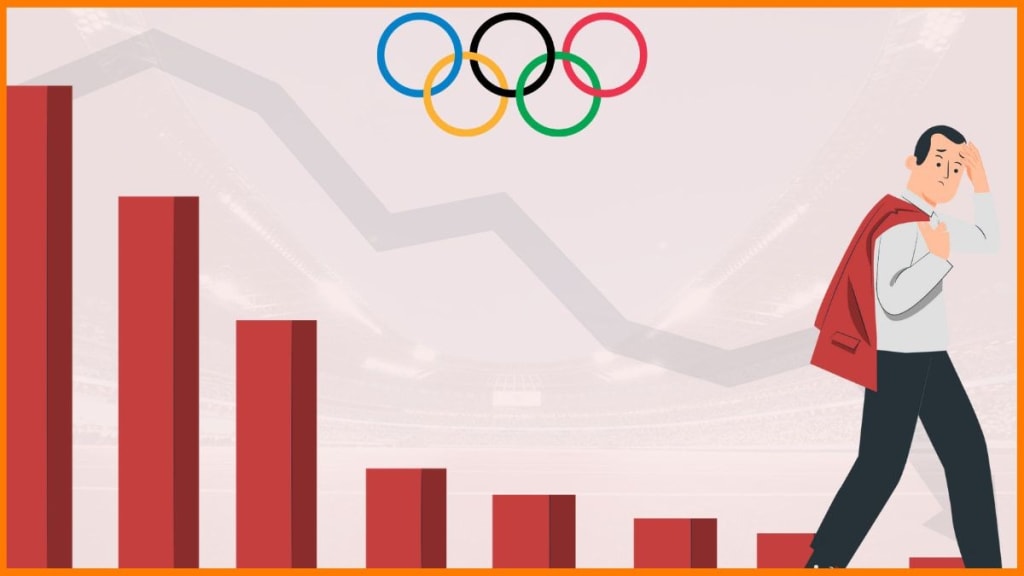
In conclusion, the economic impact of hosting the Olympic Games is multifaceted and complex. While the event generates significant short-term economic gains, such as increased tourism, job creation, and foreign investment, it also involves substantial costs, particularly in terms of infrastructure development. Host cities must carefully weigh the potential benefits against the risks and long-term financial implications before committing to the event.
To maximize the benefits of hosting the Games, cities must plan carefully, focusing on sustainable development and ensuring that infrastructure improvements continue to benefit the public long after the Games have concluded. The balance between short-term spending and long-term growth is crucial for turning the Olympic Games into a true economic boon for the host country.
About the Creator
Badhan Sen
Myself Badhan, I am a professional writer.I like to share some stories with my friends.
Keep reading
More stories from Badhan Sen and writers in Gamers and other communities.
THE 1960 ROME OLYMPICS AND TELEVISION BROADCASTING
The 1960 Rome Olympics and Television Broadcasting The 1960 Summer Olympics, held in Rome, Italy, marked a monumental turning point in the history of the Games, particularly due to its groundbreaking approach to television broadcasting. These were the first Olympic Games to be televised live via satellite, a significant leap forward in media coverage that would change the way the world experienced the event.
By Badhan Senabout a year ago in Gamers
Rsvsr Rare Drops, Big Rewards: How the Sunder Charm Refreshes Diablo II: Resurrected Endgame
Blizzard’s Reign of the Warlock expansion for Diablo II: Resurrected has breathed new life into a game beloved by fans for decades. Among the many additions, one item has captured the imagination of players more than any other: the Sunder Charm.
By Billo Nali5 days ago in Gamers
The Forsyth House Fire
Since 1851, Forsyth House has stood on the corner of Union Street and Gordon Street in the heart of Glasgow. Its iconic, or was... because on Sunday 8th of March, 2026, a fire broke out in a small, seemingly un-named shop in the building and tore all that history down. As I write, the rubble is still unsettled and the street is still blocked off. Central Station is quiet on the upper level, and around 30 small businesses have quite literally gone up in smoke.
By S. A. Crawford2 days ago in The Swamp




Comments (1)
You have really done great research on this Olympic article.