
Easy Guide for СS2 Mirage Callouts
All the most key points related to CS2 Mirage Callouts

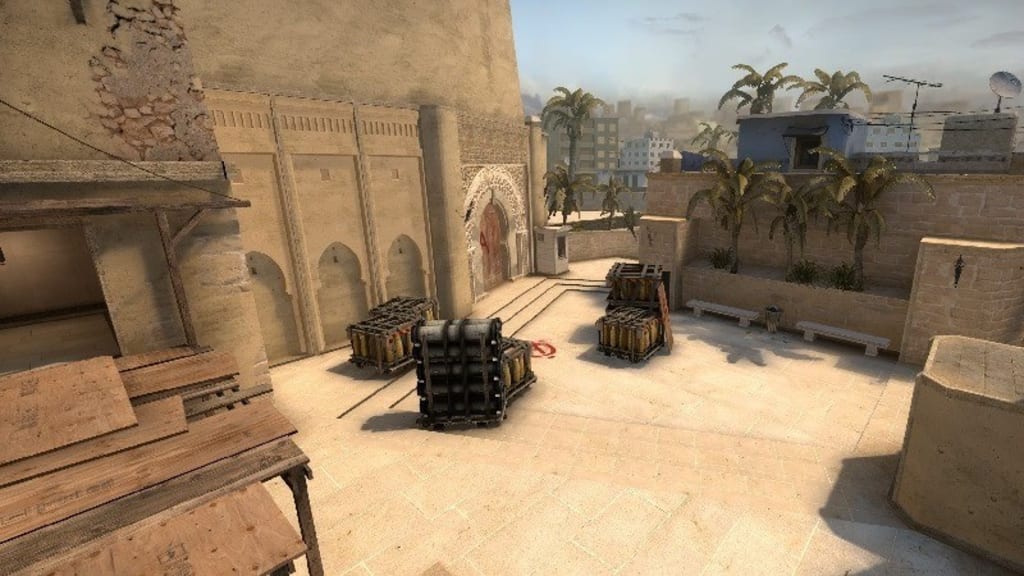
Within the dynamic landscape of Counter-Strike 2 (CS2), effective team communication is as crucial as precise aim and strategic planning. Callouts, specialized terms for map locations, are essential for streamlined and efficient communication. Mastering these callouts enhances team coordination, reaction time, and strategic execution, ultimately increasing the likelihood of victory.
Consider Mirage, a beloved map familiar to most CS2 players. Mirage exemplifies the game-changing impact of clear and concise communication. Its balanced layout and strategic depth, featuring diverse combat zones from narrow corridors to expansive bomb sites, each with unique callouts, make it a fan favorite. Let's delve into a comprehensive overview of every callout on this map.
Visualize Mirage, a vibrant digital recreation of a Middle Eastern city. This map features two key bomb sites, 'A' and 'B', and is bisected by a central area known as 'Mid', which connects to several strategically important locations. Multiple routes lead to both 'A' and 'B', each distinguished by unique characteristics. Therefore, understanding the map's specific terminology is crucial for successful tactical execution.
The 'A' bomb site is located on the eastern side of the map, bathed in sunlight. This area includes recognizable landmarks such as the majestic 'Palace', the inclined 'A Ramp', and the block-like formations of 'Tetris'. The western side houses the 'B' bomb site, featuring areas like the upper-level 'Apartments', the robust 'Van', and the bustling 'Market'.
Positioned in the center, 'Mid' serves as Mirage's central hub, containing critical control points like 'Window', 'Connector', and 'Catwalk'.
Get Unique CS2 Skins On The BLOODYCASE.COM
Use Promocode CS2VOCAL And OPEN 5 FREE CASES and GET $0.7 USD To Your Balance
All Mirage CS2 callouts
Mastering Mirage in CS2 requires more than just sharp aim; effective communication is essential. Let's review the vital callouts that can give your team a competitive advantage.
- Jungle: Connecting A Site and Mid, Jungle is essential for rotations and strategic maneuvering across the map.
- Ticket Booth: Situated near CT spawn, this position offers a broad perspective of A Site, proving particularly advantageous for defenders.
- Firebox: A concealed location on A Site, ideal for ambushes and post-plant situations.
- Ninja: A hidden nook between Firebox and Triple Box, perfect for flanking maneuvers and catching the enemy unaware.
- Triple Box/Danger Box: Providing substantial cover on A Site, this area is frequently utilized during heated exchanges.
- Balcony and Shadows: Balcony offers an elevated view of the site, while Shadows provides a concealed position directly beneath it.
- Palace: This vantage point overlooks A Site, making it valuable for both attackers seeking map control and defenders maintaining surveillance.
- A Ramp: The primary pathway from T spawn to A Site, this area is a common flashpoint for initial engagements and rapid firefights.
- Connector: This crucial passage links Mid and A Site, often becoming a contested zone throughout the match.

- Archway & Columns: These architectural elements provide cover and create intricate sightlines within Bombsite B.
- Mid High Ground: Dominating this zone grants control over a significant portion of the map's movement.
- Mid Containers: The central area of Mid offers protection and is vital for strategic duels and regulating player movement.
- Overlook: This vantage point overlooking Mid is ideal for snipers seeking to control or disrupt enemy advances.
- Stairwell Chamber: Connecting the Overlook and Short B Walkway, this room is crucial for swift movements and flanking attacks.
- Sniper's Perch: A critical defensive position, allowing for control of Mid from an elevated vantage point.
- Underpass Tunnel: A concealed lower path leading from the Terrorist Spawn to Mid, useful for stealthy approaches or avoiding snipers.
- Vantage Point: This position provides both concealment and a clear line of sight, often monitored from the Apartment complex.
- Marketplace: A common area for Counter-Terrorists rotating towards Bombsite B, frequently witnessing intense firefights in the later stages of a round.
- B Apartments: This narrow passage is essential for attackers pushing towards Bombsite B and must be secured.
- Short B Walkway: Linking Mid to Bombsite B, this route allows for rapid rotations and unexpected flanking maneuvers.
- Observation Platform: This elevated area offers a tactical view of both the Apartments and Bombsite B, advantageous for both attacking and defending teams.
Effective Callouts on Mirage: A Guide
Clear communication is key in a match, going beyond simply shouting locations. It involves conveying concise and precise information. Utilize the most common and succinct terms for locations. Accuracy is paramount; specify the exact number of enemies sighted. Choose your moments to speak; avoid cluttering voice comms during crucial engagements unless absolutely necessary.
Tips for Avoiding Confusion
- Conciseness: Employ minimal wording, such as "two A Ramp" or "sniper Window."
- Relevance: Prioritize essential information. Concentrate on enemy positions, numbers, and significant shifts in their movements.
- Shared Vocabulary: Adhere to established callouts familiar to your entire team to eliminate any potential misunderstandings.
Tactical Maneuvers with Mirage Callouts in CS2
- Strategic Shifts: A callout like "loud footsteps A Ramp" can signal teammates near B Site to rotate towards A.
- Ambushes: Shouting "enemy sneaking Jungle" can set up a perfect ambush for an unsuspecting opponent traversing Connector.
Common Mistakes with Mirage Callouts
- Imprecise Information: Simply stating "they're on A Site" without pinpointing their location can create confusion.
- Excessive Communication: Too much noise can divert attention and cause players to miss critical information.
Improving Communication Clarity
Detailed Callouts: Instead of "on A Site," use precise locations like "behind Firebox" or "at Triple Box."
Communication Protocol: Establish clear communication guidelines, such as designated callers and specific times for speaking, to minimize unnecessary chatter.
By mastering these advanced techniques for CS2 Mirage callouts, your team can significantly improve its performance through faster decision-making and reduced miscommunication. Effective communication is just as vital as accurate aim in CS2.
About the Creator
James Brown
Curious explorer navigating the intersections of technology, human connection, and knowledge. By day, I dive into code; by night, I'm lost in fictional worlds and endless learning.
Keep reading
More stories from James Brown and writers in Gamers and other communities.
All about СS2 Thera Callouts
Valve's latest major CS2 update introduces the first community-created maps, Thera and Mills, to the competitive scene. This article delves into Thera, designed by FMPONE, offering key insights into callouts, common strategies, and crucial timings.
By James Brownabout a year ago in Gamers
The Gym Where Iron Transformed Lives
The gym was hidden between a bakery and a closed-down bookstore, its faded sign barely visible from the street. The windows were dusty, the paint on the walls chipped, and the metal door creaked every time someone pushed it open. To most people, it looked like a forgotten place. But for those who stepped inside, it was a space where lives quietly transformed.
By The best writer 8 days ago in Gamers
Master the New Economy: The Best Way to Use Magic Dust After Update 34.0
The recent arrival of Update 34.0 in Rush Royale has completely shifted the ground beneath our feet. For long-time players, the game once felt like a steady climb of critical damage and equipment grinding. Now, the developers have introduced a total rework of the gear system, replaced enchantments with artifacts, and redefined how we value our most precious resources.
By Richard Bailey7 days ago in Gamers


Comments
There are no comments for this story
Be the first to respond and start the conversation.