
Do Motherboards Have GPIO Pins? Complete Guide for Beginners
Do motherboards have GPIO pins? Learn how PC motherboards use GPIO, their functions, limitations, and how they differ from Raspberry Pi boards in this detailed guide.

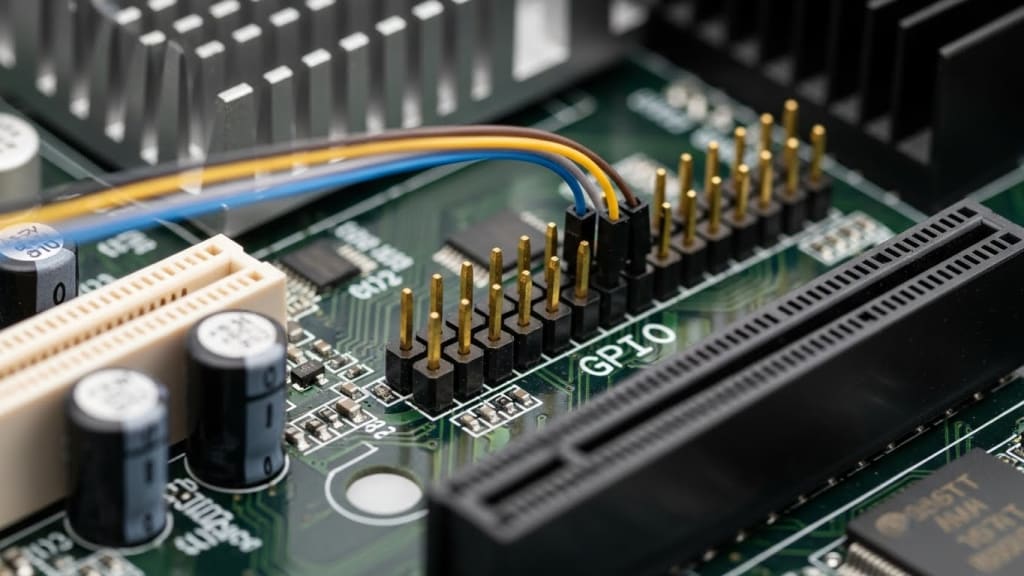
Quick Answer: Yes, some motherboards do have GPIO (General-Purpose Input/Output) pins, but they are not as flexible or accessible as those found on devices like the Raspberry Pi. On PC motherboards, pins are usually dedicated to specific tasks such as fan headers, front-panel connectors, or debugging, rather than being freely programmable.
Do Motherboards Have GPIO Pins
Do motherboards have GPIO pins? This is a question many beginners ask when they start exploring computer hardware. GPIO stands for General-Purpose Input/Output, and these pins allow devices to send or receive signals.
While Raspberry Pi boards and microcontrollers like Arduino are famous for their GPIO pins, desktop motherboards are different. They do have pins, but most are designed for specific tasks such as powering fans, connecting LEDs, or handling front-panel buttons.
In this article, we will explore what GPIO pins are, how they work, whether motherboards have them, and how they compare to hobbyist boards. We will also look at practical uses, limitations, and FAQs to give you a complete understanding.
What Are GPIO Pins?
- Definition: GPIO pins are connectors that can be programmed to act as input or output.
- Input Mode: They can receive signals, like detecting if a button is pressed.
- Output Mode: They can send signals, like turning on an LED.
- Flexibility: Unlike USB or HDMI ports, GPIO pins are not tied to one fixed purpose.
Do Motherboards Have GPIO Pins?
Yes, motherboards do have pins, but they are not the same as the GPIO pins on Raspberry Pi. Instead, they are usually:
- Fan headers: Control cooling fans.
- Front-panel connectors: Handle power buttons, reset switches, and LED indicators.
- Debug headers: Used by engineers for testing.
- Specialized connectors: Sometimes exposed for industrial or server boards.
Most consumer motherboards do not expose general-purpose programmable pins because average users don’t need them. Manufacturers design them for stability and simplicity.
Why Motherboards Don’t Use GPIO Like Raspberry Pi
- Different Audience: Raspberry Pi is built for learning and tinkering, while motherboards are built for everyday computing.
- Complexity: Allowing free GPIO access could cause hardware conflicts.
- Cost: Extra programmable pins add cost, which most users don’t need.
- Software Support: Operating systems like Windows don’t provide easy APIs for GPIO control.
Examples of Pins on Motherboards
- ATX Front Panel Header: Connects power button, reset button, and LEDs.
- USB Headers: Provide extra USB ports.
- Audio Headers: Connect front audio jacks.
- Fan Headers: Control CPU and case fans.
- Debug Pins: Found on some high-end boards for engineers.
Do Motherboards Have GPIO Pins for Hobby Projects?
Not really. If you want to control LEDs, motors, or sensors, a Raspberry Pi or Arduino is better. Motherboard pins are locked to specific functions. However, some advanced users can access low-level hardware through BIOS or specialized drivers, but this is rare and complex.
Comparing Motherboards and Raspberry Pi GPIO

Practical Uses of Motherboard Pins
- Connecting case buttons and lights.
- Controlling fan speeds.
- Adding extra USB ports.
- Debugging hardware.
These are useful, but they are not the same as GPIO projects like building robots or smart devices.
Conclusion
Do motherboards have GPIO pins? Yes, but they are not general-purpose like those on Raspberry Pi or Arduino. Motherboard pins are designed for specific tasks such as powering fans, connecting front-panel buttons, or debugging. If you want to experiment with electronics, Raspberry Pi or Arduino is the better choice. Motherboards are built for stability and everyday computing, not tinkering.
FAQ
Q1: Do all motherboards have GPIO pins? No, most consumer motherboards only have task-specific pins, not general-purpose ones.
Q2: Can I use motherboard pins like Raspberry Pi GPIO? Not easily. They are locked to specific functions.
Q3: Why don’t PC motherboards expose GPIO pins? Because most users don’t need them, it reduces complexity and cost.
Q4: Which boards are best for GPIO projects? Raspberry Pi, Arduino, and similar microcontrollers.
Q5: Are fan headers considered GPIO? Technically, yes, but they are limited to fan control.
About the Creator
Perfect Tech Views
Welcome to Perfect Tech Views—your go-to source for clear, unbiased, and insightful tech knowledge. Whether you're a pro, a beginner, or just exploring gadgets, we've got you covered with expert guidance!
Keep reading
More stories from Perfect Tech Views and writers in Gamers and other communities.
How to Check Motherboard Damage from GPU – Easy Guide for Beginners
When building or upgrading a computer, one common worry is how to check motherboard damage from GPU. The motherboard is the heart of your PC, and the GPU (graphics card) is one of the most powerful components. If something goes wrong, the GPU can sometimes cause stress or even damage to the motherboard. Because of this, it is important to know the signs, the causes, and the steps to check for problems.
By Perfect Tech Views3 months ago in Gamers
Minecraft Will Change How You See Creativity, Survival, and Infinite Worlds Forever
Few games have reached the level of influence and longevity achieved by Minecraft. Created by Markus Persson and later developed by Mojang Studios under Microsoft, the game has become a global phenomenon available on platforms including Xbox. Its simple visual style hides an incredibly deep and flexible gameplay experience that continues to inspire millions of players worldwide.
By Lukáš Hrdlička3 days ago in Gamers
Call of Duty Warzone Will Change How You Experience Battle Royale Forever
Few games have managed to dominate the battle royale genre and redefine modern multiplayer experiences like Call of Duty Warzone. Developed by Infinity Ward and Raven Software, and released on Xbox, Warzone brings intensity, precision, and unpredictability to a massive, fast-paced battlefield where every match tells its own story of survival and tactics.
By Lukáš Hrdlička3 days ago in Gamers


Comments