
Crimson Desert: Review
The Ambition of a New Fantasy Epic


Crimson Desert marks a pivotal moment for Pearl Abyss, the studio best known for its visually stunning MMO Black Desert Online. After years of dominating the online RPG scene, the South Korean developer now sets its sights on a more focused, narrative-driven experience—one that trades endless multiplayer grind for personal storytelling and cinematic depth. In many ways, Crimson Desert is a reinvention: a bold attempt to blend the spectacle of a massive open world with the emotional intimacy of a single-player adventure. If successful, it could redefine what modern action RPGs aspire to be.
Set in the war-torn world of Pywel, the story follows Kliff, a weary mercenary haunted by the loss of his comrades, the Greymanes. Once the leader of a proud band of fighters, Kliff now wanders a fractured land filled with betrayal, political strife, and supernatural chaos. His journey is as much about survival as it is about redemption—rebuilding the bonds of loyalty that were torn apart and confronting the ghosts of his past. Unlike the faceless avatars of Black Desert, Kliff is a defined protagonist with his own history, regrets, and motivations, giving Crimson Desert a grounded human core beneath its sprawling fantasy landscape.
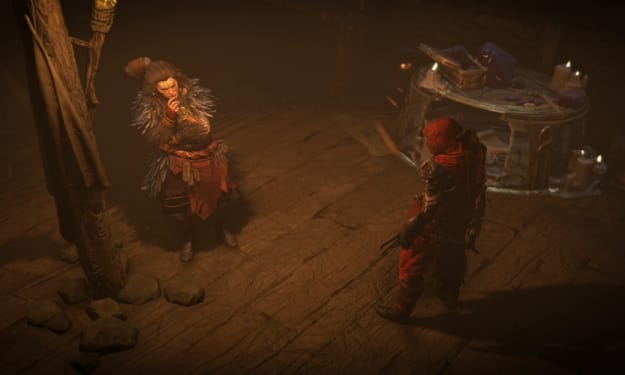
From the moment gameplay was first revealed, it was clear that Crimson Desert aimed for something extraordinary. Built on Pearl Abyss’s proprietary BlackSpace Engine, the game’s visuals are breathtaking. Every frame bursts with detail—windswept plains ripple with grass, mountain peaks cut through golden sunsets, and medieval cities teem with markets, smithies, and life. Dynamic weather systems, day-night cycles, and lifelike character models bring Pywel to life in a way few open worlds have managed. Watching Kliff traverse snow-dusted ridges or soar across canyons on a magical glider evokes a genuine sense of wonder. Few modern RPGs look this alive.
Beyond battle, exploration plays a vital role in the game’s identity. Pywel is not just a backdrop but a living organism filled with stories, dangers, and discoveries. Players can climb, glide, swim, and ride across its diverse landscapes, encountering ruins to explore, puzzles to solve, and side quests that flesh out the world’s history. The attention to environmental design recalls the best of The Witcher 3 and Elden Ring—games where every path feels like a potential story waiting to unfold. It’s a world built for wandering, rewarding curiosity at every turn.
What truly sets Crimson Desert apart, however, is its tone. Unlike the high fantasy optimism of many RPGs, Pywel is a land steeped in hardship. Towns crumble under the weight of conflict, and survival often depends on moral compromise. Kliff’s narrative isn’t about saving the world—it’s about enduring it. This focus on personal struggle grounds the story, turning epic fantasy into something intimate and human. If executed well, it could give Crimson Desert the emotional resonance that often eludes games of this scale.
Still, such ambition brings risk. Early impressions suggest that Crimson Desert sometimes struggles to define itself. It’s part cinematic action game, part open-world adventure, and part role-playing epic. That mixture can be thrilling—or overwhelming. The control scheme is dense, filled with combos, context-sensitive actions, and quick-time sequences that might intimidate newcomers. Meanwhile, the camera occasionally struggles to keep up with the chaos, especially during larger fights. These are the kinds of issues that can be ironed out with time, and fortunately, Pearl Abyss seems aware of them. The studio’s decision to delay the game’s release to March 2026 reflects a commitment to polish rather than rushing to meet deadlines—a welcome move in an industry too often defined by unfinished launches.
If there’s one word that defines Crimson Desert, it’s ambition. Few studios attempt a project of this magnitude, especially as their first major single-player title. Pearl Abyss is not just creating a game but trying to build a world that feels truly alive—a place where every mountain, every blade of grass, and every drop of rain serves the story. Whether it can deliver on that promise remains to be seen, but the potential is undeniable. Early demos have already captivated audiences worldwide, sparking comparisons to some of the greatest fantasy RPGs ever made.
In the end, Crimson Desert feels like a declaration of intent—a statement that Pearl Abyss is ready to step beyond its MMO roots and join the ranks of narrative-driven giants. It’s a game that dares to dream big, to merge spectacle with soul, and to remind players why vast, hand-crafted worlds still matter in an age of procedural sameness. If its developers can refine the rough edges, balance its systems, and maintain its emotional core, Crimson Desert could become more than just a technical marvel—it could be the next defining epic of the RPG genre.
About the Creator
Reader insights
Outstanding
Excellent work. Looking forward to reading more!
Top insights
Easy to read and follow
Well-structured & engaging content
Excellent storytelling
Original narrative & well developed characters
Eye opening
Niche topic & fresh perspectives
Heartfelt and relatable
The story invoked strong personal emotions
Keep reading
More stories from Games Tale and writers in Gamers and other communities.
Resident Evil: Village Review
The first time you step into Resident Evil: Village, it doesn’t just scare you — it seduces you. From its haunting snow-covered village to its towering vampiric mistress, Capcom’s latest nightmare dares to be both terrifying and breathtaking. Following the success of Resident Evil 7: Biohazard, the studio faced the impossible task of reinventing fear once again — and somehow, they did. Village isn’t just another sequel; it’s a gothic masterpiece that blurs the line between horror and beauty.
By Games Tale2 months ago in Gamers
A Failed Artist, A Disillusioned Poet, An Underpaid Game Show Host
I took my son and niece to Gori, a small town in Georgia where Joseph Stalin was born. They talked me into visiting the Stalin's Museum, the largest in the post-Soviet space. I had resisted going there because I just can't stand the monster and know enough about him, or so I thought.
By Lana V Lynx6 days ago in FYI



Comments
There are no comments for this story
Be the first to respond and start the conversation.