

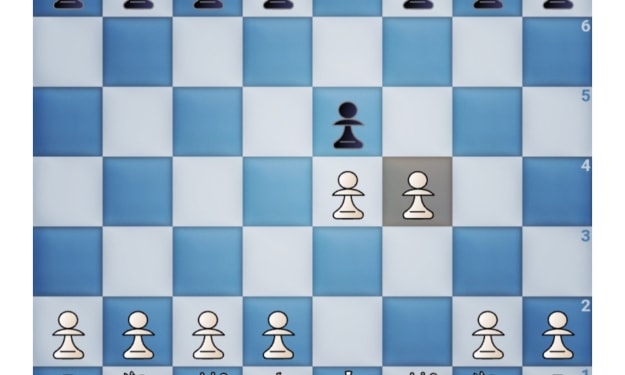
- The Queen's Gambit is a chess opening that starts with the moves 1.d4 d5 2.c4. It is one of the oldest and most respected openings in chess and is considered a strong choice for White. The idea behind the Queen's Gambit is for White to offer a pawn sacrifice in the center of the board in exchange for control of the center and more active piece development.
- The Queen's Gambit has a rich history and has been played by many of the greatest chess players of all time. It remains a popular choice among competitive players and offers a wealth of tactical and strategic possibilities for both sides.
- In Queen's Gambit, White offers a pawn to Black, with the hope of controlling the center of the board and obtaining a strong position. The Queen's Gambit is considered a more solid and positional opening, compared to more aggressive openings like the King's Gambit.
- Black has several options for how to respond to the gambit, including accepting the pawn, declining the gambit, or counter-gambling with their own pawn sacrifice. If Black accepts the gambit pawn, they must be careful to avoid a weakened pawn structure that can leave them vulnerable to attack.
- It is considered an excellent choice for those who prefer a more positional and strategic approach to the game. It is often used as a way to reach more complex and strategic positions that require precise play to navigate.
Here are the typical steps in a Queen's Gambit game:
1.d4 d5 2. c4 dxc4
White offers a pawn sacrifice to control the center of the board. Black can choose to accept or decline the gambit.
3.Nf3 Nf6 4. e3
White develops their pieces and prepares to castle kingside. Black also develops their pieces.
5.Bxc4 e6
Black protects their c4 pawn and prepares to castle kingside.
6.O-O a6
Black continues to develop their pieces and prepares to challenge White's control of the d4 pawn.
7.Qc2 c5
Black aims to regain control of the center of the board and create counterplay.
8.dxc5 Bxc5
Black recaptures the c4 pawn and aims to create pressure on White's position.
9.Nc3 O-O
Black castles kingside, securing their king.
10.Be2 Qc7
Black develops their pieces and aims to create a strong position.
This is a basic overview of the Queen's Gambit, and the specific moves and tactics can vary greatly depending on the individual game and the player's preferences. It's important to be aware of the potential pawn structure, piece development, and tactical opportunities that can arise in the Queen's Gambit, in order to make informed decisions and play the best possible moves.
Here are some notable and highly regarded games that feature the Queen's Gambit:
- Tal vs Botvinnik, 1960 World Championship - A brilliant display of tactical play and aggressive chess by the legendary Mikhail Tal.
- Kasparov vs Anand, 1995 World Championship - A tense and highly tactical battle between two of the greatest chess players of all time.
- Petrosian vs Spassky, 1966 World Championship - A classic game that showcases the positional and strategic strengths of the Queen's Gambit, as two of the strongest players of the 20th century battle it out.
- Fischer vs Petrosian, 1971 World Championship Candidates - A stunning game by Bobby Fischer, who demonstrates his tactical prowess and aggressive play with the Queen's Gambit.
- Kramnik vs Kasparov, 2000 World Championship - A tense and strategic battle between two of the strongest chess players of the modern era.
These games are considered to be among the best and most memorable Queen's Gambit games of all time, and are well worth studying for players of all skill levels who are interested in this opening. They demonstrate the tactical and strategic depth of the Queen's Gambit, and showcase the creativity and skill of some of the greatest chess players of all time.
About the Creator
From Battle Royale to a Global Digital Platform
When Fortnite first gained popularity, it was known mainly as a fast-paced battle royale game. Over time, however, Fortnite evolved into something much broader. Today, it functions as a global digital platform that blends gaming, creativity, social interaction, and live entertainment. This shift did not happen through hype or exaggeration, but through steady development and changing player behavior.
By Games Mode Onabout 22 hours ago in Gamers
Rsvsr Monopoly GO! Strategy Guide: Maximize Rewards and Complete Challenges
Monopoly GO! is more than just rolling dice—it’s a fast-paced game of strategy, timing, and careful planning. With daily challenges, special events, and competitive tournaments, understanding how to play strategically can make the difference between slow progression and rapid success.
By Billo Nali2 days ago in Gamers


Comments
There are no comments for this story
Be the first to respond and start the conversation.