
Can You Increase Your Odds at Winning at Blackjack? Tips to Help Sway the Odds in Your Favor!
Some helpful reminders and tips

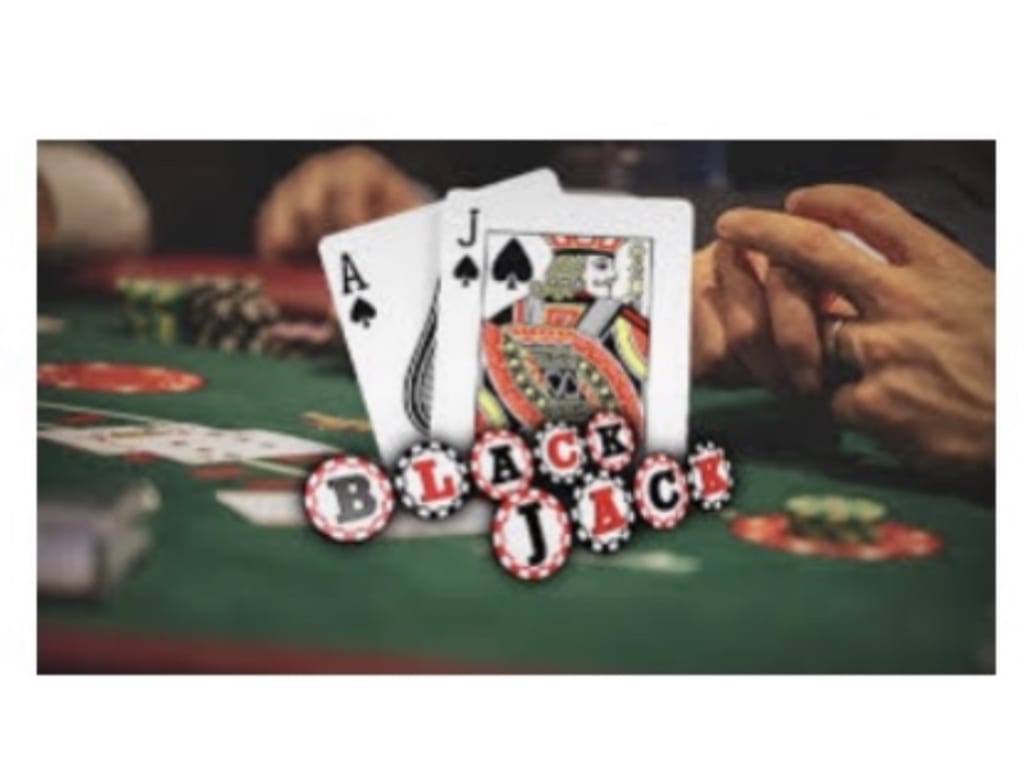
Can You increase Your Odds at Winning at Blackjack? Tips to Help Sway the Odds in Your Favor!

Some helpful tips and insight on how to successfully win at Blackjack... Contrary to many peoples’ beliefs that the key to winning at Blackjack are attaining a 21, are technically correct; however there are statistics and hundreds of rules to follow in order to fully succeed at beating the dealer. I am going to give a bunch of key strategies I learned from my father, who is an expert Blackjack player, on how to increase the odds of winning in your favor.
1. First and foremost; I want to state that while the objective in Blackjack is to obtain 21; there is a difference between getting a 21 by hitting and a natural 21 called a Blackjack. Sounds elementary, yes, however we are talking about increasing your odds of winning. If you get Blackjack on the 2 cards you’re dealt and the dealer doesn’t get BlackJack on his first 2 cards, then you receive 1.5 your bet versus the scenario of you and the dealer both getting 21 on your first 2 cards. In that case you get a push and your money back. There is no other chance to win when dealer is dealt a natural 21. If you get a 21 by hitting on your initial 2 cards and the dealer doesn’t get a natural blackjack then you still win but it’s a 1 to 1 on your win meaning if you bet $20 you win $20 unlike the aforementioned scenario where if you bet $20 and get a natural blackjack you get a return of $30; again providing the dealer also doesn’t get a natural 21.
2. Now for the real helpful rules and strategies I have learned over time.
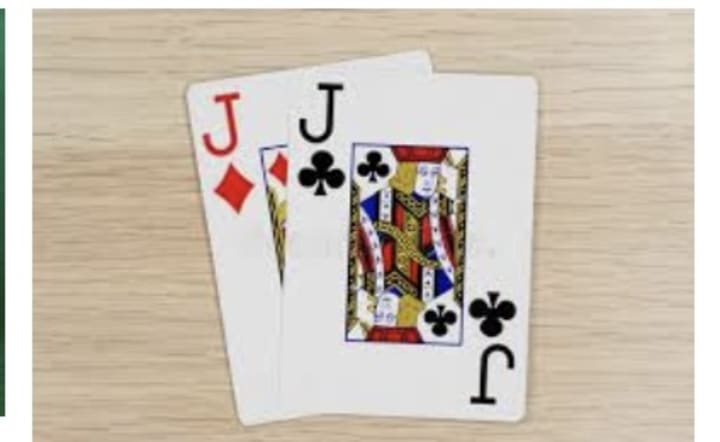
A big misconception and theory of many amateur blackjack players is the scenario of when you are dealt a pair of 10’s, jacks, queens or kings. Yes, the first instinct is to split the two cards and try to get a 20 or 21 on both but there are drawbacks and reasons why not to split the pair which adds up to 20. When dealt any of those hands, you already have a 20 thus your odds of winning with that hand are over 80%. Remember, the ultimate objective is to consistently win. If you split your 2 cards (doubling your bet), you are now left with a 10 on each hand. The odds of winning both hands decrease significantly by over 50%. The worst possible scenario is if you split and the dealer has a 10,J,Q or K showing. The reason for your significant decreased odds of winning are based on a deck of cards statistics which I will go into next; however the basic reasoning is that the dealers odds of getting an Ace, K, Q, J, or 10 on his other card are high and instead of you almost solidifying your win or push (tie) with the dealer with your original 20, your odds decrease because the odds of you also drawing a 20 or 21 on both hands to match or beat the dealer is almost null. Again in the case of winning one hand of the now split 2 hands you would just break even and the point is to win and come out ahead. The only and I mean only time to split a pair is when you have Aces. While you aren’t guaranteed a win on both it’s better than having a 12 as your hand especially if the dealer has an Ace or face card showing.
3. Now for some helpful statistics and scenarios that can help increase your chances of winning; which is again the objective. Bear with me on the odds and statistics because this is one of the most important ways in increasing your winning percentage, by knowing what you’re potentially going up against. Starting with the obvious: there are 52 cards in a deck thus 20 possibilities of drawing a value of 10 or higher 11(an Ace) on your first card. Well what does that mean for you? So the odds for that is 20/52 or 38%. Remember, it’s similarly the same odds for the dealer. A typical shoe of cards at a casino has 6 decks of cards but your odds stay the same, just more of each card (an equal amount of each therefore not changing the percentage.) Now, while your odds of getting a 10 or higher on the first card is 38% the odds of getting a 10 or higher also on the second card is moderately lower. Calculating 20/52 on the first card multiplied by 19/51 on the second card is 14%. You may wonder why the probability decreased by so much with just taking away 1 card from the deck but take it for its probability on both cards not just one. So if you are lucky enough to get 2 face cards or a face card and an Ace, consider yourself lucky. Definitely, under no circumstances, do you hit in those lucky scenarios regardless of what the dealer has. Now, the probability of getting any 2 cards that aren’t a 10 or higher are 86% thus being 14% against you and again that goes for the dealer. The odds of getting 1 card that’s a 10 or higher and 1 card under a 10 go as follows 20/52 or 38% multiplied by 32/52 or 61% is 21%. So what do we learn from these statistics? The likelihood of getting two cards under 10 is the most likely, followed by getting one card 10 or higher and one card lower than ten; and lastly the least likely is getting two cards of 10 or higher including an Ace. What does this mean? It means to be aware of your odds and remember the odds are the same for the dealer. Make smart choices with what you are dealt and keep the odds and strength of your hand in the back of your mind always.
4. Now, besides NOT SPLITTING A PAIR OF 10’s or higher there is an extremely IMPORTANT RULE that many people fail to follow. When to hit and when not to hit is the question! First basic elementary rule pertains to when a dealer has a 7,8 or 9 showing on his face up card. Before the reasoning, we have to remember a dealer stays on a hard 17 (meaning he doesn’t have an Ace) therefore your actions are based on what his second card could be. The odds are 38% that he has a 10 or higher on his second card forcing him to stay at 17 so if you are dealt a 17 or higher you don’t hit under any circumstance. You are banking on the idea that the dealer will NOT have a 7 or higher which is 62%. It seems logical to hit but if you were to hit with a 17 the odds of you going over 21 and busting are 71% thus not busting only being 29%, totally not in your favor. You would definitely prefer staying at 17 and hoping that the odds are in your favor.
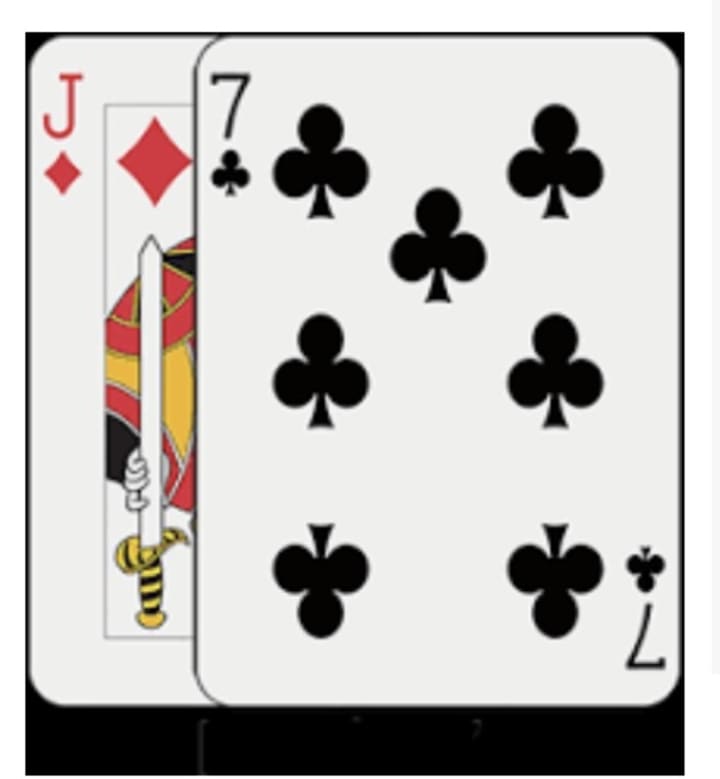
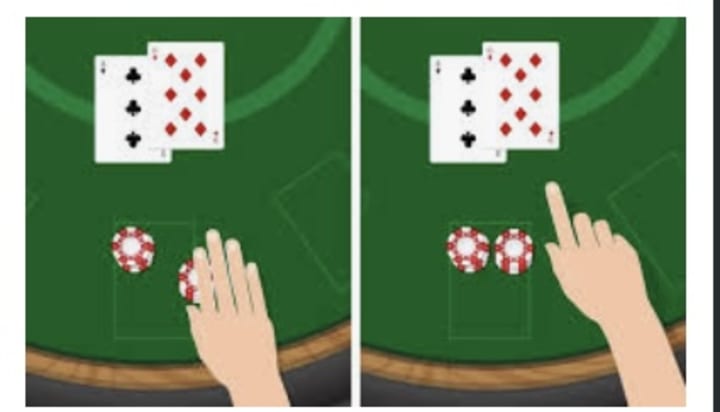
5. Now here is the situation in Blackjack that many people find tricky, when the dealer has a face card of 6 or lower! No matter what cards you are dealt; NEVER HIT; with one exception; being dealt 2 cards that equal up to 10 or between 7 and9. Then you could double up and hit since there is zero chance of busting and increasing your odds of getting closer to 21 or your goal of 17. The odds for hitting in that situation and getting a 17 or higher (since dealer will be hitting on a 16 or lower) range from as high as 64% providing you have a total of 10 and 38% of getting a 7, 8, or 9 ( putting you in a seemingly good position.) Now, the odds for the dealer when he has a 6 showing and is forced to hit and hopefully bust; (you are banking and hoping the dealer’s second card is a 10 or higher; again 38% which is higher than 1/3 so very likely) are 62% which is extremely in your favor and by doubling up you receive double the winnings. The only drawback or negative of doubling up besides the lower chance that the dealer does in fact get a 18 or higher is that when you double up; you can only hit once. However, again you are banking on the fact that the odds are in your favor. The same theory applies whether you double down or not and just hit but why not double down and try to double your winnings. It’s the only scenario you would truly want to double down. Also, if you have the same aforementioned hand above; the one advantage you have in the hopes that the dealer will bust is that if you did hit and get a 6 or higher, you took one less card from the deck allowing the dealer a slightly better chance of not busting. Or a better way to look at it is that by hitting and drawing that 6 or higher you took what would have been the dealers bust card since he had a 16. Rule of thumb is to traditionally not hit when the dealer has a 6 or higher showing. You want those 62% odds of him busting in your favor. You don’t want to mess with that.

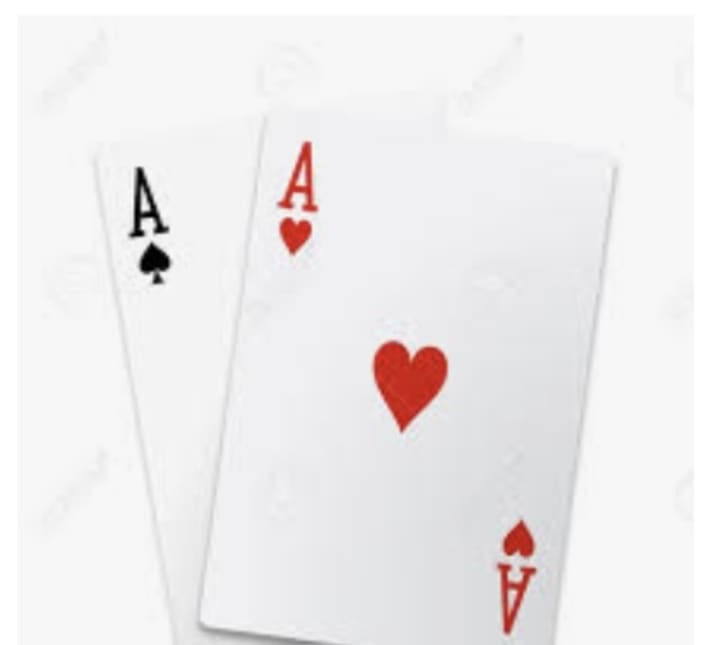
6. The one and only good time to split Is when you have been dealt 2 aces. Yes you have to double your bet but your odds of getting 21 are rather good. By not splitting you have a 12. Now, yes you can play it safe and just hit not risking the extra money but know if you do hit because it’s a soft 12 you won’t bust. The odds of getting a 21 on at least one of your Aces is 31% pretty good for a 21 which remember you will get 1.5 your bet and the odds for getting 21 on both Aces is the 38% multipled by 37% (the one less card) is 14%. Now that sounds low but we’re forgetting to add in the option of what the dealer has as his face card. If it is lower than 7, your odds of winning both hands goes up exponentially. It may seem confusing, and you can always lose; there’s never a sure fire 100% chance of winning but it’s the best case scenario besides being dealt a natural blackjack.

So... to simplify without odds the few rules or suggestions I made are as follows...
A: Remember that the objective of blackjack is to get 21 but also keep in mind all the factors that play into it.
B: Remember the likelihood of getting 2 cards lower than a 10 is the highest odds, getting one card higher than 10 and 1 card lower than 10 is second most likely and getting both cards a 10 or higher is likely so definitely keep what the dealers face card is in mind when deciding the strength of your hand.
C: Remember that when dealt a pair of 10’s or higher your odds of winning that hand are 80% and in blackjack those are almost the best odds in your favor to be successful at beating the dealer so to be safe; NEVER SPLIT A PAIR! (Except Aces which I explained)
D: Remember that a dealer has to STAY on a hard 17 or higher so if you have a 17 or higher then don’t hit. Yes you have a chance of losing but we’re basing this on his face card. We never know what his other card is until after we bet.
E: Definitely don’t hit when the dealer has a card under 7 because the odds are in your favor that he will bust.
F: The only time to hit when a dealer is showing a six or less is when you have a combined total of 10 or less because you can’t bust and can improve your hand. The same goes for doubling down. You can’t bust with a 10 or lower so you traditionally hit hoping to double your winning but remember you only get one card and keep in mind while it may improve your hand, it could have been the bust card for the dealer if you hadn’t split. So the choice to gamble is up to you with splitting; but never double down when a dealer has a 7 or higher since you only get 1 card and if you have a total of 6 per say and get a 2, now you’re stuck with an 8 where he has a 10 showing with a 38% odds of having a 10 or higher underneath; bad odds for you. Be cautious. The best time to split is with aces, especially if the dealer is showing a 6 or lower. It’s a very rare hand so make the decision wisely.
G: If a dealer is showing an ACE, before he checks to see if he has blackjack, you are able to surrender. That means you can give up your hand, playing it safe and get half your bet back.
**** TO ME, THE MOST IMPORTANT WAY TO ASSURE THESE ODDS AND PERCENTAGES STAY THE SAME and to keep track of what is going on, is to wait for a new “ Shoe” to be put in by the dealer. You’re not counting cards. That’s an illegal action and something that takes crazy memory and talent. You are MAKING SURE you aware that all the cards are available to you thus not changing the odds. By joining towards the end of a shoe, you don’t know if all the Aces or face cards are gone and therefore screw up your ability to make an informed wager. So... my advice is to walk up to a table; be patient; see where the shoe is at and when you feel it is at a comfortable enough place, then sit and play. There are so many more strategies and rules for blackjack but these are the most important. Enjoy yourself but remember it’s a numbers and statistics game with partial luck involved thus nothing is guaranteed. Have fun!!!!!

About the Creator
Sadie Colucci
I’m 41 years old. I graduated with a degree in psychology and work with children and adults on the autism spectrum. I love reading, writing, poetry, singing, dance and learning.
Keep reading
More stories from Sadie Colucci and writers in Gamers and other communities.
The Rise of Online Gaming Communities: How Players, Creators, and Collaboration Shape Digital Culture
Over the last decade, online gaming has grown far beyond a simple form of entertainment. What once existed as a niche hobby for a small group of enthusiasts has evolved into a vast, interconnected digital culture. Today, online gaming is a global ecosystem that connects players, creators, and communities, all contributing to an environment where interaction, storytelling, and creativity define the experience. Gaming has become more than a pastime—it’s a space where social connections are built, ideas are shared, and digital culture is shaped.
By Hawaiian Malia6 days ago in Gamers
From Battle Royale to a Global Digital Platform
When Fortnite first gained popularity, it was known mainly as a fast-paced battle royale game. Over time, however, Fortnite evolved into something much broader. Today, it functions as a global digital platform that blends gaming, creativity, social interaction, and live entertainment. This shift did not happen through hype or exaggeration, but through steady development and changing player behavior.
By Games Mode Ona day ago in Gamers




Comments
There are no comments for this story
Be the first to respond and start the conversation.